With the 2026 FIFA World Cup just weeks away, football enters a defining moment in its modern evolution. A 48 team expanded format, unprecedented global representation, and a wave of emerging nations have converged to create what may be the most unpredictable tournament in the sport’s history.
But before the first ball is kicked, the story of 2026 is already being shaped by its past.
A Legacy Written in Chaos, Genius, and Margins of History (2006–2022)
The modern World Cup era has delivered a sequence of finals that reflect football’s shifting power dynamics European dominance, South American resurgence, and generational iconography.
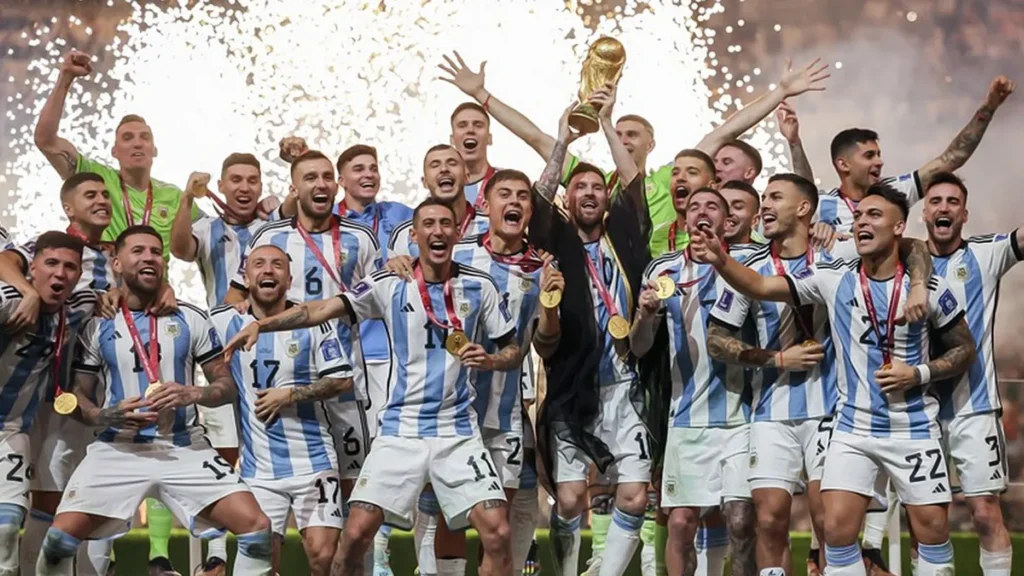
In 2022, in Qatar, the world witnessed a final for the ages: Argentina vs France.
A 3–3 draw decided on penalties, it became a duel of eras, Lionel Messi’s coronation against Kylian Mbappé’s inevitability. Argentina’s victory reasserted South America at the summit of world football.
Four years earlier, France dismantled expectations in Russia, beating Croatia 4–2 in a final defined by youthful dominance and transitional football principles verticality, pressing triggers, and rapid chance conversion.
In 2014, Germany claimed glory in Brazil with Mario Götze’s extra time strike against Argentina, sealing a tournament that validated Germany’s structural rebuild and tactical discipline.
The 2010 final saw Spain win their first World Cup via Andrés Iniesta’s extra time goal against the Netherlands, completing the peak of tiki taka hegemony.
And in 2006, Italy edged France on penalties in a match remembered as much for Zidane’s infamous red card as for Italy’s psychological resilience under pressure.
Across these tournaments, one pattern is clear: fine margins define football’s ultimate prize.
Expanding the Game: Why 2026 Changes Everything
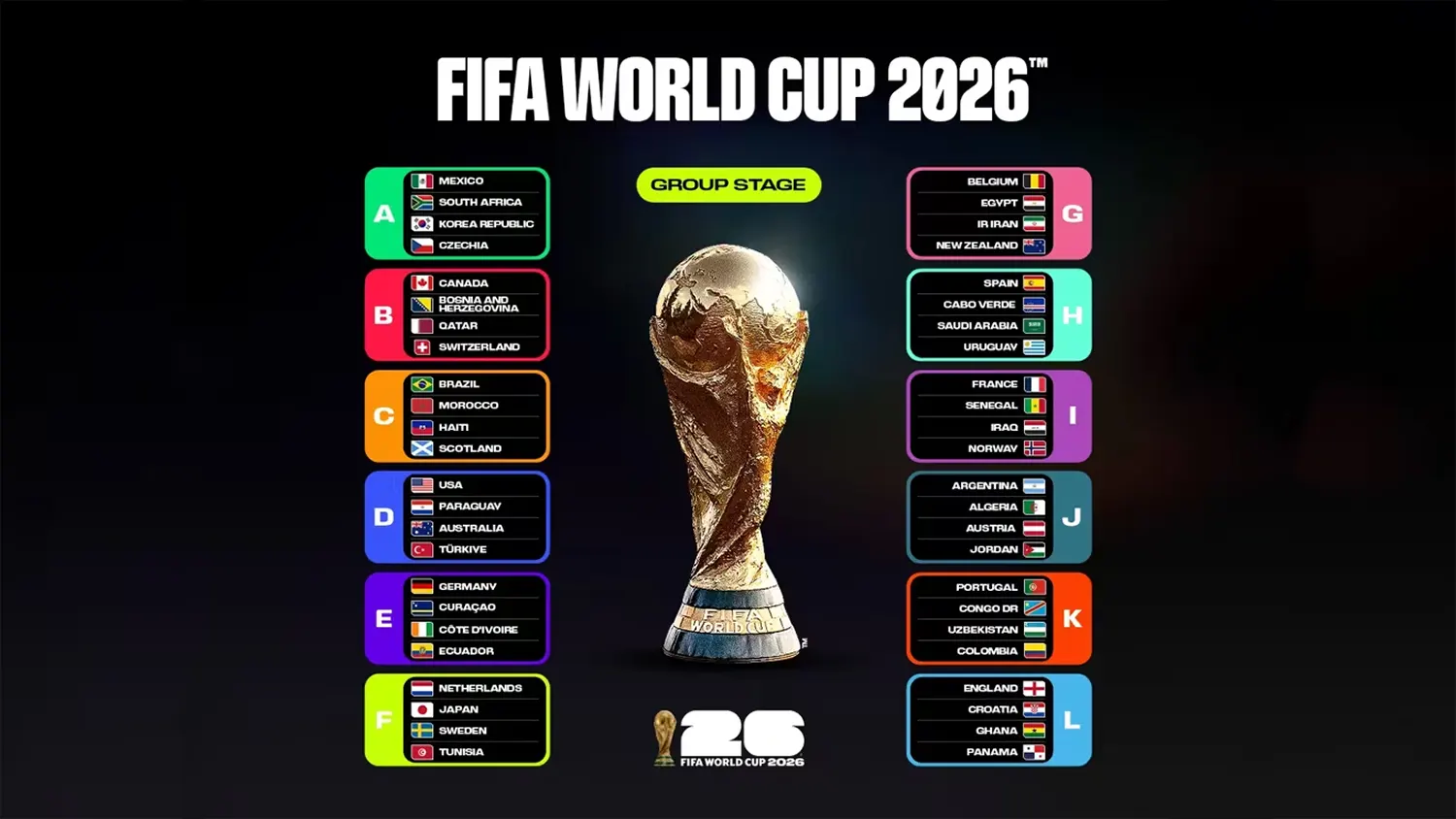
The 2026 edition introduces a structural revolution: 48 teams, 12 groups, and a newly created Round of 32 that reshapes knockout probability models entirely.
Hosted across North America, the tournament spans three nations:
- United States
- Mexico
- Canada
The opening match will be staged at the iconic Estadio Azteca in Mexico City, a venue steeped in World Cup mythology, having hosted finals involving legends like Pelé and Maradona. The final will take place at MetLife Stadium in the New York/New Jersey region, symbolising football’s commercial and cultural expansion into North America’s largest media market.
The expansion also guarantees representation from emerging football nations.
The qualification of Iraq, after defeating Bolivia in Monterrey, marks one of the most compelling underdog narratives in recent memory.
The 2026 Group Stage: Depth, Danger, and Tactical Volatility
The group draw has produced a uniquely balanced competitive landscape, no traditional “easy paths,” only varying degrees of difficulty.
Group D – The Host Nation Under Pressure
United States, as co host, face a physically demanding group featuring Paraguay, Australia, and Türkiye. This is a tactical stress test: transition defence, set piece resilience, and midfield control will define progression chances.
Group I – The Group of Tactical Extremes
Defending finalists France must navigate a complex field including Senegal, Norway, and debutants Iraq. With Erling Haaland leading Norway’s attacking threat, this group combines elite finishing with emerging defensive instability across teams.
Group L – European Collision Course
A rematch of historical tension sees England and Croatia collide again, joined by a resurgent Ghana. Expect compact mid block systems and narrow margin outcomes
this is a group where set pieces may decide qualification.
Other Notable Groups
- Group C: Brazil and Morocco headline a tactically diverse mix.
- Group F: Netherlands and Japan bring contrasting positional philosophies.
- Group J: Argentina begin their title defence against unpredictable opposition including Algeria and Austria.
The “Groups of Death”: Where Champions Will Be Tested Early
Three groups stand out for their competitive density and knockout level intensity.
Group I – Elite Pressure Cooker
With France, Senegal, Norway, and Iraq, this is arguably the most balanced group of the tournament. Expect high pressing vs vertical counter attacks, with little margin for error.
Group L – Historical Weight Meets Present Chaos
England and Croatia renew a rivalry defined by psychological tension and tactical familiarity. Ghana’s inclusion introduces unpredictability, particularly in transition phases.
Group D – Host Nation Reality Check
The United States must balance expectation with execution. Paraguay’s physicality and Türkiye’s attacking momentum create a group where tempo control becomes decisive.
Dark Horses and Tactical Wildcards
With 48 teams, the tournament structure naturally elevates unpredictability. Two debutants Uzbekistan and Jordan enter the competition with minimal historical baggage and maximum tactical freedom.
This is where the expanded format changes dynamics: second-tier teams no longer need perfection, only strategic efficiency across three matches.
Expect:
- Compact defensive structures from debutants
- High reliance on set piece conversion rates
- Increased penalty shootout probability in knockout rounds
Meanwhile, established mid tier nations will seek to exploit transitional chaos in the
Round of 32, where fatigue and rotation depth become decisive variables.
Historical Echoes: Why 2026 Feels Different
Football history loops through memory. In 1986, Argentina lifted the trophy at Estadio Azteca under Diego Maradona. In 2026, the same stadium opens the tournament once again binding eras together across four decades.
The last time the United States hosted in 1994, the final ended goalless and was decided on penalties. That tournament defined survival football. In contrast, 2026’s expanded format encourages risk taking, even in group stages.
And in 2002, Ronaldo’s redemption arc for Brazil marked one of football’s most emotionally resonant comebacks reminding us that individual narratives often define collective glory.
What Comes Next: Tactical Trends to Watch
Three macro trends will define the 2026 World Cup:
1. Squad Rotation Depth
With more matches required to reach the final, depth charts matter more than ever.
2. Transition Football Dominance
The enlarged field increases counter attacking opportunities, especially against high possession teams.
3. Set Piece Inflation
In compressed knockout rounds, dead ball efficiency will likely outperform open play creativity in deciding matches.
A Tournament Without Certainty
As April 2026 closes and global attention shifts toward kickoff, one truth stands out: this is no longer a tournament dominated by a handful of powers.
Instead, it is a global equilibrium where elite nations remain vulnerable, debutants arrive fearless, and margins between progression and elimination are thinner than ever.
The stage is set for a World Cup that may not just crown a champion but redefine what international football dominance looks like in the modern era.