A Crisis Pauses But Doesn’t Resolve
For now, the world’s most important oil artery remains open but the war around it has not ended.
As of April 18, 2026, the crisis in the Strait of Hormuz has entered a tense “wait and see” phase. On the surface, there are signs of de escalation: shipping lanes are open, and a ceasefire is holding. But underneath, the fundamentals of the conflict remain unchanged.
This is not peace, it is a temporary pause in a confrontation that could restart at any moment.
From War to Economic Strangulation
The current standoff is the result of a conflict that has steadily escalated over months.
What began as coordinated military action involving the United States and Israel evolved into a broader war with Iran spanning missile strikes, proxy engagements, and infrastructure attacks. As direct confrontation intensified, diplomacy became less about prevention and more about containment.
The turning point came when talks collapsed, and the United States shifted to economic warfare at sea.
By April 13, Washington had imposed a naval blockade on Iran, enforced by U.S. Central Command. The goal was not symbolic pressure, it was to cut Iran off from global trade entirely while maintaining the appearance of broader maritime stability.
The “Open” Strait vs. The “Active” Blockade
At the center of today’s tension is a carefully constructed contradiction.
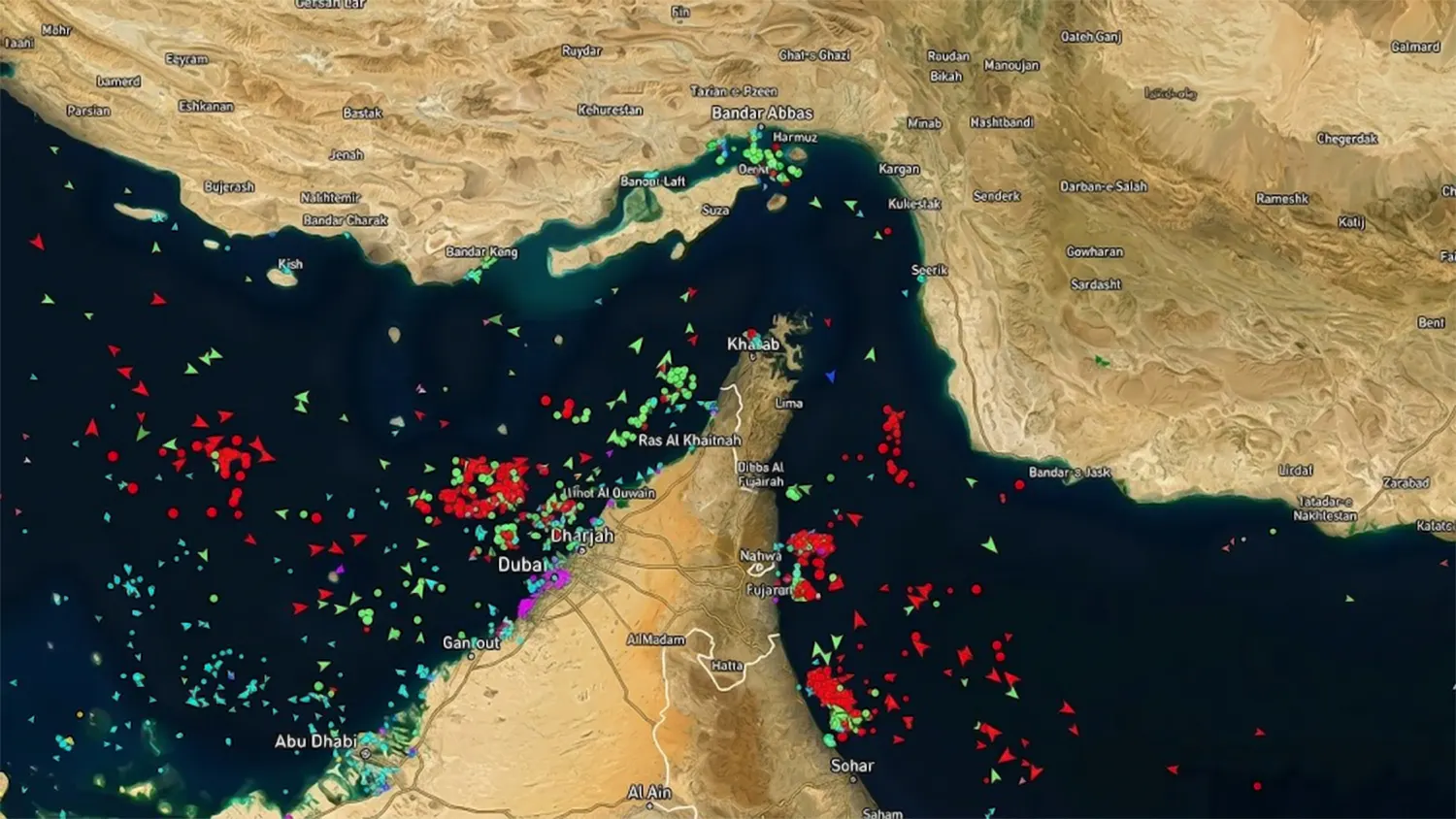
The Strait of Hormuz is technically open but Iran remains effectively cut off.
Iran’s Foreign Minister, Abbas Araghchi, has publicly declared the waterway “completely open,” linking the move to a ceasefire in Lebanon. This is a calculated signal aimed at global markets, particularly Asian oil buyers, that Tehran is not the party disrupting global trade.
Across the divide, President Donald Trump has embraced that opening but only selectively.
The U.S. position is clear: the Strait is open for the world, but closed for Iran.
American naval forces are allowing tankers from countries like Saudi Arabia and the UAE to pass freely, ensuring global oil flows remain stable. At the same time, they are systematically intercepting vessels tied to Iranian ports, enforcing what amounts to a targeted economic chokehold.
This dual-track strategy allows Washington to apply maximum pressure on Iran without triggering immediate global economic panic.
The Economic Pressure: A $400 Million a Day Squeeze
The financial impact of the blockade is immediate and severe.
Iran is losing an estimated $400 to $435 million per day in blocked trade.
This level of economic strain is not incidental, it is the core leverage behind U.S. strategy. By maintaining pressure while avoiding a full closure of the Strait, Washington is attempting to force Tehran into concessions without escalating into full scale war.
In effect, the battlefield has shifted from missiles to money.
But this pressure comes with risks. Iran’s leadership has made clear that if the blockade continues, it may escalate in ways that affect all shipping not just its own.
As Iran’s Parliament Speaker warned, “the Strait will not remain open” if the current situation persists.
The “Nuclear Dust” Dispute: A Deal or a Deadlock?
At the heart of current negotiations is an unusually specific and contentious issue: what President Trump has repeatedly called “nuclear dust.”
This refers to the remnants of Iran’s enriched uranium stockpile, much of it damaged or buried during earlier strikes on nuclear facilities.
The U.S. proposal is both technical and symbolic. It involves:
- Excavating nuclear material from Iranian sites using heavy equipment
- Transferring that material directly to U.S. territory
- Eliminating Iran’s ability to quickly rebuild a nuclear program
For Washington, this represents total assurance zero “breakout” capability.
However, Tehran has drawn a clear red line.
Iranian officials have publicly rejected any transfer of nuclear material outside the country, signaling that while economic pressure may force negotiation, it will not compel outright strategic surrender.
Complicating matters further are conflicting signals from Washington itself. Reports suggest a possible $20 billion incentive package tied to the deal, while Trump has insisted “no money will change hands,” framing the outcome as a unilateral concession by Iran.
This gap between rhetoric and reality underscores how fragile and unresolved the negotiations remain.
A High Stakes Timeline: The “Final Hour” of Negotiations
The situation is now compressed into a narrow and dangerous timeframe.
A 10 day ceasefire is currently in effect and rapidly running out.
Behind the scenes, a high level summit is expected in Islamabad, where final terms may be negotiated. But the messaging from Washington suggests limited patience.
Trump has made it clear: if a “100% complete” deal is not reached within days, military operations could resume.
This framing is deliberate. By presenting a stark choice deal or renewed conflict, the U.S. is attempting to maintain maximum leverage over Iran while the ceasefire holds.
In essence, this is diplomacy under the shadow of immediate war.
The Risk of Miscalculation: A War Waiting to Restart
Even as negotiations continue, the military reality remains volatile.
U.S. and Iranian forces are still operating in close proximity in and around the Strait. The blockade is active. Iranian retaliation remains a constant possibility.
All the ingredients for escalation are still in place only temporarily restrained by diplomacy.
This creates a scenario where:
- A failed negotiation could trigger immediate military action
- A miscalculation at sea could spark unintended conflict
- Economic pressure could push Iran toward broader disruption
The difference now is not the absence of conflict but the presence of a countdown.
A Fragile Balance With Global Consequences
The Strait of Hormuz is open but the crisis surrounding it is far from resolved.
What we are witnessing is a highly controlled standoff:
- Global trade is being protected
- Iran is being economically strangled
- Diplomacy is racing against time
The outcome of the next few days will be decisive.
Either a historic agreement is reached, reshaping the balance of power in the region or the ceasefire collapses, and the conflict returns with greater intensity.
In either case, the stakes extend far beyond the Middle East.
Because when tension centers on the Strait of Hormuz, it is not just a regional crisis, it is a pressure point for the entire global economy.