
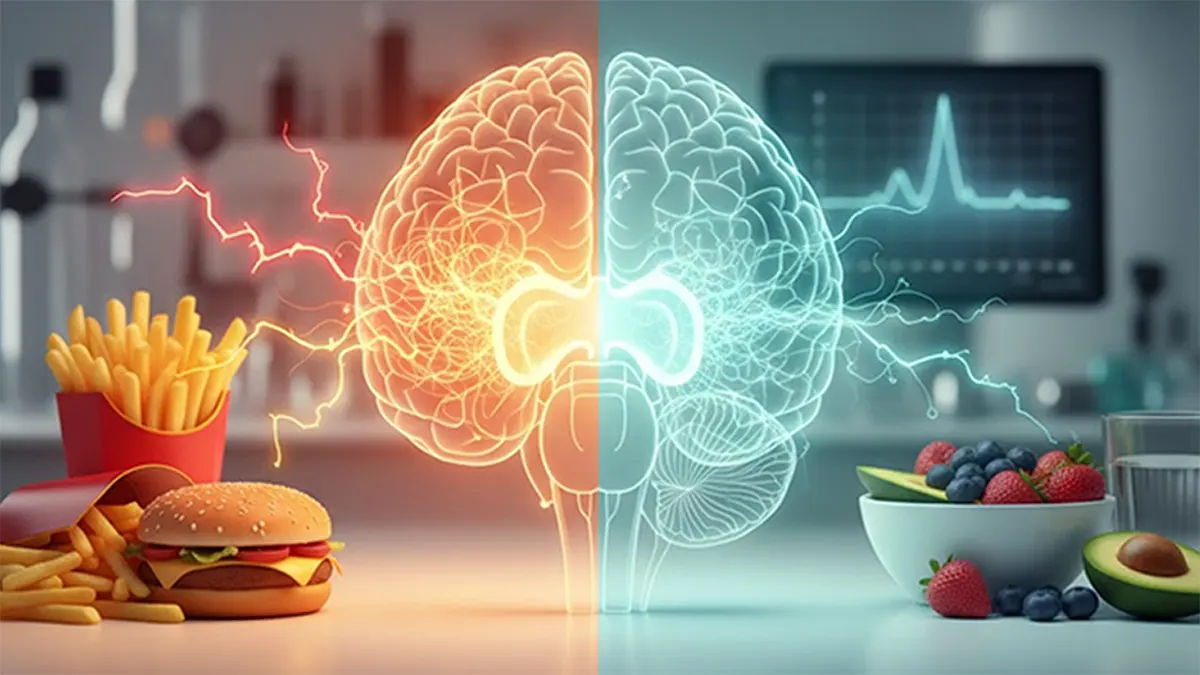
A few days of eating fatty, processed food may do more than leave you feeling sluggish. New research from the UNC School of Medicine suggests that a high-fat diet can disrupt the brain’s memory system in mice in as little as four days.
The study, published in Neuron in September 2025, identified a specific group of neurons in the hippocampus that became unusually active after the animals were placed on a high-fat diet. Researchers linked the change to problems with how the brain receives and uses glucose, its primary energy source.
The finding is striking because these brain changes appeared before the animals developed obvious signs of obesity or diabetes. It suggests that the brain may respond to an unhealthy diet much sooner than the rest of the body.
The Hippocampus Has a Critical Role in Memory
The hippocampus is one of the brain’s key regions for learning and memory. Within this structure are several types of neurons that work together to control how information is processed.
The UNC researchers focused on a particular group known as CCK interneurons. These cells help regulate activity in the hippocampus, essentially keeping neural circuits from becoming too active or disorganized.
After only four days on a high-fat diet, the researchers found that these neurons became abnormally active. That change disrupted the normal activity of the hippocampus and was associated with impaired memory in the mice.
The result gives scientists a more specific explanation for how an unhealthy diet might affect the brain. Rather than simply saying that fatty food is “bad for memory,” the study points toward a particular neural circuit that appears to be especially vulnerable.
The Problem May Start With Glucose
The researchers also identified a possible reason for the neurons’ unusual behavior: reduced glucose availability in the brain.
Although the brain makes up only a small portion of body weight, it requires a substantial and continuous supply of energy. Glucose is one of its main fuels.
In the study, a high-fat diet interfered with the brain’s ability to receive glucose normally. As glucose availability fell, the CCK interneurons became overactive, disturbing the hippocampal circuits involved in memory.
The researchers also identified PKM2, a protein involved in cellular energy metabolism, as an important part of this process. The findings suggest that changes in how brain cells handle energy may help explain why memory can be affected so quickly by a high-fat diet.
Four Days Was Enough to Produce a Measurable Change
Perhaps the most surprising part of the research was the speed of the effect.
The mice developed changes in hippocampal activity and memory within four days of starting the high-fat diet. At that stage, the animals had not yet developed the kind of major metabolic problems typically associated with long-term unhealthy eating.
That distinction matters. It suggests that brain effects may emerge before visible changes in body weight or broader metabolic health.
The researchers therefore describe the hippocampus as particularly sensitive to short-term changes in the body’s energy metabolism.
Still, this does not mean that eating fast food for four days will cause permanent memory loss in people. The study was conducted in mice, so its findings cannot be directly translated into a specific timeline or effect for humans.
The Findings Build on Earlier Human Research
The new UNC study is not the first research to connect a Western-style diet with memory.
A 2017 human study published in PLOS ONE found that healthy young adults who consumed a diet high in saturated fat and added sugar for four days showed poorer performance on a test of hippocampal-dependent memory compared with a control group. The researchers also found a relationship between changes in blood glucose and memory performance.
That study involved people rather than animals, but it examined behavioral changes rather than the specific CCK-neuron mechanism identified by the newer UNC research.
Taken together, the findings point toward a broader scientific question: how quickly can dietary changes influence the brain, and which biological pathways are responsible?
The answer is still developing.
Restoring Glucose Helped Calm the Brain Circuits
There is also a potentially encouraging finding from the UNC research.
When scientists restored glucose availability in the brain, the previously overactive CCK interneurons became calmer and memory performance improved in the mice. Researchers also investigated dietary interventions, including periods of fasting, as ways of addressing the metabolic changes caused by the high-fat diet.
That does not mean intermittent fasting has been proven to reverse memory problems caused by junk food in humans. The experiments were conducted in mice, and much more research is needed before drawing conclusions about treatments or dietary prescriptions for people.
What the findings do suggest is that the brain’s response to an unhealthy diet may be more flexible than previously thought.
What This Means for People Who Eat Junk Food
The study should not be interpreted as a warning that one burger or a few days of takeout will permanently damage your memory.
Instead, it adds to evidence that diet and brain function are closely connected and that repeated exposure to diets high in saturated fat and other unhealthy components may affect the brain through metabolic and inflammatory pathways.
There is also an important difference between occasional indulgence and a long-term dietary pattern. The UNC study examined a sustained high-fat diet in mice, not isolated meals in humans.
For everyday health, the broader lesson is straightforward: a diet built around vegetables, fruits, whole grains, lean proteins and healthier sources of fat provides the brain with a more balanced nutritional environment.
Regular physical activity and adequate sleep also remain important parts of maintaining healthy cognitive function.
Scientists Still Have Questions to Answer
The UNC findings open several avenues for further research.
Scientists will need to determine whether the same CCK-neuron response occurs in humans, how long the changes persist after returning to a healthier diet, and whether repeated short-term exposure to a high-fat diet could contribute to longer-term cognitive problems.
The relationship between diet, glucose metabolism and diseases such as dementia is also considerably more complicated than this single study can establish.
For now, the strongest conclusion is a modest one: the brain can respond to dietary changes surprisingly quickly, at least in mice, and the hippocampus appears to be particularly sensitive to disruptions in energy metabolism.
That makes the four-day finding less a reason to panic over an occasional fast-food meal and more a reminder that what we eat can influence far more than our waistline.
The brain is part of the body and it responds to its metabolic environment, too.