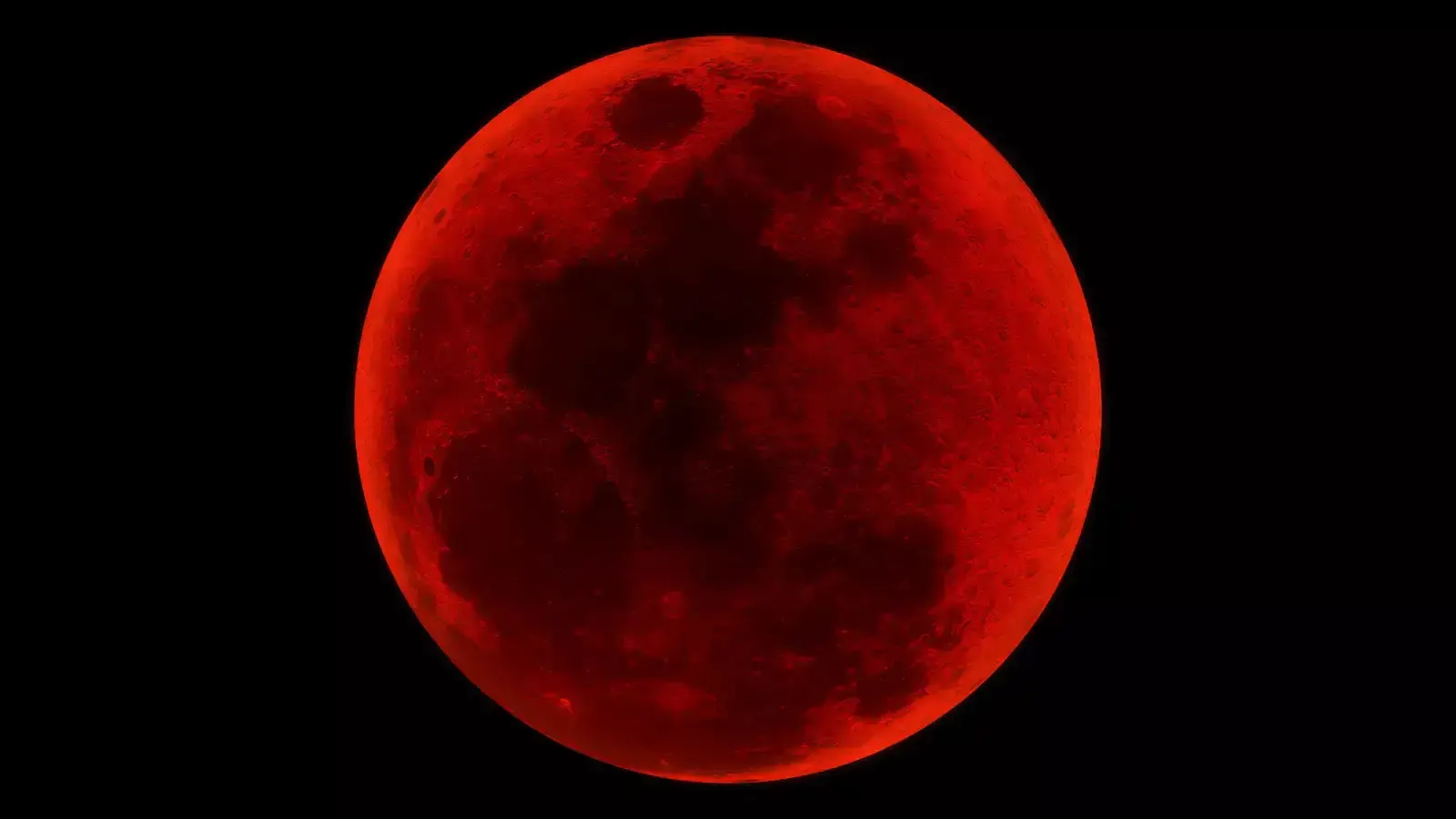
On the night of September 7–8, 2025, something genuinely spectacular is going to happen in the sky above much of the world and unlike most astronomical events, this one requires absolutely nothing to enjoy. No special glasses, no telescope, no app. Just you, a clear sky, and one of the most visually striking things nature has to offer.
82 Minutes of a Red Moon Hanging in the Sky
This is a total lunar eclipse, what most people know by its far more dramatic name: a Blood Moon. And the September 2025 event isn’t just any lunar eclipse. Totality will last approximately 82 minutes, placing it among the longest total lunar eclipses in recent memory. The entire event, from the moment Earth’s shadow first touches the Moon to the moment it fully releases, spans roughly five and a half hours.
What makes this one particularly worth staying up for is the combination of its duration and its reach. The eclipse will be visible across much of Asia, Australia, eastern Africa, and Europe meaning billions of people will have a front-row seat without needing to travel anywhere.
Why the Moon Turns Red — the Simple Version
The Blood Moon effect isn’t magic, but the explanation is almost as satisfying.
When Earth positions itself directly between the Sun and the Moon, it casts a shadow across the lunar surface. But Earth’s atmosphere doesn’t simply block sunlight, it bends it. The same process that paints sunsets orange and red is at work here. Shorter blue wavelengths scatter away, while longer red and orange wavelengths curve around the edges of the Earth and land on the Moon.
The result is that instead of going dark, the Moon glows a deep, burnt red or amber, hanging in the sky like an ember. The exact shade varies depending on how much dust, smoke, or volcanic ash is currently sitting in Earth’s atmosphere, which means every Blood Moon looks slightly different. That’s part of what makes each one worth seeing.
When to Look Up, Wherever You Are
The eclipse unfolds gradually, so knowing your local window matters.
Indonesia (WIB): Totality begins at 12:31 AM on September 8 and runs through 1:53 AM. The full event stretches across approximately 5 hours and 27 minutes meaning patient watchers who stay up will catch the Moon shifting through shadow, red, and back again.
India (IST): The total phase falls between 11:01 PM on September 7 and 12:23 AM on September 8, a manageable late night window for most.
Europe and eastern Africa: The eclipse peaks during the late evening hours of September 7, making it one of the more accessible Blood Moons for observers in these regions in recent years.
Australia: Viewers will catch the event in the early hours of September 8. Worth setting an alarm for.
Exact timings shift slightly depending on your specific city, so it’s worth checking a local astronomy site or app for your precise window.
You Don’t Need Any Equipment But Here’s How to Make It Better
This is one of the genuinely democratic moments in astronomy. A total lunar eclipse is completely safe to watch with the naked eye no protective glasses, no filters, nothing. That alone sets it apart from solar eclipses, which require specific eyewear to observe safely.
That said, a few simple steps will significantly improve the experience.
Get away from city lights if you can. Even driving 20 minutes out of an urban area makes a noticeable difference in how vivid the red glow appears. The Moon during totality is dimmer than usual, and light pollution washes out the color.
Check your weather forecast in the days leading up to September 7. A single bank of clouds at the wrong moment can block the view entirely and unlike a total solar eclipse, you can’t just travel a few miles to find a gap in the path.
If you want to photograph it, a tripod is the single most important piece of gear. Even a smartphone in night mode on a steady surface can produce surprisingly good results. If you’re using a camera, experiment with longer exposures during totality that’s when the Moon is at its most dramatic and also its dimmest.
Binoculars or a small telescope will reveal surface detail on the Moon during the red phase that the naked eye misses, the craters and maria (the dark basalt plains) become strangely vivid against the blood-red backdrop.
Why This One Is Worth Making the Effort For
Total lunar eclipses happen roughly once every two to three years on average but not all of them are visible from the same regions, and very few last this long. An 82-minute totality with visibility across multiple continents is genuinely unusual.
The next total lunar eclipse after this one occurs on March 3, 2026 but its visibility footprint will be different, and early indications suggest it won’t match the September 2025 event in duration. After that, the calendar thins out for a while.
In other words, if you’re in the viewing zone on September 7–8 and the skies are clear, this is not one to sleep through.
Quick Answers Before You Go Outside
Do I need glasses to watch this? No. A lunar eclipse is completely safe to view with the naked eye. That only applies to solar eclipses.
What if it’s cloudy where I am? Several astronomy organizations and YouTube channels will be streaming the eclipse live. It’s not the same as being outside under it, but it’s a solid backup.
Will the Moon look red the whole time? Not quite. The red phase only occurs during totality when the Moon is fully inside Earth’s darkest shadow. Before and after that, you’ll see a partial eclipse where the Moon looks like it has a dark bite taken out of it. The full sequence is worth watching if you have the time.
Why does the color intensity vary? The shade of red depends on atmospheric conditions at the time volcanic eruptions, wildfires, and dust storms all affect how much particulate matter is in Earth’s atmosphere, which changes how light bends onto the Moon. Some Blood Moons are a deep brick red; others glow a brighter orange. You won’t know exactly which until you see it.
The universe doesn’t put on shows like this on a schedule that accommodates busy lives. But this one falls on a weekend night, spans over an hour of totality, and is visible from more of the world than most. Mark the date, find a dark spot, and look up.