
Ever notice how youthful skin looks firm, smooth, and radiant? A lot of that comes down to collagen, the protein that keeps your skin structured and resilient.
As we age, however, collagen production naturally declines, leading to fine lines and loss of elasticity. The good news? You can support your skin from within by choosing the right foods. With a few smart additions to your diet, boosting collagen naturally becomes both simple and enjoyable.
Let’s break down the foods that can help you maintain that healthy glow.
Foods That Contain Collagen Directly
Some foods already contain collagen, giving your body a ready-made supply to work with. Think of these as your direct collagen sources.
- Bone broth
Made by simmering animal bones, bone broth is rich in collagen and amino acids. It’s easy to incorporate into soups or drink on its own as a nourishing option. - Chicken (especially skin and cartilage)
Chicken isn’t just a protein staple, it also provides natural collagen support, particularly in the skin and connective tissues. - Fish and shellfish
Fish like salmon and mackerel contain marine collagen, especially in the skin and bones. Shellfish such as shrimp and mussels also contribute valuable nutrients. - Pork skin and gelatin
Pork skin is high in collagen, while gelatin derived from collagen, is commonly found in desserts and snacks.
While these foods help, they’re only part of the picture. Your body also needs specific nutrients to produce collagen efficiently.
Nutrients That Help Your Body Produce Collagen
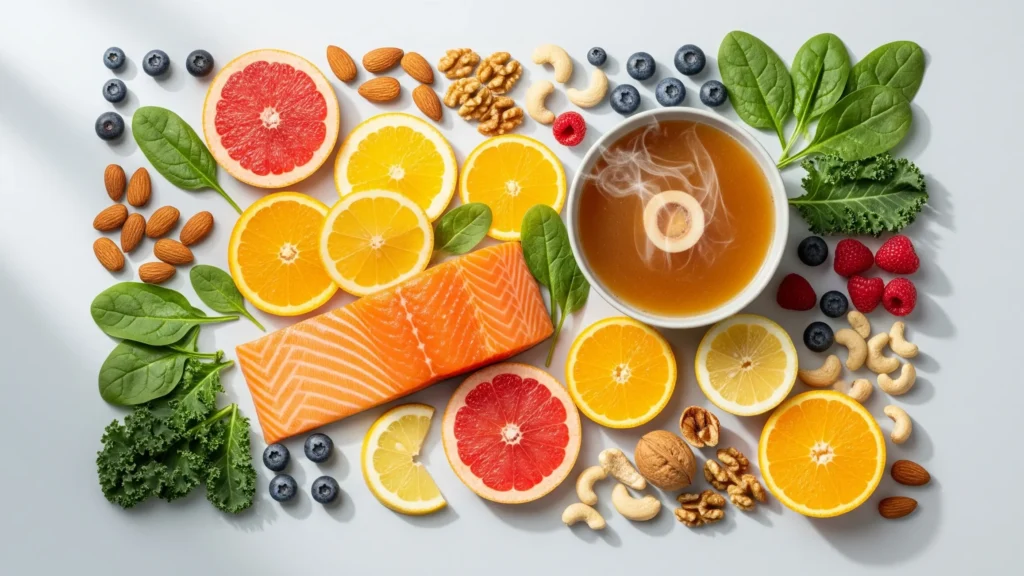
Instead of relying only on collagen rich foods, it’s equally important to support your body’s own production. This is where collagen boosting foods come in.
1. Vitamin C: Essential for Collagen Synthesis
Vitamin C plays a critical role in collagen formation. Without it, your body simply can’t produce collagen effectively.
Add more of these to your meals:
- Citrus fruits like oranges, lemons, and limes
- Berries such as strawberries and blueberries
- Bell peppers and leafy greens
These foods support stronger, healthier skin from within.
2. Protein Rich Foods: Building Blocks of Collagen
Collagen is made from amino acids like glycine and proline. That’s why high quality protein intake matters.
Great sources include:
- Eggs
- Lean meats like beef and poultry
- Plant based options such as beans, lentils, and chickpeas
A balanced intake ensures your body has what it needs for consistent collagen production.
3. Zinc and Copper: Key Structural Minerals
These minerals help your body assemble collagen properly.
You’ll find them in:
- Nuts and seeds (almonds, cashews, sunflower seeds)
- Shellfish like oysters and crab
- Whole grains such as oats and quinoa
Together, they support skin repair and regeneration.
4. Garlic: A Small but Powerful Addition
Garlic contains sulfur compounds that help protect collagen from breaking down. Adding it regularly to your meals can support long term skin health in a simple, natural way.
Whole Foods vs. Supplements: What Really Works?
With so many collagen powders and drinks on the market, it’s easy to assume they’re the best solution. But in reality, whole foods offer broader nutritional benefits.
They don’t just supply collagen, they provide the vitamins, minerals, and antioxidants your body needs to use it effectively. In other words, you’re supporting your skin from multiple angles, not just one.
Build Better Skin from the Inside Out
Healthy skin isn’t just about what you apply, it’s also about what you eat. By combining collagen rich foods with nutrients that support its production, you create a sustainable approach to skin health.
Start small. Add a bowl of bone broth, toss berries into your breakfast, or include more leafy greens in your meals. Over time, these habits can lead to visible improvements in skin texture and elasticity.
Your daily diet is one of the most powerful tools you have use it wisely, and your skin will reflect it.