Remembering the Darkest Chapter
In a rare and deeply symbolic move, UNESCO has recognized sites not of beauty but of human tragedy.
In July 2025, three locations tied to the Cambodian genocide were officially added to the World Heritage List. These are not traditional heritage sites filled with art or architecture. Instead, they stand as stark reminders of one of the 20th century’s most devastating atrocities.
This decision matters not just for Cambodia, but for the world. It ensures that the lessons
of this dark period are preserved and never forgotten.
The Historic Decision: UNESCO’s Unprecedented Recognition
On July 11, 2025, during its 47th Session in Paris, UNESCO made a groundbreaking decision.
The organization inscribed the “Cambodian Memorial Sites: From centres of repression to places of peace and reflection” onto its prestigious list.
Between 1975 and 1979, under the rule of the Khmer Rouge, an estimated 1.7 to 2.2 million people died due to execution, forced labor, starvation, and disease.
Unlike most World Heritage listings, this recognition is not about celebrating the past,
it is about confronting it.
The Sites: Where History Still Speaks
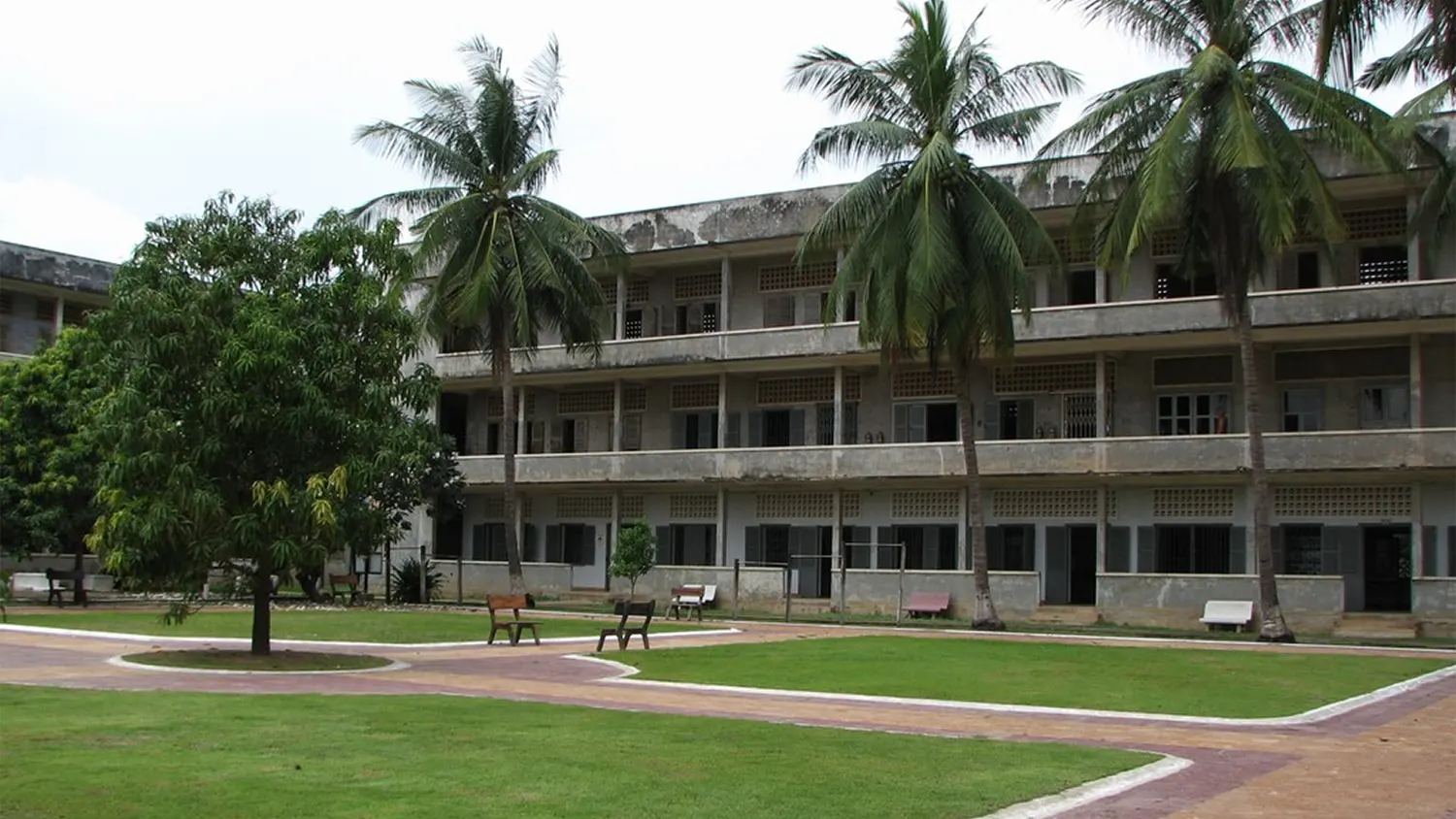
Tuol Sleng Genocide Museum (S-21)
Located in Phnom Penh, Tuol Sleng Genocide Museum was once a high school before being transformed into the infamous S-21 prison.
An estimated 15,000 people were imprisoned, tortured, and ultimately killed here.
Today, the site preserves haunting photographs of victims faces that force visitors to confront the human cost of political terror.
Choeung Ek Genocidal Centre (The Killing Fields)
Just outside the capital lies Choeung Ek Genocidal Centre, one of the most well known execution sites.
This is where many prisoners from S-21 were taken to be killed and buried in mass graves.
Often referred to as the “Killing Fields,” it has become a powerful symbol of the brutality of the Khmer Rouge era and a place of quiet reflection for visitors from around the world.
M-13 Prison
Less widely known but historically critical, M-13 Prison served as an early testing ground for the regime’s methods.
This was where systems of interrogation, torture, and control were first developed
before being scaled nationwide.
Though now largely abandoned, its role in shaping the machinery of repression makes it
a vital part of the historical record.
Why This Recognition Matters
Global Acknowledgment
The UNESCO listing formally recognizes the Cambodian genocide as a defining tragedy in human history.
It ensures that the events are not minimized or forgotten, but instead embedded in global collective memory.
Preservation and Education
These sites are now protected as permanent educational resources.
Future generations will be able to learn directly from these locations, understanding not just the facts but the human impact.
As survivors have emphasized, education is the strongest defense against repeating such atrocities.
A Shift in UNESCO’s Mission
This designation represents a turning point in how UNESCO defines “heritage.”
Traditionally focused on ancient landmarks, the organization is now also recognizing sites tied to modern conflict and human rights abuses.
This shift signals a broader commitment to preserving not only humanity’s achievements but also its failures.
Healing and Recognition for Survivors
For survivors and families of victims, this recognition carries deep emotional significance.
It validates their experiences and acknowledges their suffering on a global stage.
As Cambodian officials have noted, these sites are no longer just places of pain,
they are spaces of dignity, remembrance, and healing.
What This Means for the Future
The transformation of these sites reflects a powerful idea: even the darkest places can serve a purpose.
They now stand as:
- Warnings against authoritarianism and unchecked power
- Educational tools for future generations
- Symbols of resilience and remembrance
As a result, Cambodia is not only preserving its past, it is actively shaping how the world understands it.
The Big Picture
UNESCO’s recognition of Cambodia’s genocide sites is not about history alone,
it is about responsibility.
It is a reminder that:
- Atrocities can happen anywhere
- Silence and indifference carry consequences
- Memory is essential to prevention
By preserving these sites, the world makes a collective promise: to remember, to learn, and to ensure that such horrors are never repeated.