What began as a blunt confrontation over Greenland’s future has, within 48 hours, evolved into something more complex and potentially more volatile.
As of Friday, January 23, 2026, the immediate threat of U.S. tariffs and annexation rhetoric has eased. In its place, a new contest has emerged: one fought through investment packages, security frameworks, and sharply diverging interpretations of sovereignty.
The European Union calls it deterrence through integration.
The White House calls it a strategic victory.
Greenland calls it unfinished business.
From Confrontation to Capital
The turning point came in Davos. European Commission President Ursula von der Leyen used the World Economic Forum to unveil what Brussels now describes as a “sovereignty investment package” for Greenland an effort to eliminate the economic vacuum that had fueled U.S. pressure.
While final figures are still being negotiated, the proposal is significant. The Commission has committed to doubling long-term EU financial support for Greenland in the next multi-year budget cycle, embedding the territory more deeply into Europe’s economic and regulatory sphere.
The strategy is clear-cut.
The package rests on three pillars:
- Critical raw materials: Accelerated EU-backed development of rare earths, lithium, and neodymium to ensure Greenland does not rely on U.S. or Chinese capital.
- Energy and connectivity: Subsidies for green hydrogen projects and subsea data cables linking Nuuk directly to mainland Europe.
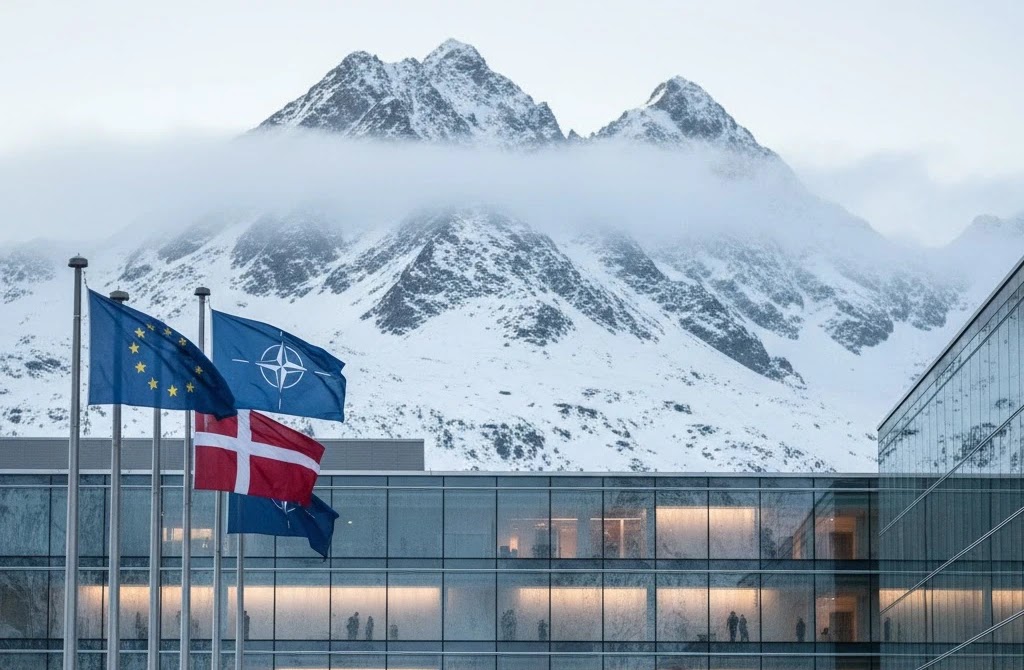
- Security: Support for a permanent NATO presence informally dubbed “Arctic Sentry”
modeled on Baltic deployments, designed to demonstrate that allied defense does not require U.S. ownership.
This is not a gesture of goodwill toward Denmark. It is a preemptive defense using capital and infrastructure to close off future leverage.
Trump’s Pivot: From “Own” to “Deal”
Only days earlier, the tone was far harsher. President Donald Trump had threatened 25 percent tariffs on Denmark and several major European economies, openly tying trade pressure to Greenland’s strategic value.
That posture shifted on Wednesday, January 21, after a meeting with NATO Secretary-General Mark Rutte.
Trump announced that tariff threats would be dropped, for now and replaced with what he described as a “framework deal” involving expanded U.S. and NATO military access and mineral cooperation. He claimed the United States had secured “total access.”
Copenhagen and Nuuk responded swiftly: Greenland’s sovereignty is not for sale.
Competing Claims, One Framework
At the heart of the dispute lies interpretation.
Trump has framed the Davos outcome as a decisive break from the “bureaucratic mess” of the 1951 and 2004 defense agreements governing U.S. presence on the island. He explicitly linked Greenland to his proposed “Golden Dome” missile defense system, presenting the framework as a milestone that secures Arctic defense for the United States.
Danish and NATO officials tell a narrower story. The framework, they say, merely initiates talks to modernize existing defense arrangements strictly under Danish sovereignty. Mark Rutte later stressed that sovereignty was never discussed.
The gap between those narratives remains wide.
Nuuk Draws Its Red Line
If Davos was intended to calm tensions, it failed to do so in Greenland.
Prime Minister Jens-Frederik Nielsen said he was “completely unaware” of any framework involving Greenlandic territory. His predecessor, Múte B. Egede, was more direct. Protests erupted in Nuuk and Copenhagen under a single slogan: “Greenland is not for sale, not now, not ever.”
A January poll drives the message home: 85% of Greenlanders reject any form of U.S. annexation or purchase, including partial arrangements.
Even rumored compromises are being dismissed. Diplomatic sources describe a so-called
“Cyprus model” granting the U.S. sovereign base areas as a Davos corridor whisper, floated quietly but rejected outright by Greenlandic lawmakers.
Why June Matters
The crisis has not ended. It has been deferred.
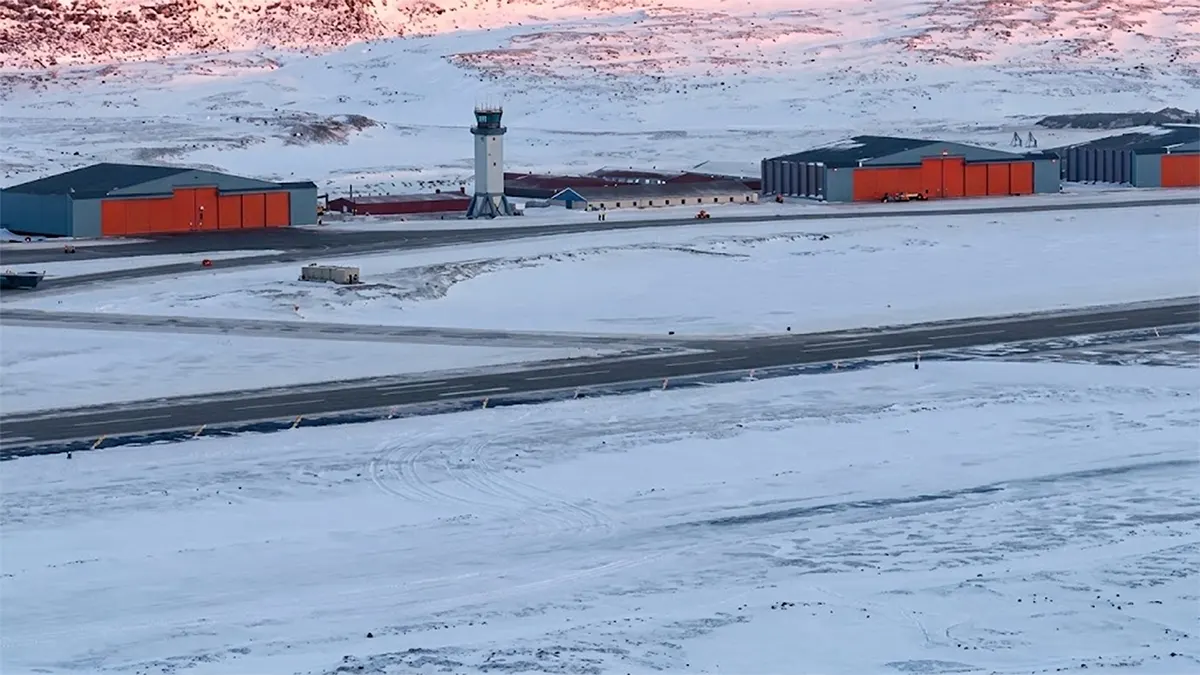
Trump paused a 10% tariff scheduled for February, but the more severe 25% tariff threat remains active for June 1, 2026. That date has become the central pressure point.
Behind closed doors, U.S. demands reportedly focus on three areas Copenhagen and Nuuk consider non-negotiable:
-
Expanded missile defense basing beyond Pituffik (Thule).
-
Priority access to Greenland’s critical minerals.
-
Judicial exemptions placing U.S. personnel outside Danish and Greenlandic law.
The EU is preparing its response. Brussels has readied its Anti-Coercion Instrument, a retaliation package that could trigger up to €93 billion in counter-tariffs on U.S. goods if June passes without an agreement.
Markets are already adjusting, pricing in a rising risk of a renewed transatlantic trade confrontation this summer.
A Deal-Maker on Two Fronts
There is an irony European diplomats privately noted in Davos. The same day Trump promoted a new “security framework” for Greenland, his team met with Russian and Ukrainian envoys in Abu Dhabi to discuss the proposed Board of Peace mechanism.
On one front, Trump presented himself as a global mediator.
On another, as a hard-nosed negotiator wielding tariffs and leverage.
The contrast reinforces his deal-maker persona and underscores why allies remain wary.
A Temporary Ceasefire, Not a Settlement
Trump himself has since described the Davos outcome as merely a “concept of a deal.” That may be the most accurate assessment.
For Washington, the pause preserves leverage.
For Europe, investment is a defensive wall.
For Greenland, sovereignty remains the immovable center.
Adding to the tension, Danish intelligence services are monitoring alleged U.S.-linked political operatives in Nuuk claims Greenlandic officials describe as staged provocations that have further hardened local resistance.
The immediate crisis has cooled, but the underlying contest remains unresolved. Control of Greenland its land, its minerals, and its position at the Arctic’s front door remains an open question.
Davos delivered a pause, not peace.
With June approaching, the struggle over Greenland is far from over.