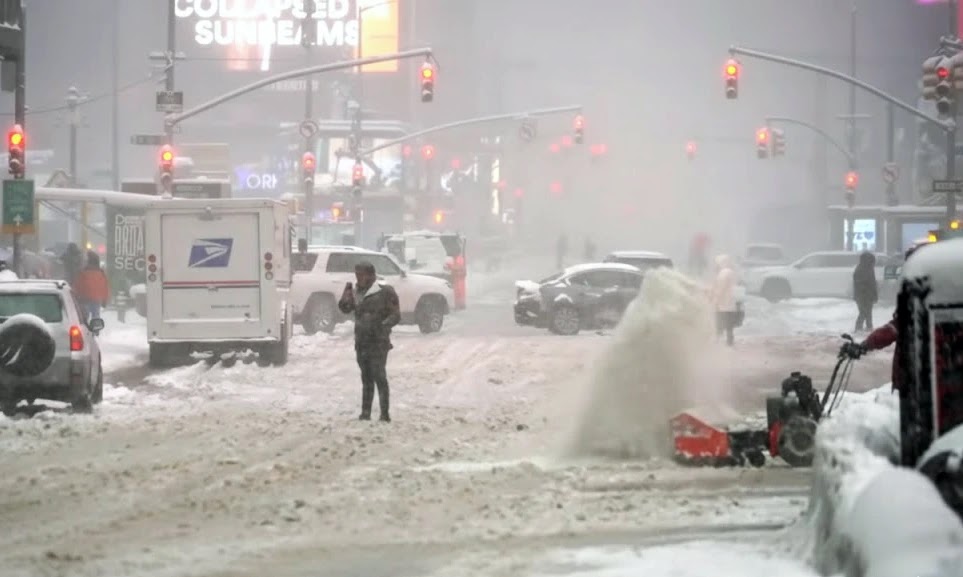
As of Saturday, January 24, 2026, Winter Storm Fern has intensified into one of the most expansive and dangerous winter weather events in recent U.S. history. Stretching more than 2,000 miles from the Southern Plains to New England, the storm has placed over 230 million people under weather alerts, with at least 15 states declaring States of Emergency.
Fern is not a typical snowstorm. Its combination of crippling ice, paralyzing snowfall, and life-threatening Arctic cold is exposing critical vulnerabilities in infrastructure, energy systems, and emergency preparedness particularly as climate volatility increases.
A Storm Defined by Scale and Severity
Governors in states including Texas, Georgia, Virginia, New York, Pennsylvania, and New Jersey have activated emergency powers. New Jersey’s declaration took effect Saturday evening as conditions rapidly deteriorated across the region.
Unlike storms dominated by snow alone, Fern’s most destructive feature is ice. In parts of the South, ice accretion of up to one inch is forecast enough to snap mature trees and collapse power lines under extreme weight. Utility providers, including Duke Energy, have warned that multi-day power outages are likely.
Meanwhile, travel systems are under extraordinary strain. Nearly 6,000 flights have been canceled nationwide through Sunday, with major disruptions at hubs in Dallas, Charlotte, and Nashville. Several states have imposed commercial vehicle bans on major interstates to prevent accidents and jackknifed trucks.
Three Major Danger Zones
Meteorologists divide Winter Storm Fern into three overlapping but distinct threat regions.
1. The Ice Corridor: Infrastructure at Risk
Primary States: Texas, Louisiana, Arkansas, Mississippi, Alabama, Georgia, the Carolinas, southern Virginia
Key Cities: Dallas–Fort Worth, Atlanta, Charlotte, Raleigh
Ice accumulation between 0.5 and 1 inch is expected, levels capable of causing what forecasters describe as “hurricane-level” infrastructure damage. The slow melt expected over the coming days raises the risk of prolonged black ice and delayed recovery.
2. The Heavy Snow Belt: Travel Paralysis
Primary States: Oklahoma through New England
Key Cities: Oklahoma City, St. Louis, Washington D.C., Philadelphia, New York City, Boston
Large swaths of the country are forecast to receive 8–16 inches of snow, with localized totals exceeding 20 inches, particularly in parts of the Appalachians. Road closures, school shutdowns, and supply disruptions are expected to persist into early next week.
3. The Arctic Deep Freeze: Life-Threatening Cold
Primary States: North Dakota, Minnesota, Wisconsin, Iowa
Behind the storm, a displaced Polar Vortex is driving wind chills as low as –50°F, with some locations reporting even colder values. At these temperatures, frostbite can occur in under 10 minutes, and any vehicle breakdown may become a medical emergency.
The Coldest Air in Years and Why It Matters
Parts of the Upper Midwest are currently experiencing temperatures colder than Antarctica, where it is summer. Cities such as Grand Marais and Duluth, Minnesota, have recorded wind chills below
–60°F, while Minneapolis faces three consecutive days of sub-zero temperatures.
The danger extends beyond personal exposure. Officials warn of:
- Burst pipes and frozen well heads
- Rapid indoor temperature drops during outages
- Increased risk of hypothermia, which can begin at body temperatures of 95°F
What Comes Next: A Stagnant Pattern
Meteorologists caution that this event may not end quickly. A phenomenon known as Sudden Stratospheric Warming, a rapid temperature spike high in the atmosphere has disrupted the Polar Vortex and allowed Arctic air to spill southward.
Because of a persistent high-pressure “Greenland Block,” the cold air is effectively trapped.
Late January (Now–Jan 31)
- Prolonged sub-zero temperatures across the Northern U.S.
- Slow ice melt in the South, increasing refreeze risks
Early February (Feb 1–10)
- Models suggest the vortex may split, potentially sending another surge of Arctic air into the Eastern U.S.
- Utilities warn of sustained pressure on energy grids and fuel supplies
Climate Context and Practical Solutions
While no single storm can be attributed to climate change alone, scientists agree that warming Arctic temperatures and atmospheric instability are increasing the likelihood of extreme, slow-moving winter events like Fern.
Immediate, practical actions can reduce risk:
- Avoid unnecessary travel during active storm periods
- Protect pipes by insulating exposed plumbing and dripping faucets
- Use generators only outdoors and away from living spaces
- Check on elderly neighbors and those without reliable heat
- Support long-term investments in grid resilience and weather-hardening infrastructure
Winter Storm Fern is a reminder that extreme cold remains one of the most dangerous weather threats and that preparedness, adaptation, and resilient systems are no longer optional.