Volkswagen is preparing one of the most sweeping corporate restructurings ever seen in the global automotive industry, with plans to eliminate around 100,000 jobs worldwide by 2030 as the German automaker struggles with high costs, weak electric-vehicle demand and intensifying competition from China.
The cuts represent roughly 15% of Volkswagen Group’s global workforce. They combine a newly approved reduction of about 50,000 positions with another 50,000 jobs targeted under a restructuring agreement reached in late 2024.
While the program is global, Germany is expected to bear the heaviest burden. Between 50,000 and 65,000 of the planned job reductions could affect employees in the company’s home country, putting pressure on factories, administrative operations and other parts of Volkswagen’s German industrial base.
The scale of the changes reflects a deeper problem facing Volkswagen: the company is trying to reduce its cost base at the same time as the global automotive industry undergoes a rapid shift toward electric vehicles and software-driven cars.
Four German factories face an uncertain future
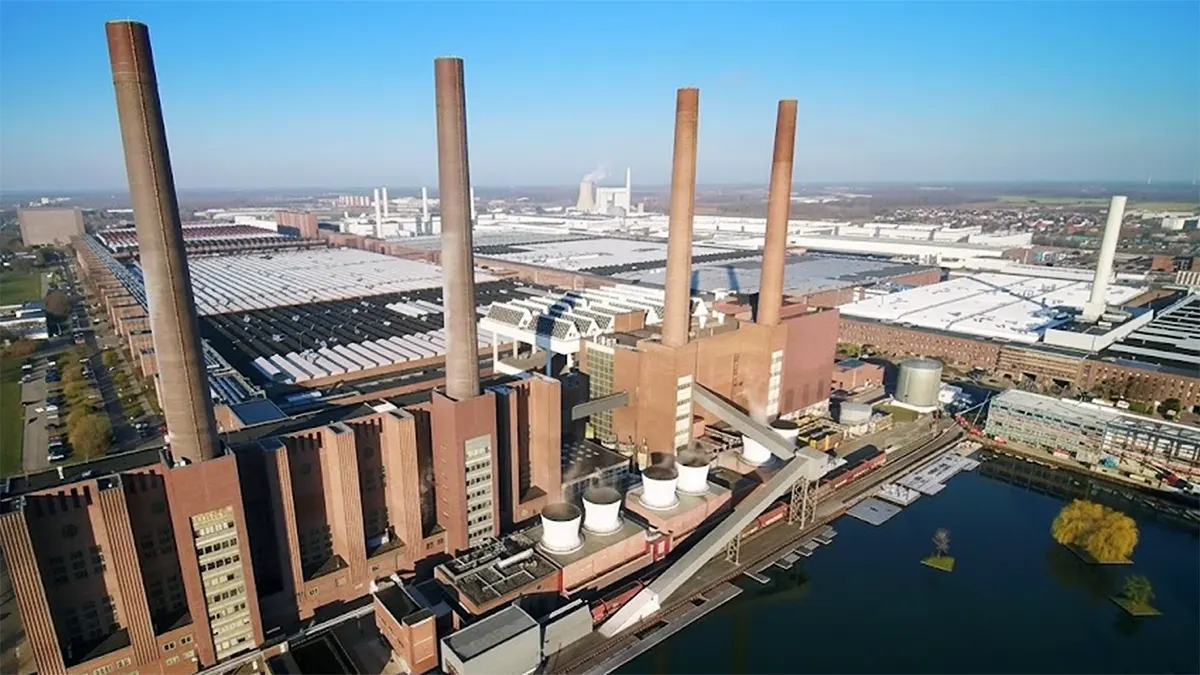
Among the most significant concerns are four major German production sites: Hanover, Emden, Zwickau and Audi’s Neckarsulm plant.
Management and labor representatives have signaled that these facilities may no longer have guaranteed futures beyond the late 2020s. Any full closure of Volkswagen plants in Germany would be a major break with the company’s industrial history.
The threat is particularly significant because several of these facilities have been closely associated with Volkswagen’s transition toward electric-vehicle production. Weak EV demand, however, has left some European factories operating below their intended capacity.
Volkswagen is therefore facing a difficult calculation: maintaining expensive manufacturing capacity that is not fully utilized can put further pressure on profitability, but closing plants would carry substantial economic and political consequences in Germany.
Volkswagen is also cutting the number of models it builds
The restructuring goes beyond factory employment.
Volkswagen Group plans to reduce the number of vehicle variants across its brands, potentially cutting the portfolio by as much as half. The objective is to simplify production, reduce development costs and eliminate the complexity created by offering too many closely related models and configurations.
The change affects a group that includes Volkswagen Passenger Cars, Audi, Porsche and Škoda, among other operations.
For Volkswagen, simplifying the lineup is intended to make the business more efficient while allowing resources to be concentrated on models and vehicle segments with stronger commercial potential.
The company is targeting a 9% operating margin by 2030, making cost reduction a central part of its long-term strategy.
China’s EV industry is changing Volkswagen’s competitive position
One of the biggest pressures comes from China.
Volkswagen has historically depended heavily on the Chinese market, which has been an important source of sales and profits. But the competitive landscape has changed dramatically as Chinese automakers have developed lower-cost, technology-focused electric vehicles.
Companies such as BYD have expanded rapidly, while other Chinese manufacturers are competing aggressively on price, software and vehicle features.
The challenge is no longer limited to China. Chinese EV manufacturers are increasingly entering European markets, bringing the same competitive pressure directly into Volkswagen’s home region.
That has forced Volkswagen to rethink how it develops vehicles and software, including greater reliance on partnerships with external technology companies.
Europe’s EV slowdown has left factories with too much capacity
Volkswagen is also dealing with structural overcapacity in Europe.
The company has invested heavily in preparing its manufacturing network for the electric-vehicle transition, but consumer demand for EVs has not grown as quickly as expected in some European markets.
As a result, Volkswagen is dealing with factories that were designed for substantially higher production volumes than current demand supports. The company’s European operations are estimated to have roughly 500,000 vehicles of annual excess capacity.
The restructuring aims to bring production capacity closer to actual demand. Volkswagen’s longer-term target is to reduce potential global production capacity from roughly 12 million vehicles annually to about 9 million.
That reduction helps explain why the restructuring involves not only office jobs but also manufacturing, procurement, logistics and other functions connected to vehicle production.
High costs make Germany the main target
Although Volkswagen’s restructuring is global, Germany is at the center of the cost-cutting effort.
The company maintains a huge workforce in Germany, but its domestic operations face higher labor, energy and regulatory costs than many international competitors.
Those expenses become especially problematic when Volkswagen is competing against manufacturers that can produce EVs at lower costs.
The issue is not simply wages. Energy prices, industrial regulations, supplier costs and the broader expense of operating large manufacturing facilities in Germany all affect the competitiveness of Volkswagen’s domestic production network.
For management, reducing German capacity and employment is therefore one of the most direct ways to address the company’s cost structure.
For workers and local communities, however, the consequences could be much broader than the headline job numbers suggest.
The job cuts extend well beyond German factories
The remaining 35,000 to 50,000 job reductions are expected to come from Volkswagen’s international operations.
These cuts can affect administrative departments, software operations, supply-chain organizations and other corporate functions across Europe, North America and Asia.
The restructuring is therefore not simply a German factory story. Volkswagen is attempting to reduce overhead across its global organization.
The company’s software division, CARIAD, is one area facing particular pressure. Volkswagen has struggled with the cost and complexity of developing software internally, contributing to delays and increased development expenses.
Under CEO Oliver Blume, the group has increasingly turned toward external technology partnerships, including its cooperation with Rivian and technology relationships involving XPeng in China.
That shift reduces the need to maintain every software capability internally and could lead to further reductions in overlapping development roles.
Volkswagen’s other brands are also being affected
The restructuring spans the group’s major brands rather than being limited to the core Volkswagen passenger-car business.
Volkswagen Passenger Cars is expected to absorb the largest share of the workforce reductions, affecting both corporate positions and manufacturing-related employment.
Audi is also planning significant job reductions, while Porsche is cutting permanent positions as well as temporary workers.
The different brands face different challenges, but they are all being asked to contribute to the group’s broader effort to improve profitability and simplify its operations.
Tariffs are adding another layer of pressure
Volkswagen is also confronting growing uncertainty around international trade and tariffs.
Higher import duties and other trade barriers can increase the cost of vehicles produced in one market and sold in another, putting additional pressure on already-tight margins.
For a global automaker with manufacturing and supply chains spread across multiple continents, changes in trade policy can quickly affect production decisions, sourcing strategies and export profitability.
That makes the restructuring more urgent as Volkswagen tries to build a manufacturing network that can remain competitive despite changing trade conditions.
A global restructuring with Germany at its center
Volkswagen’s planned 100,000-job reduction is ultimately the result of several pressures arriving at the same time.
Chinese EV competition is weakening Volkswagen’s position in a crucial market. European EV demand has been slower than expected. German production remains expensive. Excess manufacturing capacity is weighing on efficiency. Software development has proven costly and complicated. And tariffs are creating additional uncertainty for international trade.
The company’s response is a broad attempt to make the business smaller, simpler and less expensive to operate.
That means fewer employees, fewer vehicle variants, lower production capacity and greater reliance on external technology partnerships.
Yet the hardest part of the restructuring may be in Germany. Volkswagen is deeply embedded in the country’s industrial economy, and its factories support thousands of workers, suppliers and surrounding communities.
If the company ultimately closes full-scale domestic plants, the consequences would extend far beyond Volkswagen itself.
The restructuring therefore represents more than a workforce reduction. It is a fundamental reshaping of how one of the world’s largest automakers intends to compete in the electric-vehicle era.