Mexico is confronting a rapidly evolving criminal landscape, driven by cartel fragmentation, new technologies, and mounting international pressure following the killing of a major cartel leader earlier this year.
But the real significance lies not just in rising violence. It is the emergence of a “criminal ecosystem” shaping daily life, from local economies to national security, that makes this moment critical.
Power Vacuum After “El Mencho” Sparks Violent Realignment
The turning point came in February 2026, when Mexican forces, backed by U.S. intelligence, killed Nemesio Oseguera Cervantes (“El Mencho”), leader of the Jalisco New Generation Cartel (CJNG).
Instead of weakening the cartel, the operation triggered a violent internal power struggle, with rival factions battling for control across western Mexico. States such as Jalisco, Colima, and Nayarit have seen a surge in homicides and “narco blockades,” where burning vehicles shut down highways.
But the real shift came when cartels escalated their methods. Groups linked to CJNG are now deploying weaponized drones and improvised explosive devices, signaling a move toward high-tech insurgent tactics rarely seen in organized crime.
Cartels Redefine Themselves as Parallel Economic Powers
While violence draws headlines, the deeper transformation is economic. Cartels are no longer primarily drug traffickers, they are becoming diversified criminal enterprises embedded in everyday commerce.
In states like Guanajuato, fuel theft and extortion now rival drug profits, forcing businesses from small tortilla shops to industrial operations to pay protection fees. At the same time, cartels have expanded aggressively into human smuggling, where tighter U.S. border policies have driven prices sharply higher.
That raises a second question: how far this influence extends. In agricultural regions such as Michoacán, cartels now tax avocado and lime production, effectively influencing global food prices through what analysts describe as a “cartel controlled supply chain.”
When Criminal Control Reaches Daily Life
This expansion has created a system where cartels function less like gangs and more like informal governing authorities.
Farmers are forced to pay “access fees” just to enter their own land, while transport companies face toll like charges to move goods. Meanwhile, in urban areas, extortion has become routine, with businesses displaying stickers indicating they have paid the required “cobro de piso,” or ground rent.
What makes this even more urgent is the visibility of these crimes. Unlike drug trafficking, which operates in secrecy, this “cartel tax” is openly embedded in daily transactions, raising prices for basic goods and reinforcing cartel control.
A Nation Searching for Its Missing
Alongside economic control, Mexico faces a deepening humanitarian crisis. As of April 2026, more than 132,000 people are officially missing, a figure that continues to rise.
But the real impact is felt on the ground. Civilian groups known as Guerreros Buscadores (“Searching Warriors”) are conducting their own searches for clandestine graves, often without government protection. In early April, one group uncovered multiple bags of human remains at a construction site near Guadalajara.
That discovery underscores a broader reality. Mexico is grappling not only with disappearances, but with what families call a “double disappearance” victims vanish, and their cases risk being lost in bureaucratic systems.

International Pressure Intensifies Over Human Rights Concerns
The crisis has now drawn global scrutiny. In April 2026, a United Nations committee reported “well founded indications” of crimes against humanity linked to disappearances in Mexico.
The government has rejected the findings, calling them biased. However, the report has intensified pressure on President Claudia Sheinbaum, particularly as her administration attempts to revise official records by identifying individuals as “located” based on administrative data.
What makes this controversial is the gap between records and reality. Families argue that finding a name in a database does not confirm safety, fueling accusations that the state is minimizing the scale of the crisis.
From “Hugs Not Bullets” to High Tech Security Strategy
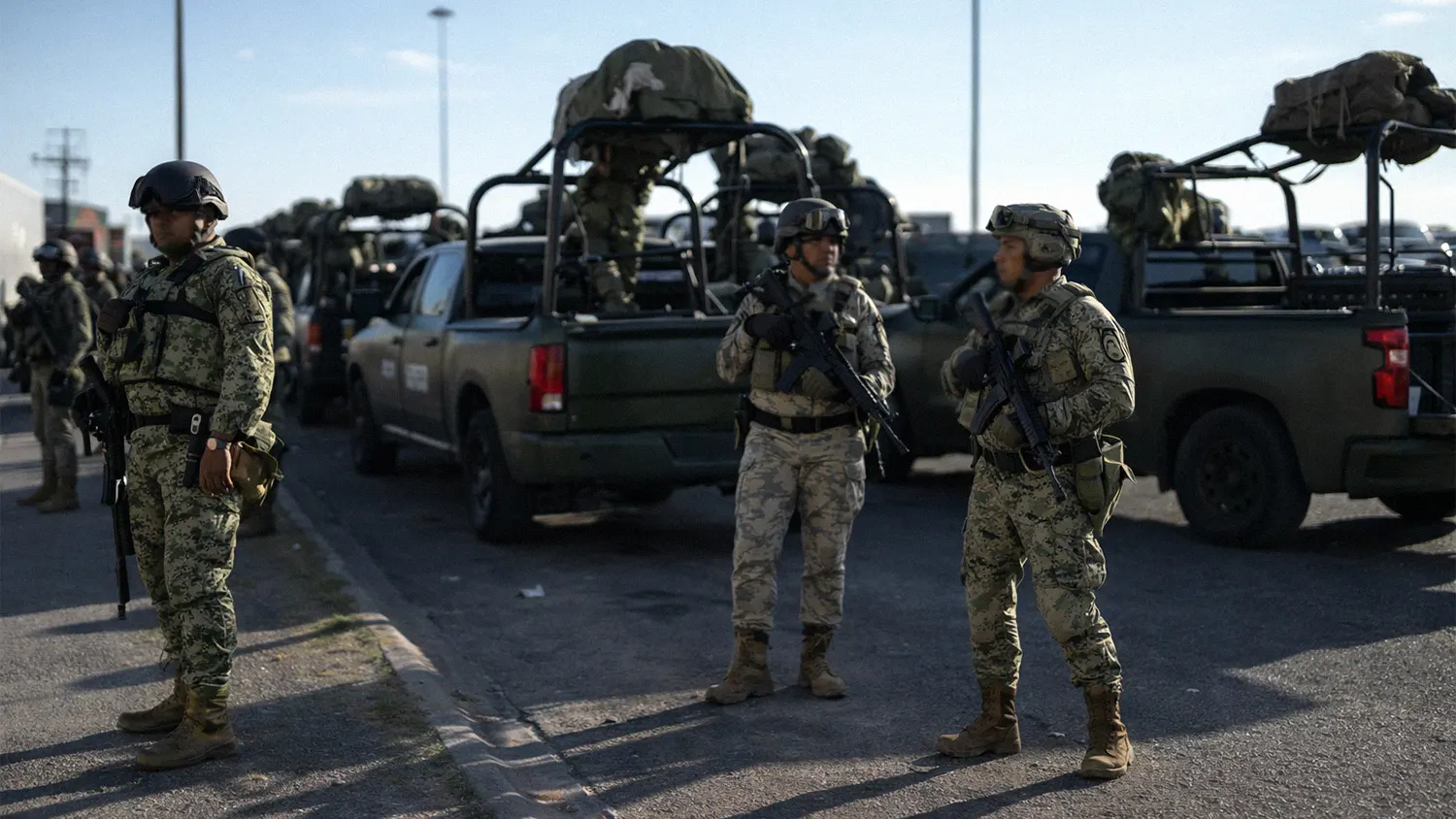
At the same time, Mexico’s security approach is undergoing a significant shift. The previous policy of “Hugs, not Bullets” has been replaced by a more aggressive strategy focused on targeted operations and intelligence gathering.
Under this model, authorities have arrested nearly 50,000 individuals for high impact crimes and seized large quantities of drugs and weapons. The strategy has also contributed to a sharp decline in homicide rates, with daily averages falling by more than 40% since late 2024.
But the real test lies in how violence is evolving. While killings have decreased overall, they are now concentrated in a handful of states, and cartels have adapted by expanding into extortion, smuggling, and territorial control.
A Conflict That Is No Longer Just About Drugs
The transformation of cartel activity is perhaps most visible in the use of new technology. Groups like CJNG are now deploying first person view drones capable of carrying explosives, marking a shift toward asymmetric warfare tactics.
At the same time, the United States has escalated its stance by designating several Mexican cartels as Foreign Terrorist Organizations, increasing the risk of direct intervention.
That creates a delicate balance. Mexico must demonstrate effective enforcement while resisting measures that could undermine its sovereignty, leading to what analysts describe as a “transactional security relationship” with Washington.
The Numbers Show Progress but the Reality Remains Complex
Recent government data suggests measurable progress. Authorities report:
- 49,000+ arrests for major crimes
- 494 tons of drugs seized
- 2,300 meth labs dismantled
Homicide rates have declined significantly, with March 2026 recorded as the least violent March in over a decade.
However, the reality on the ground tells a more complicated story. In regions like Guanajuato and Michoacán, residents continue to face daily extortion, economic pressure, and the threat of violence, even as headline crime statistics improve.
A Country Caught Between Control and Chaos
The central question now is not whether the state can weaken cartel leadership, but whether it can dismantle the broader system they have built.
Mexico is no longer facing a conventional drug war. It is confronting a deeply embedded criminal network that influences markets, communities, and governance itself.
And as the country moves forward, the challenge will be defining whether this new strategy can restore control or whether the “criminal ecosystem” will continue to shape everyday life for millions.