At 12:01 a.m. on February 24, 2026, the rules of global trade change again.
Not gradually. Not predictably. Overnight.
In the span of 72 hours, the U.S. Supreme Court struck down sweeping presidential tariffs, only for a new 15% blanket rate to rise in their place. Governments are scrambling. Markets are swinging. Businesses are recalculating prices before cargo even clears port.
Welcome to what analysts are calling the Global Tariff Reset and it comes with a ticking deadline that expires on July 24, 2026.
This is the story of how we got here and what it means for countries, companies, and consumers.
The Legal Shock: The Supreme Court Pulls the Plug
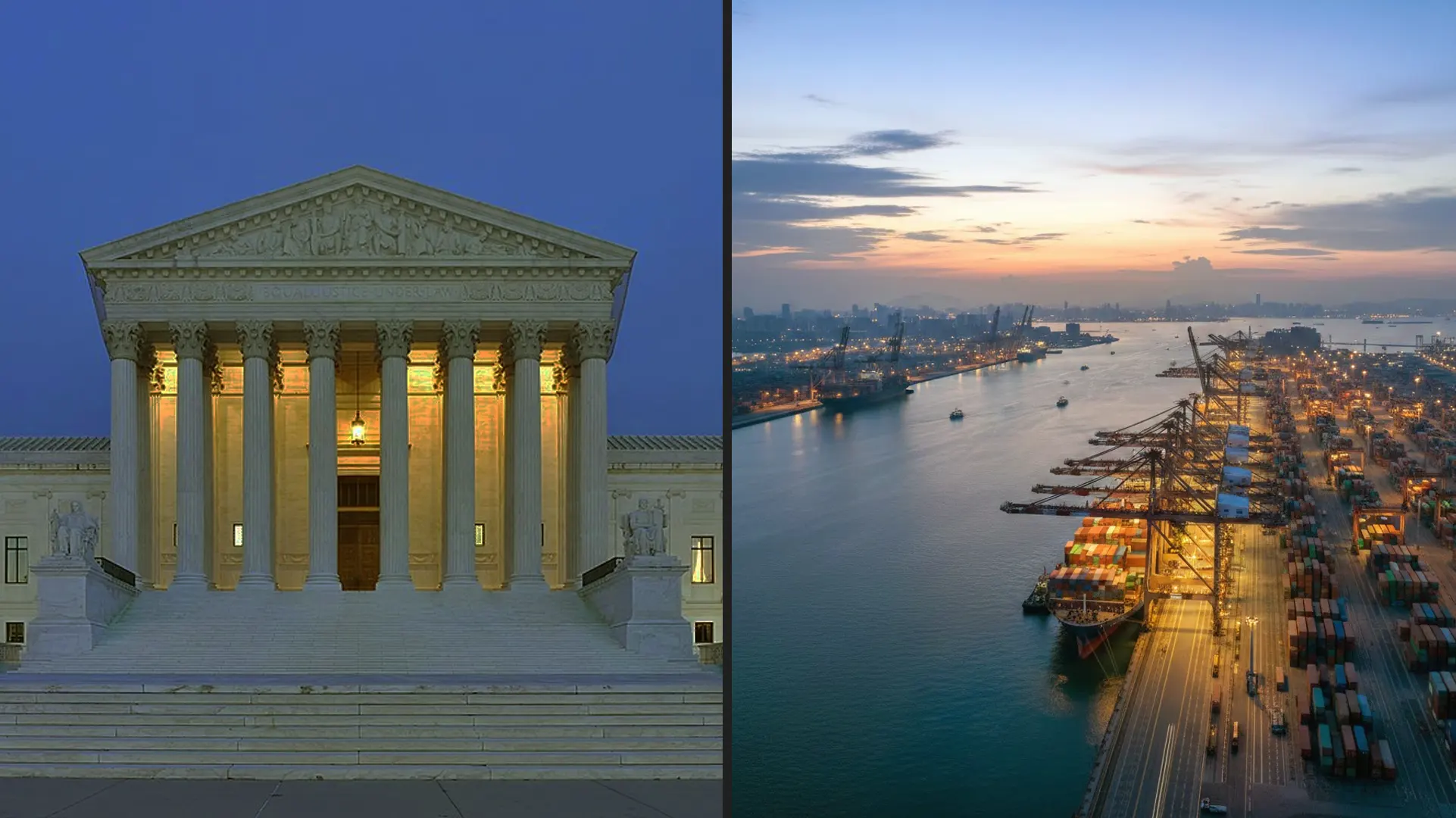
The chain reaction began with a 6–3 Supreme Court ruling that invalidated tariffs imposed under the International Emergency Economic Powers Act (IEEPA).
The Court’s message was direct: tariff authority belongs to Congress, not the president.
U.S. Customs was ordered to stop collecting the duties.
Businesses immediately began preparing refund claims for tariffs paid throughout 2025.
For a brief moment, markets cheered, lower trade barriers seemed possible. Inflation relief looked real.
Then the pivot happened.
The Political Pivot: The 15% Section 122 Move
Within hours, President Trump invoked Section 122 of the Trade Act of 1974, a rarely used emergency authority that allows temporary tariffs for 150 days.
The result: a 15% global tariff on most imports, effective February 24, 2026.
Unlike the previous system, this rate applies broadly and uniformly.
But it carries an expiration date: July 24, 2026.
This creates what traders now call the 150 Day Clock, a countdown period during which no country can confidently negotiate long term trade deals.
The Political Fallout: Winners, Losers, and the “Prabowo Trap”
Some countries are discovering that their carefully negotiated deals no longer look so smart.
The “Prabowo Trap”
Indonesia had just agreed to a 19% tariff rate in exchange for:
- $33 billion in U.S. purchases (aircraft, energy, agriculture)
- Removing domestic “local content” rules
- Opening mining to expanded foreign ownership
Now that the global rate is 15%, Indonesia appears locked into paying
4% more than everyone else.
That $33 billion commitment is effectively a sunk cost paid to avoid
a 32% threat that no longer exists.
This dilemma is known as The Prabowo Trap:
paying a premium for a discount that disappeared.
Winners vs. Losers
| Participant | Previous Status | New Status | Outcome |
|---|---|---|---|
| 🇮🇩 Indonesia | 19% negotiated deal | Others now at 15% | LOSER – Higher rate + concessions |
| 🇪🇺 European Union | 15% w/ special carve-outs | Everyone now at 15% | STALEMATE – Advantage erased |
| 🇨🇳 China | Faced 32% threat | Now 15% | RELATIVE WINNER |
| 🇺🇸 Consumers | High inflation fears | 15% still applies | MIXED |
| Global Shippers | Country specific chaos | 150 day uniform rate | TEMPORARY RELIEF |
The Refund Mess: Billions in Legal Limbo
When the Court struck down the original tariffs, it didn’t immediately order refunds.
An estimated $200 billion is now in dispute.
Who wants the money back?
- The European Union – demanding reimbursement under prior agreements
- China – labeling past tariffs “illegal”
- U.S. importers – seeking compensation for 2025 payments
Washington has signaled resistance.
This unresolved battle is being called the Refund Mess, and it may outlast the 150 day window itself.
Market Reaction: From Euphoria to Whiplash
Markets celebrated the legal ruling on Friday. By Monday, enthusiasm had evaporated.
- U.S. stock futures turned sharply lower.
- European markets slid amid ratification freezes.
- China’s Hang Seng index rallied, seeing the 15% rate as relief from a 32% threat.
- The dollar dipped roughly 0.4%.
- Gold surged as a safe haven.
- The VIX “fear gauge” spiked to an eight week high.
Investors aren’t reacting to the number 15%.
They’re reacting to instability.
What It Means for Consumers
Here’s a common misconception: foreign governments pay tariffs.
In reality, importers pay them and pass costs along.
Consider this example:
A $30,000 imported vehicle now carries a 15% duty.
That’s $4,500 added before it even reaches a dealership.
Even if companies absorb some cost, price increases ripple through supply chains. Electronics, apparel, and machinery could follow.
The 15% rate may be lower than the 32% threat but it’s still significantly higher than pre 2025 norms.
Practical Tip: Plan Around the Two Danger Dates
If you’re a business owner, investor, or procurement manager, circle these dates:
- February 24, 2026 – 15% tariff begins
- July 24, 2026 – Authority expires unless extended
Major inventory commitments, long term contracts, and cross-border pricing strategies should factor in the possibility of another sudden shift this summer.
Flexibility is now a competitive advantage.
The Bigger Question: Can Trade Survive This Level of Volatility ?
This episode isn’t just about tariffs.
It’s about institutional authority, treaty reliability, and economic predictability.
The Supreme Court reinforced congressional power yet executive authority found a workaround almost instantly.
For allies who negotiated in good faith, the scoreboard was reset
mid game. For markets, the message is clear: policy stability is no longer guaranteed.
The Global Tariff Reset has launched a 150 Day Clock, created a sprawling Refund Mess, and exposed the diplomatic irony of The Prabowo Trap.
Economic growth depends on trust, rules, and predictability.
If those rules can change in 72 hours, what happens to the foundation that global trade stands on ?