Four days after the mass shooting that shattered Tumbler Ridge, British Columbia, the story is no longer defined only by chaos and loss. As the names and faces of the victims are formally released, the national conversation is shifting toward accountability particularly how firearms ended up inside a home repeatedly flagged for mental health crises.
Victims Confirmed
The BC RCMP now confirm nine people are dead, including the
18 year old shooter.
At Tumbler Ridge Secondary School, six people were killed:
one teacher, 39 year old Shannda Aviugana Durand, and five students aged 12 and 13.
Earlier in the day, two victims were killed at a residence on Fellers Avenue: 39 year old Jennifer Jacobs, the shooter’s mother, and an 11 year old boy identified as the shooter’s stepbrother.
Police have corrected earlier reports that suggested a tenth fatality. One female victim previously believed to have died remains hospitalized in critical condition.
Two airlifted victims are still fighting for their lives.
The shooter has been identified as Jesse Van Rootselaar, also known as Jesse Strang, a former student of the school. Investigators say she acted alone and died from a self inflicted gunshot wound.
National Mourning, Political Unity
Prime Minister Mark Carney is expected to arrive in Tumbler Ridge within 24 hours and has invited opposition leaders to join him in a show of unity. Flags across Canada are flying at half mast, including on Parliament Hill.
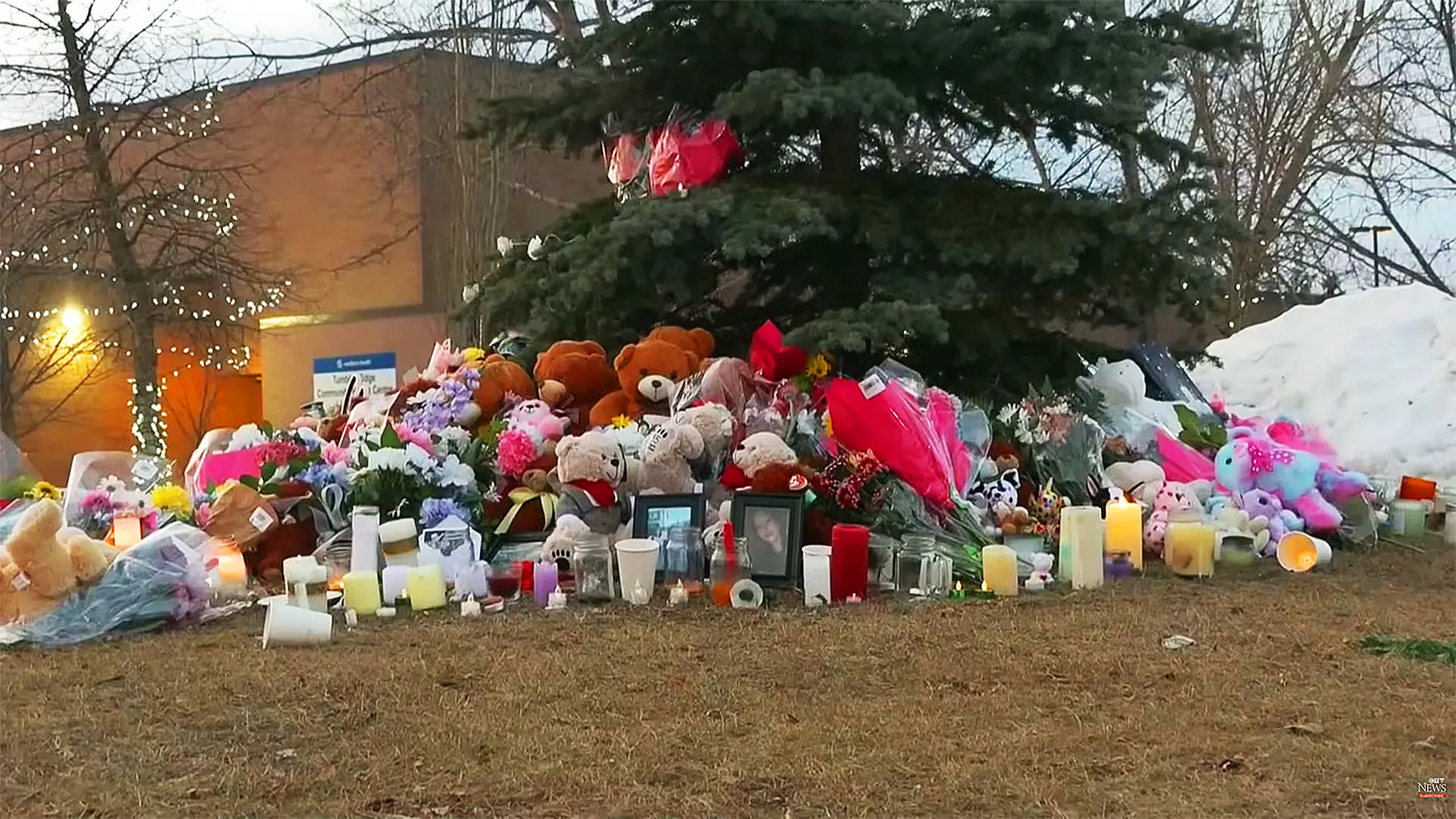
The Tumbler Ridge Community Centre has become the town’s emotional anchor hosting grief counseling, crisis support teams, and now a candlelight vigil drawing residents from across the Peace River region. Sister vigils are taking place in nearby Chetwynd and Dawson Creek.
The Canadian Red Cross has launched a dedicated
“Tumbler Ridge Tragedy Appeal” to support affected families
with immediate financial and mental health assistance.
But alongside mourning, scrutiny is intensifying.
The Firearms Question: What Went Wrong?
At the center of the emerging debate is a timeline that is now drawing national attention.
Two years ago, RCMP officers seized firearms from the Fellers Avenue residence following a mental health crisis. According to Deputy Commissioner Dwayne McDonald, those firearms were later returned after the lawful owner who was not the shooter petitioned for their release.
Under current Canadian law, individuals may apply to have seized property returned if they are not themselves subject to a prohibition order.
Now investigators are working to determine whether those returned firearms described as a long gun and a modified handgun were the same weapons used in the attack.
Gun control advocates argue the case exposes a gap in Canada’s “red flag” framework: while authorities can temporarily remove firearms in crisis situations, there is no automatic, long term prohibition preventing guns from being present in a household where another resident has a documented history of detention under the Mental Health Act.
Prime Minister Carney has called for an urgent review of the Criminal Code’s “return of property” provisions, signaling potential legislative changes that could broaden restrictions when any member of a household is deemed high risk.
Investigators Piecing Together Motive
Police have confirmed there is no manifesto.
Instead, they are reconstructing motive through digital forensics, medical history, and social media activity.
Three major threads are emerging:
1. Documented Mental Health Struggles
RCMP confirm a “well documented history” of police attendance at the family home. The shooter had previously been apprehended under the Mental Health Act for psychiatric assessment.
Social media posts from late 2023 reference a “complete break from reality” after psychedelic drug use. Reports indicate ongoing treatment for ADHD and OCD, including prescribed antidepressants and antipsychotics.
Authorities caution that mental illness alone does not explain acts of mass violence. However, investigators are examining whether a deteriorating psychological state contributed to the escalation.
2. Online Radicalization and Copycat Patterns
Digital forensic teams are analyzing social media accounts that reposted content related to past school shootings, including the 2023 Nashville attack.
Analysts are evaluating whether the shooter demonstrated signs of “copycat” behavior, a phenomenon in which perpetrators model aspects of previous mass attacks, including symbolism, aesthetics, or targeting patterns.
Police stress that no ideological manifesto has been found and that speculation particularly attempts to link the attack to gender identity is unfounded. The RCMP has directly warned against misinformation circulating online.
3. Family Instability
Court documents from a 2015 custody case describe a “nomadic” upbringing involving multiple moves between Newfoundland and British Columbia.
The shooter’s father released a public statement expressing sorrow and noting years of estrangement. The first victim in the attack was the shooter’s mother.
Investigators believe the violence began inside the family home before moving to the school, where police say there is no evidence specific staff or students were individually targeted.
A Community at the Center of a National Reckoning
Tumbler Ridge is a town of roughly 2,400 people. The scale of the loss is intimate nearly every resident has some connection to the victims.
In small communities, tragedy reverberates differently.
Teachers are neighbors. Parents coach local sports.
Students grow up together from kindergarten to graduation.
The immediate emergency phase is over. What follows will be measured not in days, but in years: trauma counseling, legal reviews, policy debates, and a town redefining itself after violence few imagined possible.
As the vigil candles burn outside the community centre, two parallel realities now define Tumbler Ridge:
Grief for children and a teacher who will never return.
And a growing national debate about whether warning signs were missed or whether the legal system allowed a preventable risk to persist.
The investigation remains active. But the questions have already begun shaping what comes next not only for this small northern town, but for firearm oversight and crisis intervention policies across Canada.