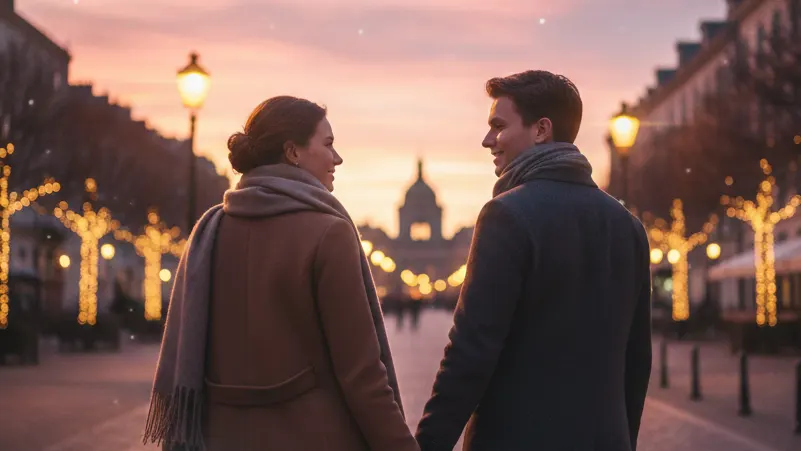
Every February, we tell ourselves that love shouldn’t need a calendar reminder.
And yet, when Valentine’s Day arrives, we still look for small ways to make someone feel seen.
In 2026, that search feels different.
Not colder. Not mechanical. Just… curated.
This is the year love got an assistant.
The Rise of “Agentic Dating”
Somewhere between dinner reservations and last minute flower runs, a new ritual has quietly emerged: AI as a romantic concierge.
Couples are using custom built lifestyle bots to plan deeply personal surprises not generic ones.
Instead of booking the most popular restaurant in town, people are asking AI to design scavenger hunts through the places that matter most. The café where they met. The bookstore where they hid from the rain. The street corner where they had their first awkward goodbye.
Technology, oddly, is being used to remember.
There’s also the “memory menu” trend. Instead of fighting for a table at a crowded bistro, couples are generating five course tasting menus based on shared vacations, a pasta from Florence, a dessert from Tokyo, the exact cocktail they once ordered in Barcelona.
The food isn’t the point.
The remembering is.
In a way, AI isn’t replacing romance. It’s archiving it and playing it back with care.
Romance in Two Moods
Walk into a home this Valentine’s weekend and you’ll likely find one of two atmospheres.
The first is dramatic and candlelit oxblood reds, dark plums, shadows dancing against the wall. Inspired by recent gothic cinema and moody literary revivals, this aesthetic feels pulled from the pages of an old novel. It’s less about balloons and more about intensity.
The second mood couldn’t be more different.
Soft pastels. Delicate bows. Floral arrangements that look like they belong in an English estate garden.
High tea brunches with porcelain cups and handwritten notes.
One says, “Let’s run away to the moors.”
The other says, “Let’s linger in the garden.”
Both are nostalgic. Both are theatrical. Both are about slowing down.
In a year defined by acceleration, romance is borrowing from the past.
The Rise of the Instant, Thoughtful Gift
There was a time when a forgotten Valentine’s gift meant a panicked dash to the nearest florist.
Now, the most meaningful gifts are often digital but no less personal.
Digital picture frames are one of the quiet hits of 2026.
Not because they’re flashy, but because they allow someone to wake up to a living album of shared memories.
A year in review, looping softly in the background.
There’s something comforting about that. Like love, on repeat.
Others are gifting shared experiences instead of objects
a virtual mixology class, a baking workshop, something to try together on a quiet Saturday night. The point isn’t mastery. It’s presence.
And then there’s the shift toward living gifts.
Instead of cut roses that fade by next week, some are choosing to plant trees in a partner’s name, a small grove somewhere that will grow long after this February has passed.
It’s romantic in a quieter way. Less spectacle. More longevity.
What This Year Really Says About Love
For all the talk of AI, digital assets, and curated aesthetics, Valentine’s Day 2026 doesn’t feel less human.
If anything, it feels more intentional.
The tools have changed. The gestures are evolving. But the impulse remains the same as it always was:
to say, “I remember. I care. I chose this for you.”
Maybe that’s the quiet truth beneath the trend forecasts.
In a world that moves faster each year, love is still about attention.
And whether that attention comes from a handwritten note, a candlelit room, or a carefully programmed surprise route through the city what matters most is that someone took the time to make it feel personal.
Technology may be planning the evening.
But the feeling ?
That part is still entirely ours.