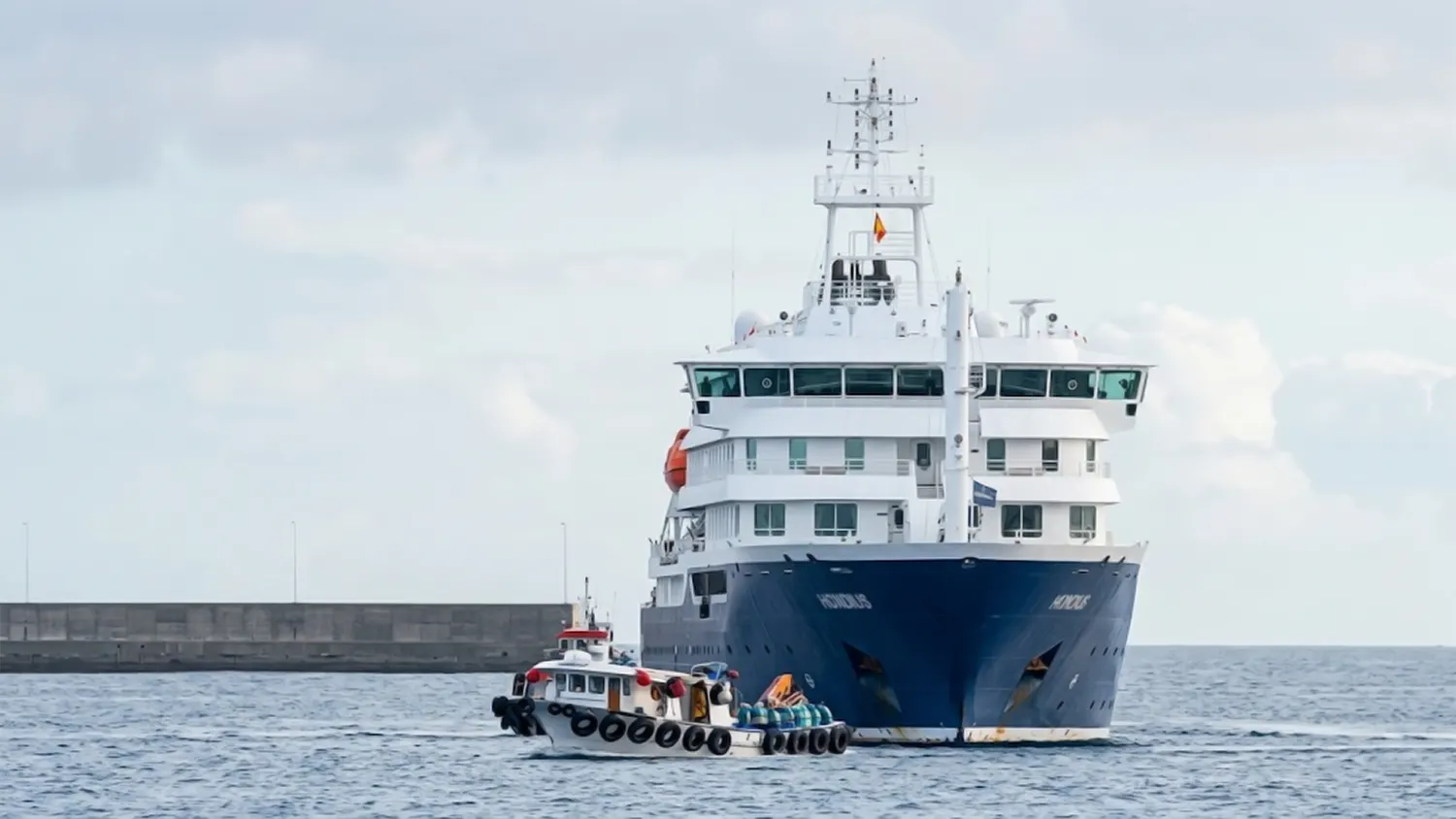
Seventeen American passengers from the MV Hondius cruise ship touched down in Omaha, Nebraska, early Monday morning. By the time the plane landed, at least one of them had already tested positive for the Andes virus. Another was showing symptoms. The remaining fifteen were healthy but no one was going home.
They were taken directly to the University of Nebraska Medical Center, the same facility that handled Diamond Princess passengers during the 2020 pandemic, and placed under a 42-day quarantine in one of the most specialized isolation units in the country. What happens inside that building over the next six weeks will be watched closely not just as a medical operation, but as the first major test of how the United States handles a serious international outbreak entirely outside the World Health Organization.
How 17 Americans Ended Up in an Omaha Quarantine Unit
The MV Hondius departed Ushuaia, Argentina on April 1, 2026, on what was billed as an expedition cruise through some of the most remote landscapes on Earth. What investigators now believe is that at least one passenger had been exposed to infected rodents during trekking activities in Patagonia before boarding and carried the Andes strain of hantavirus onto the ship without knowing it.
By the time the outbreak was identified, passengers had already dispersed across more than a dozen countries. The ship eventually made its way to the Canary Islands, where it docked on May 10. Spanish authorities coordinated with the U.S. State Department to evacuate the American passengers, who were flown home on a State Department-chartered medical flight not through a WHO coordinated evacuation, but through a direct bilateral agreement between Washington and Madrid.
That distinction matters more than it might seem.
What the 42 Days in Nebraska Actually Look Like
The seventeen Americans are not sitting in a hotel room waiting. They are inside the National Quarantine Unit at UNMC, the only facility of its kind in the United States undergoing daily blood tests and lung scans designed to catch the earliest possible sign of the virus taking hold.
The breakdown of the group tells you everything about how seriously medical teams are treating this:
One passenger tested mildly PCR positive before or during the flight. They are confirmed infected, currently being monitored and treated. A second passenger is symptomatic — fever, mild respiratory issues but is currently testing negative. Because the Andes virus is known to trigger a physical response before viral load becomes detectable, this individual is being held in a separate high-level biocontainment unit. The remaining fifteen are testing negative but remain under strict quarantine for the full 42-day window.
That 42-day timeline is not arbitrary. While most viruses reveal themselves within days, documented hantavirus cases have taken up to 56 days to manifest symptoms. A negative PCR test today does not mean a passenger is in the clear. It means the virus, if present, has not yet replicated to detectable levels. The symptomatic but negative passenger is the one doctors are watching most closely the body can begin reacting to the virus before it becomes detectable by testing.
The math is unforgiving: with a fatality rate of up to 38–40% in clinical settings, and a virus capable of causing rapid lung and heart failure, medical teams are not waiting for certainty before acting.
Why the Andes Virus Is Different From Every Other Hantavirus
Most people have never heard of hantavirus. Most strains are genuinely not a public concern, they infect humans only through direct contact with rodents or their droppings, and they go no further. The virus reaches a dead end in the human body.
The Andes strain does not behave that way. It is the only hantavirus known to spread from person to person through close and prolonged contact, shared spaces, respiratory droplets, or bodily fluids. That single characteristic is what transformed a cruise ship outbreak into a twelve-country international response.
The global picture as of May 11, 2026 reflects exactly that reach:
The Netherlands lost two passengers, the first confirmed deaths of the outbreak.
Germany lost one. A British national died after the ship made a stop at Saint Helena.
In total, three people have died and at least eight cases have been confirmed or are under active investigation. Patients are currently being treated in specialized isolation units in South Africa, Switzerland, France, the Netherlands, and now the United States. France confirmed a new positive case on Monday, a French woman evacuated to Paris who tested positive after falling ill Sunday night.
Contact tracing efforts are focused heavily on passengers who disembarked early particularly those who left the ship at Saint Helena in late April, weeks before the outbreak was formally identified.
The WHO Is Coordinating the Global Response Without the United States
Here is where the MV Hondius outbreak becomes something larger than a medical story.
On January 22, 2026, the United States formally completed its withdrawal from the World Health Organization, a move driven by the Trump administration and championed by HHS Secretary Robert F. Kennedy Jr. The decision reshaped how America responds to exactly this kind of international health event.
In this outbreak, the chain of command looks nothing like it did during COVID-19 or Ebola. HHS and the State Department are leading the U.S. response through direct bilateral agreements with individual countries. The CDC, historically the primary U.S. liaison to the WHO, has been repositioned as a domestic implementation arm, its experts are on the ground in Tenerife, but they are there to serve American interests specifically, not to contribute data to the WHO’s global coordination pool.
The practical consequence that critics point to most sharply: the United States no longer has automatic access to the WHO’s International Health Regulations real-time database. That information gap, they argue, is part of why it took longer to track down the 29 passengers who disembarked during earlier port stops some of whom had already returned home to the U.S. before the alarm was raised.
Secretary Kennedy Jr. has pushed back firmly. His position is that the Omaha operation proves the U.S. can manage high-consequence pathogens more effectively without Geneva’s involvement that moving faster through bilateral channels, and housing patients in a world-class domestic facility, is exactly what an independent biosecurity model looks like in practice.
Global health experts, including voices from Johns Hopkins, counter that being out of the room has a cost that won’t be visible immediately. If the Andes virus spreads further across Europe or South America, the United States will depend entirely on the goodwill of other nations to share genetic sequencing data, transmission findings, and case updates in real time. In an outbreak where every day matters, goodwill is a fragile foundation.
The Families Are Waiting. So Is Everyone Else.
For the fifteen Americans who tested negative and are showing no symptoms, the next six weeks will be an exercise in suspended uncertainty. They are not sick. They may never get sick. But with a virus that can stay dormant for up to eight weeks, feeling healthy right now means very little.
The 42-day quarantine runs from their last potential exposure on the ship. If they remain clear through late June, doctors will be able to say with near certainty that they are out of danger. Until then, daily monitoring continues.
No confirmed secondary infections have been reported anywhere in the world meaning no confirmed cases of the virus spreading from returning passengers to people in their home communities. That is the most reassuring data point available right now, and it is consistent with what epidemiologists know about the Andes strain: it can spread between people, but it does not do so efficiently enough to sustain a large outbreak on its own.
What the coming weeks will reveal is whether that pattern holds as more passengers return home, whether the contact tracing gaps caused by the WHO data-sharing friction allowed any exposure chains to go undetected, and whether the University of Nebraska’s National Quarantine Unit now carrying the weight of a new American biosecurity philosophy delivers the outcome the administration is counting on.
Seventeen people landed in Omaha on a Monday morning. The world is watching what happens next.