Southeastern Brazil Flooding: A Region Under Water
Rain is part of life in Brazil. But what’s happening now is something else entirely.
The Southeastern Brazil flooding crisis has escalated sharply over the past 24 hours, leaving at least 30 people dead and dozens still missing as of February 25, 2026. Entire neighborhoods have been swept away.
Rivers have burst their banks. And emergency crews are racing against time while more rain looms in the forecast.
This isn’t just a story about bad weather. It’s about how extreme rainfall, steep terrain, and fragile infrastructure collided creating a fast moving disaster that is still unfolding. Here’s what we know so far.
Juiz de Fora: Ground Zero of the Disaster
The hardest hit city is Juiz de Fora, in the state of Minas Gerais.
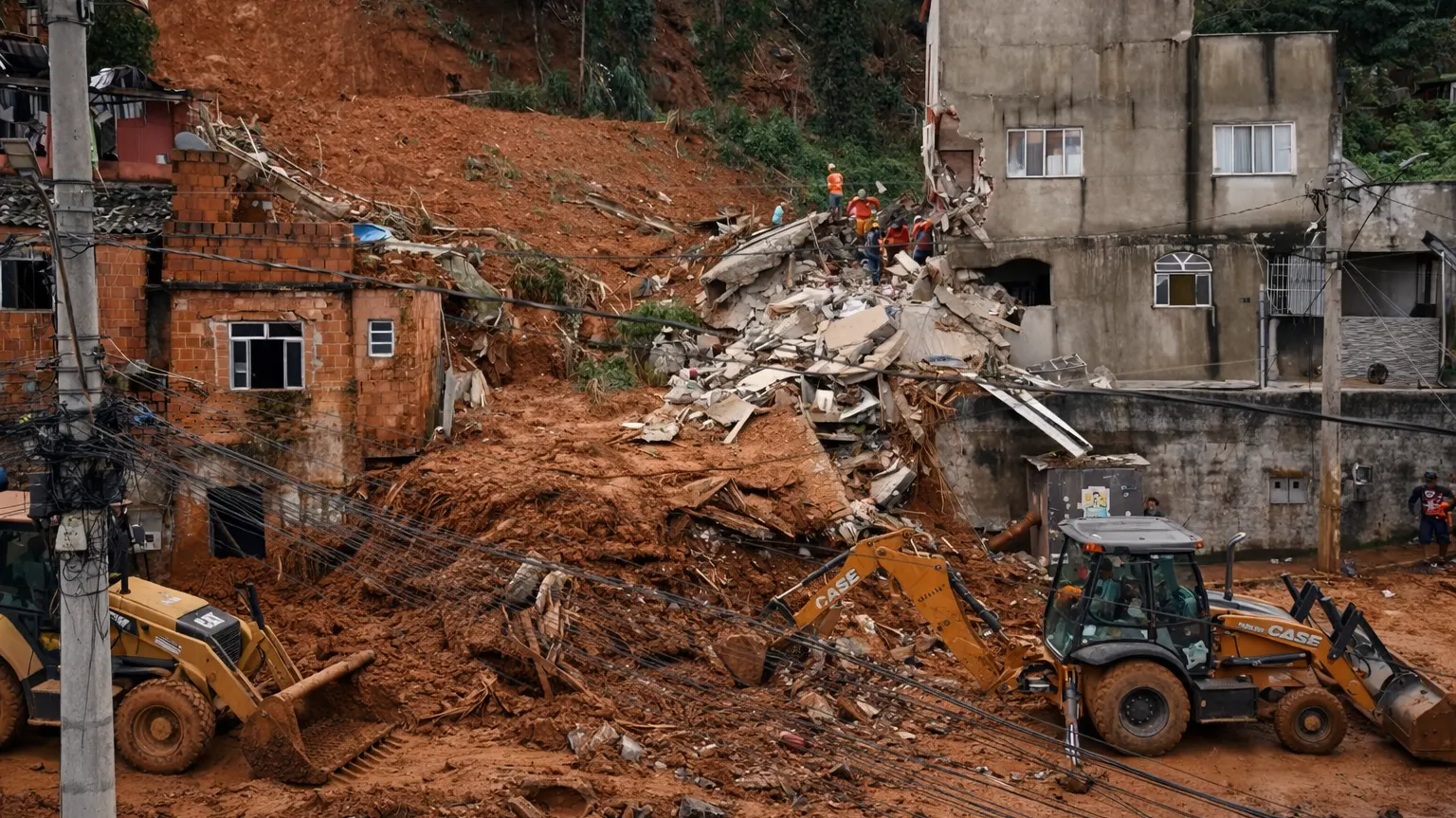
In the middle of the night, a massive landslide tore through the Parque Jardim Burnier neighborhood. Twelve homes were completely obliterated in a single sweep of mud and debris. Many families were asleep when it happened.
So far, most confirmed deaths have occurred here. Between 18 and 22 fatalities are reported in the city alone, with dozens more still unaccounted for. Firefighters are focusing heavily on this area, where several missing residents including children are believed to be buried under meters of mud.
Then there’s the rain. A lot of rain.
Juiz de Fora recorded 584 millimeters (23 inches) of rainfall this month more than double its usual February average. February 2026 is officially the wettest month in the city’s recorded history.
At one point, more than 180mm fell in just four hours. Imagine nearly an entire season’s worth of rain dumped in a single afternoon. Streets turned into rivers. Drainage systems failed. The nearby Paraibuna River overflowed, surging through neighborhoods like a brown tidal wave.
Southeastern Brazil Flooding Spreads Beyond One City
While Juiz de Fora is the epicenter, it’s not alone.
About 110 kilometers away, the city of Ubá has reported at least seven deaths. Flash floods and infrastructure collapses have left residents stranded and rescue crews stretched thin.
Across the wider region, approximately 3,000 people have been forced to evacuate their homes. In Juiz de Fora alone, more than 440 residents are now sheltering in public schools converted into emergency housing.
Meanwhile, Brazil’s National Institute of Meteorology (Inmet) has placed more than 600 cities across 14 states under a “Red Alert” for extreme rainfall and landslide risk.
The soil in many areas is now fully saturated meaning it cannot absorb another drop of water. Any additional rainfall could trigger fresh landslides with little warning.
Why This Storm Was So Destructive
Not all storms are created equal. This one had a dangerous mix of ingredients.
Meteorologists point to three main factors:
- A cold front moving up the coast from São Paulo
- A powerful supercell thunderstorm
- A low pressure atmospheric trough pulling moisture inland
A “supercell” is an unusually intense thunderstorm that rotates and can persist for hours. In this case, the storm stalled over the mountainous Zona da Mata region.
Think of it like a faucet left running over a funnel. The steep hillsides channeled the water downhill at high speed. Instead of soaking into the ground gradually, the rain rushed into rivers and streets all at once.
Rain fell faster than the city’s drainage systems could handle, creating what experts call a “stationary deluge.”
In just 24 hours, Juiz de Fora recorded 191mm of rainfall. More than 100mm fell in three hours on one morning alone. For context, many cities around the world don’t see that much rain in an entire month.
Rescue Operations: Racing Against Time
More than 140 specialized firefighters and search and rescue personnel are working around the clock. They are equipped with sniffer dogs, heavy machinery, and thermal imaging tools.
But conditions are dangerous.
The ground remains unstable. Rescuers must dig carefully to avoid triggering secondary landslides that could bury both survivors and first responders. Every movement requires precision.
Still, there have been moments of hope.
Over 200 people have been rescued alive from floodwaters and debris. Among them was a 10 year old boy pulled from the rubble after a two hour extraction effort, a rare bright spot in an otherwise grim scene.
The federal government, led by President Luiz Inácio Lula da Silva, has mobilized national civil defense forces. A formal “State of Calamity” declaration allows emergency funds to be released immediately and speeds up humanitarian aid.
Power and water services remain cut in several areas to prevent electrical accidents and because pumping stations near the river were damaged.
What Happens Next ?
The most worrying part? The rain hasn’t stopped.
Inmet has extended Red Alerts for 14 states, including all of Minas Gerais and Rio de Janeiro. Additional rainfall is forecast over the next 24 hours.
With hillsides already weakened and soil at maximum saturation, even moderate rainfall could trigger new landslides.
Disasters like this raise broader questions. Are extreme weather events becoming more frequent? Is urban infrastructure prepared for record breaking rainfall ? While those discussions will come later, right now the focus is simpler: saving lives and restoring basic services.
The Bottom Line
The Southeastern Brazil flooding crisis is still unfolding. At least 30 people have died. Dozens remain missing. Thousands have been displaced.
Record rainfall, mountainous terrain, and overwhelmed infrastructure combined to create a fast moving catastrophe.
Rescue crews continue to search through mud and debris, even as more rain threatens the region. For the families waiting for news, every hour matters.
And for southeastern Brazil, recovery will take far longer than the storm itself.