
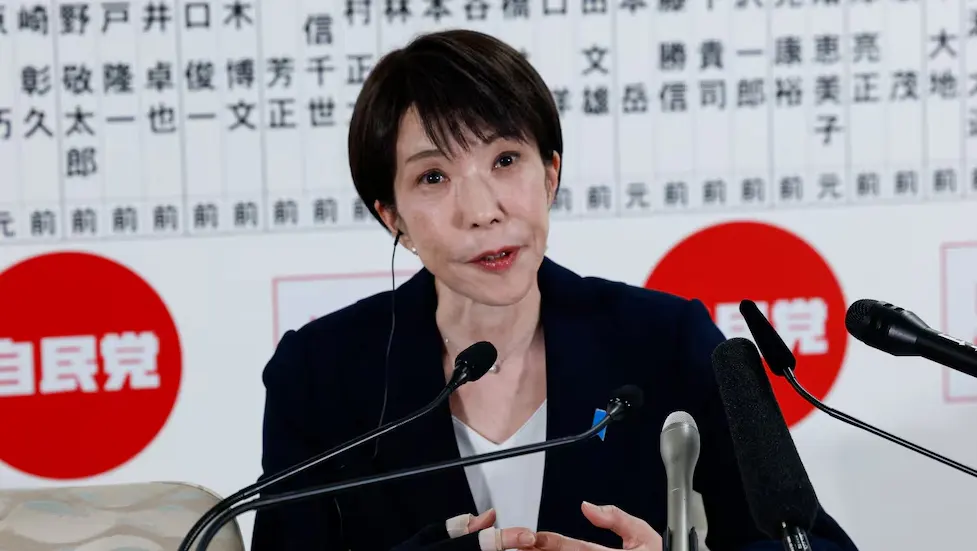
Japan’s snap election has delivered one of the most consequential political outcomes in the country’s postwar history, granting Prime Minister Sanae Takaichi a commanding parliamentary mandate that extends far beyond routine governance. What began as a high risk dissolution gamble has resulted in a structural shift in Japan’s political balance, fiscal direction, and security posture with immediate shocks to financial markets and visible consequences for East Asian geopolitics.
The Liberal Democratic Party secured 316 seats outright, an unprecedented single party performance in the modern era. Together with the Japan Innovation Party, the ruling bloc now controls 352 of 465 seats in the Lower House comfortably surpassing the two thirds supermajority threshold that transforms legislative arithmetic into constitutional leverage.
The result consolidates Takaichi’s authority domestically while signaling the potential end of Japan’s long phase of cautious, consensus bound leadership.
From Electoral Win to Institutional Power
The significance of the supermajority is institutional rather than symbolic.
A two thirds Lower House bloc provides:
- Override power over Upper House resistance, reducing legislative deadlock
- A procedural pathway to initiate constitutional amendment, including revisions related to Japan’s security framework
While any constitutional revision still requires a national referendum, the electoral outcome removes the principal parliamentary barrier that constrained previous administrations.
In effect, Japan now has its most empowered executive leadership in decades, operating with both popular mandate and structural legislative control.
Markets Price in a New Policy Era
Financial markets reacted immediately, interpreting the result as the beginning of an extended phase of fiscal expansion and political stability.
The Nikkei 225 surged more than 4%, reaching record territory above the 56,000 level. Currency markets simultaneously placed downward pressure on the yen amid expectations of continued fiscal stimulus and a growth-oriented policy stance.
Investors are positioning around what traders have dubbed the “Takaichi Trade”:
- A ¥21 trillion stimulus program
- Temporary suspension of food related consumption tax
- Reduced political turnover risk
- Expanded defense and industrial investment
The rally reflects confidence in policy continuity through the remainder of the decade, a contrast to Japan’s prior pattern of short lived administrations.
Security Policy Moves to the Forefront
The election result carries implications that extend well beyond economic policy.
Takaichi has consistently framed regional security conditions particularly regarding Taiwan and East China Sea dynamics as directly linked to Japan’s national survival. Her earlier parliamentary references to a potential “Taiwan contingency” introduced language rarely used so explicitly by Japanese leaders.
With a supermajority, discussions surrounding the formal status and role of Japan’s Self Defense Forces are likely to gain institutional traction. Supporters view this as overdue normalization. Critics inside and outside Japan see it as a departure from the postwar pacifist equilibrium that defined the country’s international identity.
Beijing’s Unease and Regional Friction
China’s reaction has been sharp, reflecting concern that Tokyo’s political shift could translate into more explicit security alignment with the United States and expanded operational cooperation in regional contingencies.
Tensions were already elevated prior to the election following rhetorical and diplomatic clashes tied to Taiwan and historical memory issues. The electoral outcome does not create these strains but consolidates the political authority behind policies that Beijing views as strategically adverse.
The risk now is not immediate confrontation but hardening blocs across Northeast Asia, where signaling, deterrence posture, and alliance coordination may intensify.
A Generational Undercurrent
One of the less anticipated drivers of the outcome was generational. Takaichi’s leadership style projecting decisiveness and national assertiveness resonated with younger voters who have historically shown limited engagement with LDP politics. Analysts note that this cross generational support helped convert personal approval into structural power, broadening the party’s electoral base beyond its traditional demographic strongholds.
Domestic Mandate, External Consequences
The election also demonstrated a rally dynamic within Japan, where external pressure narratives intersected with domestic political identity. Takaichi’s campaign successfully translated a security focused leadership image into broad electoral backing, leaving the opposition with a diminished parliamentary counterweight.
That outcome raises two parallel dynamics: governance efficiency on one hand, and sharper political polarization on the other.
A System in Transition
Japan is not abandoning its institutional norms, but it is entering a phase where long standing constraints are being reconsidered under voter endorsement.
Three shifts now define the trajectory ahead:
- Executive durability replacing leadership churn
- Active fiscal policy prioritized over restraint
- Security normalization debate moving from fringe to procedural reality
Whether this moment becomes a lasting reorientation or a peak in political momentum will depend on economic delivery, alliance management, and the handling of regional tensions.
What is clear is that the snap election did more than renew a mandate, it altered the operating parameters of Japanese politics, placing the country at a pivotal junction between its postwar past and a more assertive strategic future.