
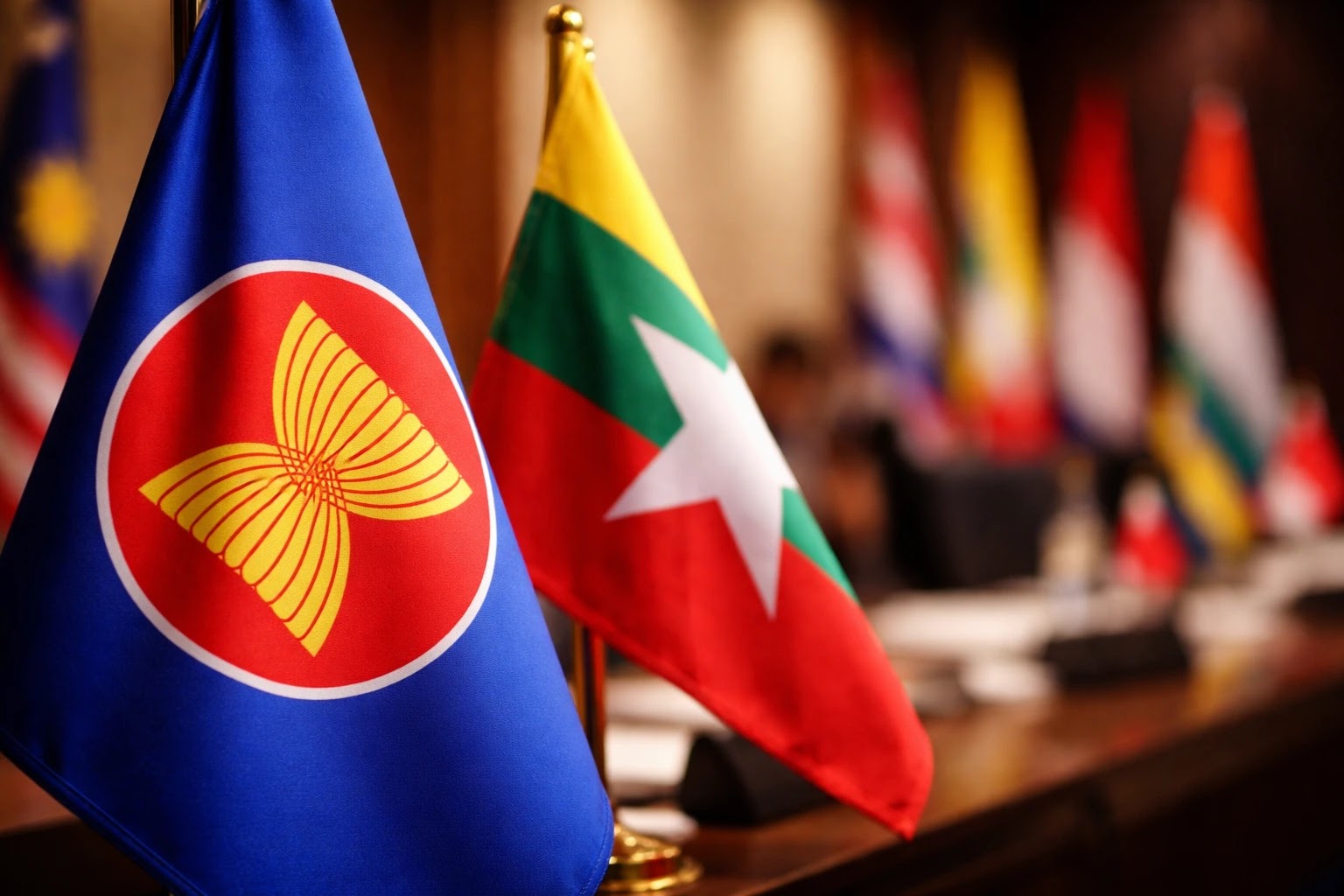
Myanmar’s January 2026 election was intended to rebrand military rule as constitutional governance. Instead, it has triggered an escalating diplomatic confrontation that now stretches from Southeast Asia to the UN Security Council.
At stake is more than one country’s political process. The dispute centers on a foundational issue in international relations: can an election conducted without meaningful competition convert de facto military control into recognized civilian authority ?
ASEAN’s current answer is cautious but consequential, there is no consensus to recognize the result.
The Core Dispute: Numbers That Tell the Story
The junta’s Union Election Commission announced overwhelming victories for the military aligned Union Solidarity and Development Party (USDP):
232 of 263 elected seats in the Lower House and 109 of 157 in the Upper House.
Those figures, combined with the constitutionally guaranteed 25% of seats reserved for the military, ensure decisive institutional control.
But the numbers reveal another paradox. Voting occurred in only about 263 of 330 townships.
In roughly 40% of the country mainly conflict zones, no polling took place at all.
That reality clashes sharply with claims by China and Russia that voter participation was “active.”
Compounding the legitimacy question is the continued detention of Aung San Suu Kyi and other senior democratic leaders. Japan’s foreign minister publicly expressed regret that the vote proceeded under those conditions. For ASEAN’s more democracy focused states, her imprisonment has become a political red line.
ASEAN’s Official Position: Legitimacy Deferred
As 2026 Chair, the Philippines has crystallized the bloc’s approach: Myanmar remains a member, but the election does not automatically restore political standing. The Five Point Consensus peace plan calling for reduced violence, dialogue, and humanitarian access remains the benchmark.
This internal friction isn’t just a policy debate; it’s a contest over ASEAN’s identity.
Recognizing the vote would prioritize stability.
Refusing to do so prioritizes institutional credibility.
A Bloc Divided by Geography and Principles
The divide inside ASEAN reflects differing threat perceptions.
Indonesia, Singapore, and the Philippines view the election through a normative lens.
For them, political legitimacy depends on inclusion, de escalation of violence, and the participation of all stakeholders. Endorsing a process where the main opposition is sidelined risks normalizing power consolidation by force across the region.
Thailand, Laos, and Cambodia approach the crisis from the ground level of immediate spillover. Thailand’s long border with Myanmar exposes it to refugee flows, transnational crime networks, and energy vulnerabilities. Bangkok’s “calibrated engagement” strategy argues that dialogue with whoever controls the state machinery is necessary to keep humanitarian channels open and prevent state collapse next door.
The result is a two speed ASEAN: one side guarding standards, the other managing consequences.
Why the Philippines’ Chairmanship Matters
Myanmar was next in line to chair ASEAN under normal rotation. That sequence was broken
a quiet but powerful diplomatic signal. The Philippines’ leadership, reinforced by coordination with past and future chairs, creates a multi year buffer preventing the junta from regaining status simply by waiting out the calendar.
For the generals, the strategy was clear: hold elections, form a cabinet in April, and present ASEAN with a civilian government. Manila has signaled that such a transformation on paper does not automatically meet political benchmarks.
China vs. the UN: A Wider Geopolitical Split
The global reaction mirrors ASEAN’s fracture but in sharper relief.
China frames the election as a stabilizing step that allows economic engagement to resume without overtly backing military rule. Infrastructure connectivity and border security dominate Beijing’s calculus.
UN human rights officials, by contrast, have urged states to reject the result outright, arguing that elections without the opposition and under coercive conditions cannot confer legitimacy.
Yet Security Council paralysis means condemnation carries moral weight but little enforcement power.
Russia’s even more supportive stance expanding military and technical ties, adds another layer to the geopolitical alignment forming around Naypyidaw.
The April Flashpoint
The junta’s roadmap now moves toward March and April, when a new parliament convenes and a civilian cabinet is formed. Authorities have already described the future system as a “highly coordinated administration,” widely interpreted as continued military oversight behind a civilian façade.
Whether Min Aung Hlaing becomes president or installs a proxy matters less diplomatically than ASEAN’s reaction. If the bloc continues to bar Myanmar’s top leadership from high level meetings, the country risks drifting further from ASEAN’s political core while remaining inside its economic framework.
The Strategic Dilemma
ASEAN is navigating between two destabilizing outcomes: legitimizing a disputed transition or deepening internal fragmentation. One path risks eroding norms; the other strains unity at a moment when the region also faces major power competition and South China Sea tensions.
Myanmar’s generals sought legitimacy through ballots. What they have instead encountered is conditional acceptance at best, diplomatic containment at worst, and a widening global argument over what constitutes a genuine political transition.