A Global Lifeline at Risk
The world’s most important oil route is now at the center of a dangerous geopolitical standoff.
On April 7, 2026, China and Russia blocked a United Nations resolution aimed at reopening the Strait of Hormuz, a narrow waterway through which about 20% of the world’s oil supply flows.
This wasn’t just a diplomatic disagreement, it removed the last unified global effort to prevent a wider war.
As a result, tensions that were already high are now moving closer to open conflict.
How the Crisis Built Up
The crisis didn’t start with the vote, it has been building for weeks.
Since late February 2026, escalating clashes involving Iran, the United States, and Israel have turned the Persian Gulf into a flashpoint. The Strait of Hormuz, a critical shipping lane, became effectively blocked amid attacks on commercial vessels and infrastructure.
What began as regional tension has now become a global economic and security crisis.
Because so much of the world’s energy passes through this narrow corridor, any disruption immediately affects fuel prices, supply chains, and economies worldwide.
That growing pressure is what led to the UN stepping in.
The Resolution That Almost Passed
The proposal, introduced by Bahrain and backed by Western allies, was designed to restore safe passage through the Strait.
But it didn’t start that way.
Originally, the draft included language allowing “all necessary means”, a diplomatic
phrase that effectively authorizes military force. Over time, however, that language was stripped away.
By the final version, the resolution only called for “coordinated defensive efforts” to protect ships not offensive military action.
It also demanded that Iran stop attacks on civilian and commercial targets.
This softening was meant to win support from China and Russia.
It didn’t work.
The Vote That Changed Everything
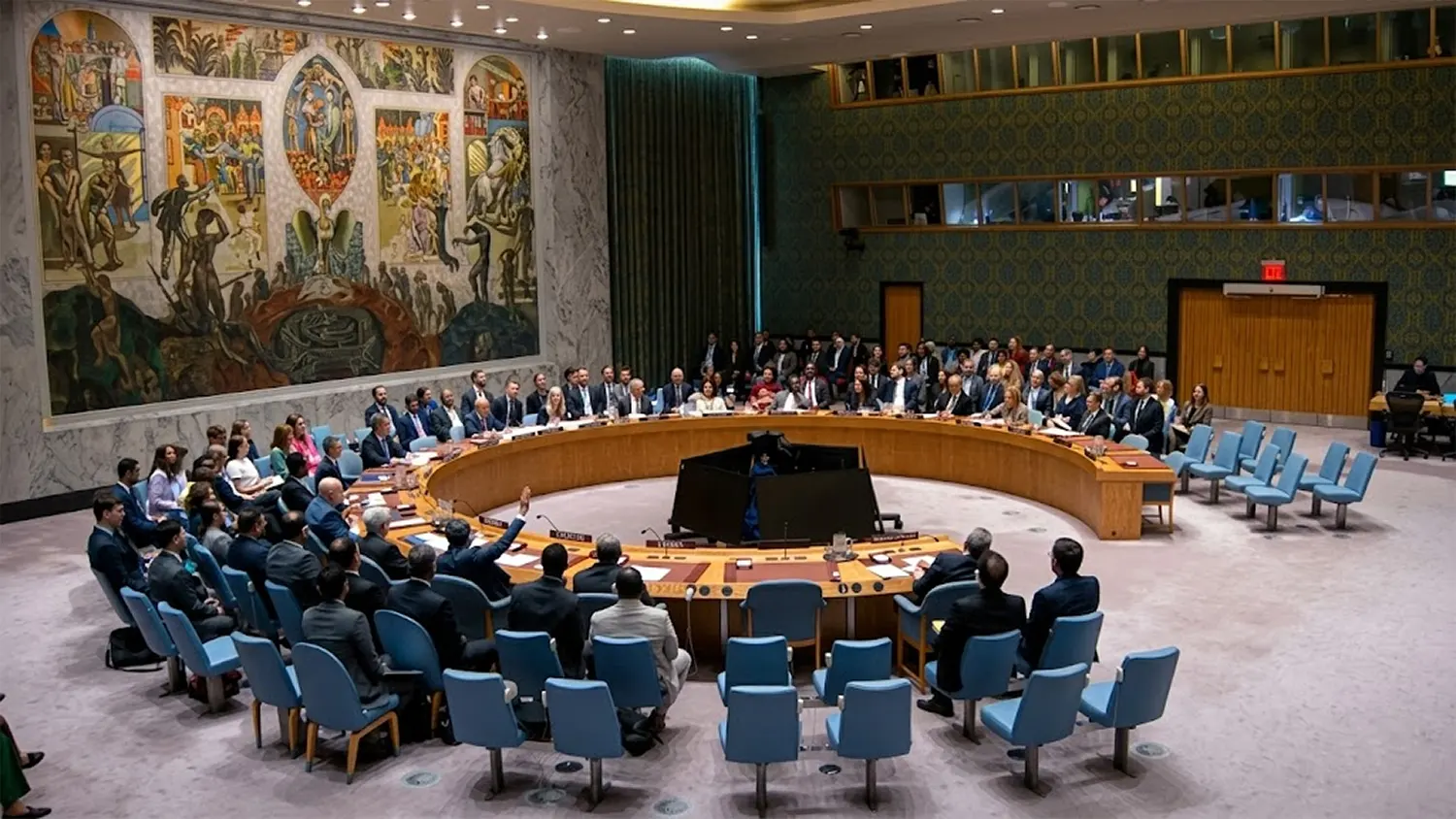
When the resolution came to a vote at the United Nations Security Council, the outcome was striking:
- 11 countries voted in favor
- 2 voted against: China and Russia
- 2 abstained
Under UN rules, a veto from any permanent member blocks the resolution entirely.
Despite overwhelming support, two vetoes were enough to stop global action.
That moment effectively ended the UN’s ability to act collectively on the crisis at least for now.
Why China and Russia Said No
Both countries argued that the resolution failed to address the deeper causes of the conflict.
Their concern was not just the wording but what it could lead to.
They feared the resolution could become a “blank check” for Western military intervention.
Even though the final version removed explicit authorization for force, earlier drafts had included it. That history made both countries skeptical.
They also pointed to U.S. and Israeli strikes on Iranian targets as part of the broader escalation, arguing the resolution was not “balanced.”
In short, they saw it as one sided and potentially dangerous.
The Trump Deadline and Rising Pressure
The timing of the veto made the situation even more volatile.
Donald Trump had set a firm deadline: if the Strait was not reopened by 8:00 PM ET on April 7, the U.S. would begin targeting Iranian infrastructure.
This created a ticking clock turning a diplomatic vote into a potential trigger for war.
Even before the deadline expired, military activity intensified:
- U.S. strikes targeted key Iranian oil facilities
- Israeli forces hit infrastructure near major cities
- Iran reportedly called on civilians to shield critical sites
With the UN resolution blocked, there is now no shared international framework to manage these actions.
The Economic Shockwaves
While diplomats debated, markets reacted immediately.
The Strait of Hormuz normally carries around 20 million barrels of oil per day. With that flow disrupted:
- Oil prices surged toward $110 per barrel
- Analysts warned prices could hit $150–$200
- Emergency reserves began to be tapped
This is not just a regional crisis, it is a global economic shock.
For countries in the Gulf, the stakes are even higher. Some have described the blockade as an “existential threat” to their stability.
And as prices rise, the impact spreads from fuel costs to food prices worldwide.
A Diplomatic Breakdown at the UN
The fallout inside the United Nations was immediate.
U.S. officials accused China and Russia of siding with Iran. Bahrain, which sponsored the resolution, expressed deep frustration at the failure to act.
The vote exposed a deep divide between global powers at a critical moment.
On one side: the U.S. and its allies, pushing for coordinated action to secure shipping.
On the other: China and Russia, warning against escalation and calling for broader negotiations.
This split has left the international system effectively paralyzed.
After the Veto: The Immediate Risks Ahead
With the resolution blocked, the path forward becomes far more uncertain.
There is no unified mandate for multinational naval protection. Instead, countries may act independently or in smaller coalitions.
That raises the risk of miscalculation where one move triggers a much larger conflict.
At the same time, the military deadline has passed, and the world is watching closely for further escalation.
The Strait remains unstable. Diplomacy is stalled. And the margin for error is shrinking.
What’s Really at Stake
The veto by China and Russia didn’t just block a resolution, it removed the last shared guardrail against escalation.
Without agreement among major powers, the risk of conflict increases dramatically.
What happens next will not only shape the future of the Middle East but also determine how the world manages crises in an increasingly divided global order.