Why the Prague Protests Matter Now
While global attention is focused on wars and geopolitical flashpoints, a different kind of crisis is unfolding in the heart of Europe.
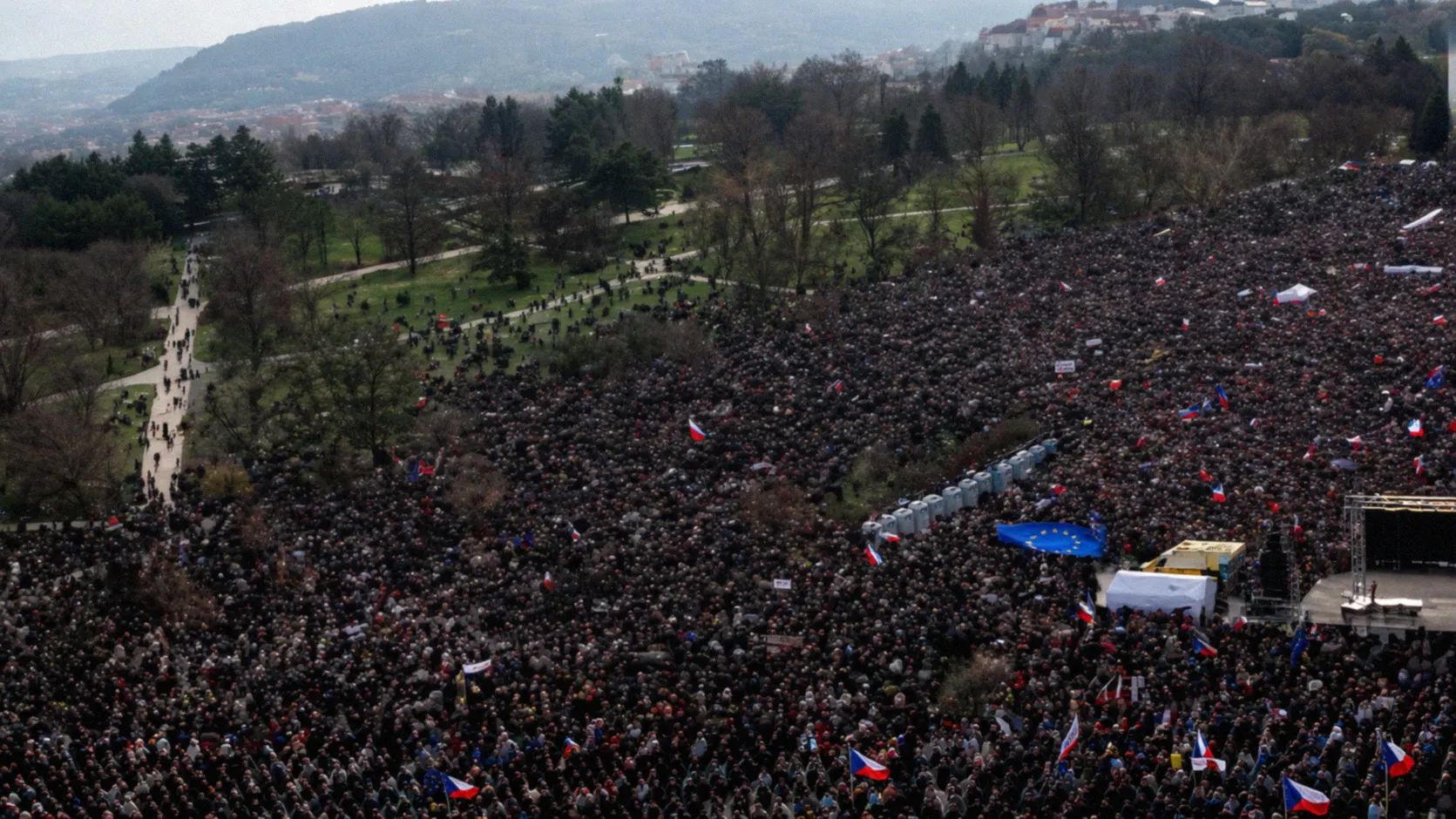
On March 21, 2026, hundreds of thousands of people flooded the streets of Prague not over foreign policy alone, but over the future of their democracy.
The sheer scale and intensity of the protest signal a deep and growing fear: that the Czech Republic may be drifting away from its Western democratic path.
A Political Shift After the 2025 Elections
The unrest comes just months after Andrej Babiš returned to power, leading a coalition backed by populist and far right forces.
Since taking office, his government has introduced policies that critics say represent a clear break from the Czech Republic’s traditional alignment with the European Union and NATO.
This shift has triggered alarm among civil society groups, academics, and a significant portion of the public.
A Historic Turnout with Real World Impact
On March 21, an estimated 200,000 to 250,000 people gathered at Letná Plain, making it the largest protest since 2019.
But this was more than just a large rally.
The demonstration physically disrupted the city. Public transport authorities were forced to:
- Temporarily close the Hradčanská metro station
- Deploy special tram lines to manage the crowds
The northern center of Prague was effectively brought to a standstill, an unmistakable sign of the protest’s scale and urgency.
Organized by Million Moments for Democracy, the rally sent a clear message:
many Czechs believe their democratic system is under threat.
The Core Issue: The “Foreign Agents” Law
At the heart of the protests is the proposed “foreign agents” law, formally known as Government Bill 811.
Protesters have given it a different name: the “Russian Law” (Ruský zákon).
The bill would require:
- NGOs and individuals receiving foreign funding to register with the state
- Broad categories of “political activity” to be disclosed
Critics warn this could apply to:
- Human rights organizations
- Academic researchers
- Even individuals active on social media
The concern is not just regulation but stigmatization.
The “foreign agent” label, they argue, is designed to undermine credibility and portray independent voices as disloyal.
Financial penalties add to the fear:
- Fines could reach up to 15 million CZK for non compliance
For many, the law mirrors tactics used in Russia and Hungary to weaken civil society.
The Week That Sparked the Uprising
The protest did not emerge in isolation. It was triggered by a sequence of events that many saw as deeply contradictory.
The timeline of that week became a rallying cry:
The Week of the “Untouchables”
- March 19: Parliament votes 104–81 to uphold the legal immunity of Prime Minister Babiš in a fraud case and also protects Tomio Okamura from prosecution over hate speech charges
- March 20: The government introduces Bill 811, imposing strict transparency requirements on NGOs and individuals
As Mikuláš Minář told the crowd:
“They demand transparency from citizens while shielding themselves from justice.”
This perceived double standard transformed a planned protest into a mass movement.
Voices from the Crowd: A Society on Edge
The demonstration drew a wide cross section of Czech society.
- Ivan Trojan warned against weakening national security
- Václav Pačes highlighted risks to academic freedom
- Students and young people stressed that democracy can erode gradually not overnight
Together, these voices reflect a broader concern: that small legal and political shifts could lead to long term systemic change.
Foreign Policy Shift: Turning Away from Ukraine
Another major source of tension is the government’s decision to halt direct financial and military aid to Ukraine.
Previously, the Czech Republic had:
- Led international efforts to supply ammunition
- Delivered over 4.4 million rounds through its initiative
Now, under Babiš:
- The country will act only as a coordinator
- No taxpayer money will be used to fund the effort
For protesters, this is more than a budget decision, it signals a shift in geopolitical alignment.
At the rally, Ukrainian flags were visible alongside Czech and EU flags.
The message was clear: abandoning Ukraine is seen as weakening Czech security itself.
Defense Spending: A Legal and Strategic Clash
The government has also proposed reducing defense spending to 1.73% of GDP in 2026, below the 2% NATO target that is already codified into Czech law.
Prime Minister Babiš argues that:
- Healthcare and social spending must take priority
However, this has triggered a direct confrontation with Petr Pavel, the Czech president and former NATO general.
Pavel has warned there is “not a single justifiable reason” to cut defense spending given the ongoing Russian threat.
The dispute highlights a deeper divide over national security priorities.
A “Pivot to the East”? The Bigger Fear
As these developments unfold, protesters are increasingly framing them as part of a broader “pivot to the East.”
This includes:
- Aligning with Hungary and Slovakia on EU issues
- Reducing support for Ukraine
- Introducing laws that could restrict civil society
The fear is not about one policy but about the country’s long term direction.
Organizers warn that the Czech Republic risks becoming a “gray zone” between Western democracies and Russian influence.
Why This Matters Beyond the Czech Republic
The situation in Prague is part of a wider trend across Central Europe, where populist governments are challenging democratic norms and EU alignment.
If the Czech Republic follows this path, it could reshape political dynamics across the region.
A Different Kind of Conflict
At the same time, these protests are unfolding alongside global crises elsewhere.
While some regions face open warfare, Central Europe is witnessing a quieter but equally important, struggle over democratic identity and political direction.
What Happens Next: Key Questions
Several developments will determine where this crisis leads:
- Will Bill 811 pass in its current form?
- Can sustained public pressure force changes or delays?
- How will the EU respond if democratic standards are challenged?
- Will tensions between the government and president escalate further?
The answers will shape not only Czech politics but its place in Europe.
A Turning Point in the Conflict
The protests in Prague represent more than opposition to a single law, they mark a defining moment for the country’s future.
On one side:
- A government emphasizing sovereignty, reduced spending, and political control
On the other:
- A large civic movement defending democratic norms, transparency, and Western alignment
The outcome of this struggle will determine whether the Czech Republic remains firmly anchored in the European democratic system or begins to move in a different direction.