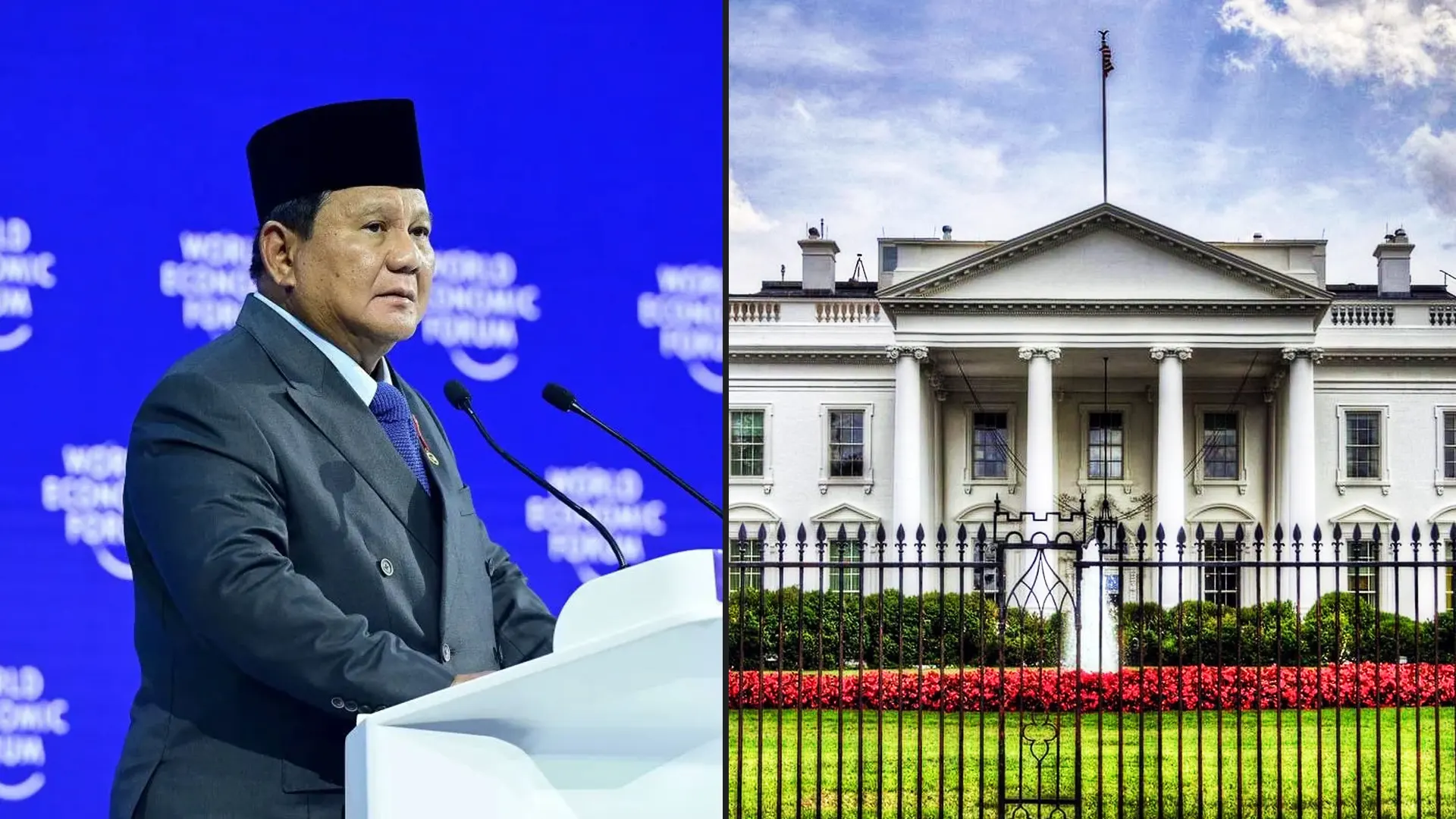
When President Prabowo Subianto arrives in Washington on February 19, 2026, the visit will be about more than diplomacy.
It will finalize a major trade deal with the United States that could reshape Indonesia’s economy for years to come.
The Agreement on Reciprocal Trade (ART) is designed to reduce U.S. tariffs on Indonesian goods. But in return, Indonesia is opening its market to American products at an unprecedented scale. Supporters call it a necessary step to protect Indonesian jobs. Critics say it comes at the cost of long term economic independence.
Why This Deal Matters
The United States had threatened a 32% tariff on Indonesian exports in 2025. The ART lowers that rate to 19% still high,
but considered survivable for Indonesia’s crucial textile and footwear industries.
In exchange, Indonesia will remove 99% of its tariffs on U.S. goods, creating almost duty free access for American companies.
| Trade Condition | Before ART | Under ART |
|---|---|---|
| U.S. tariff on Indonesian goods | 32% (threatened) | 19% |
| Indonesian tariffs on U.S. goods | ~5–15% average | 0% on 99% of products |
| Local content (TKDN) rules | Required | Waived for U.S. firms in key sectors |
For many analysts, this shows how uneven the arrangement is: Indonesia keeps paying to enter the U.S. market, while the U.S. gains broad access to Indonesia’s.
The Industrial Trade Off
Indonesia has long used local content rules (TKDN) to require foreign companies to build factories and hire local workers if they want to sell in the country.
Under ART, many U.S. firms will be exempt from these rules in sectors such as:
- Technology and electronics
- Medical devices
- Industrial equipment
This weakens one of Indonesia’s main tools for developing domestic manufacturing. American companies could supply finished goods from abroad rather than producing them locally.
Economists warn this could slow Indonesia’s push to move beyond raw materials and become a manufacturing hub
a strategy known as “Hilirisasi” (downstreaming).
Pressure on Farmers
The deal also removes tariffs on many U.S. agricultural products, including:
- Soybeans
- Corn
- Wheat
- Poultry
U.S. farming is highly mechanized and subsidized, meaning American goods can be cheaper. Indonesian farmer groups fear this could push down local prices and increase dependence on food imports.
Critical Minerals: A Strategic Exchange
Indonesia holds some of the world’s largest nickel reserves, which are essential for electric vehicle (EV) batteries.
Under the ART framework, the U.S. gains preferential access to Indonesian critical minerals. Washington sees this as a way to secure supply chains away from China. Jakarta sees it as part of a broader strategic relationship.
But there is a long term risk: if the U.S. uses Indonesian minerals to build its own battery industry, it may reduce future demand for Indonesian based processing.
The China Factor
Indonesia’s balancing act is complicated by China, which is:
- Indonesia’s largest trading partner
- A major investor in metal processing and infrastructure
If Indonesia moves too closely toward U.S. economic alignment,
it could face reduced Chinese investment or trade retaliation. That would make the ART deal far more costly than planned.
Security and Diplomacy
Trade is only one side of the Washington visit. President Prabowo is also joining the new Board of Peace initiative and has pledged Indonesian troops for Middle East peacekeeping.
The government presents this as a broader strategic repositioning strengthening Indonesia’s global role while deepening ties with Washington.
The debate at home is whether these diplomatic gains outweigh the economic concessions.
Why Jakarta Still Agreed
Despite the concerns, the government sees the deal as damage control.
A 32% tariff could have severely hurt Indonesia’s export industries, which employ millions. By accepting painful trade offs, Jakarta secures:
- A lower tariff ceiling
- Market certainty through 2029
- Closer political ties with the U.S.
From this view, the ART is not about winning, it is about avoiding a larger economic shock.
The Long Term Question
The ART gives Indonesia short term stability and keeps its exports flowing. But it also reduces the policy tools the country has used to build its own industries.
The coming years will show whether this agreement strengthens Indonesia’s global position or limits its ability to shape its own economic future.