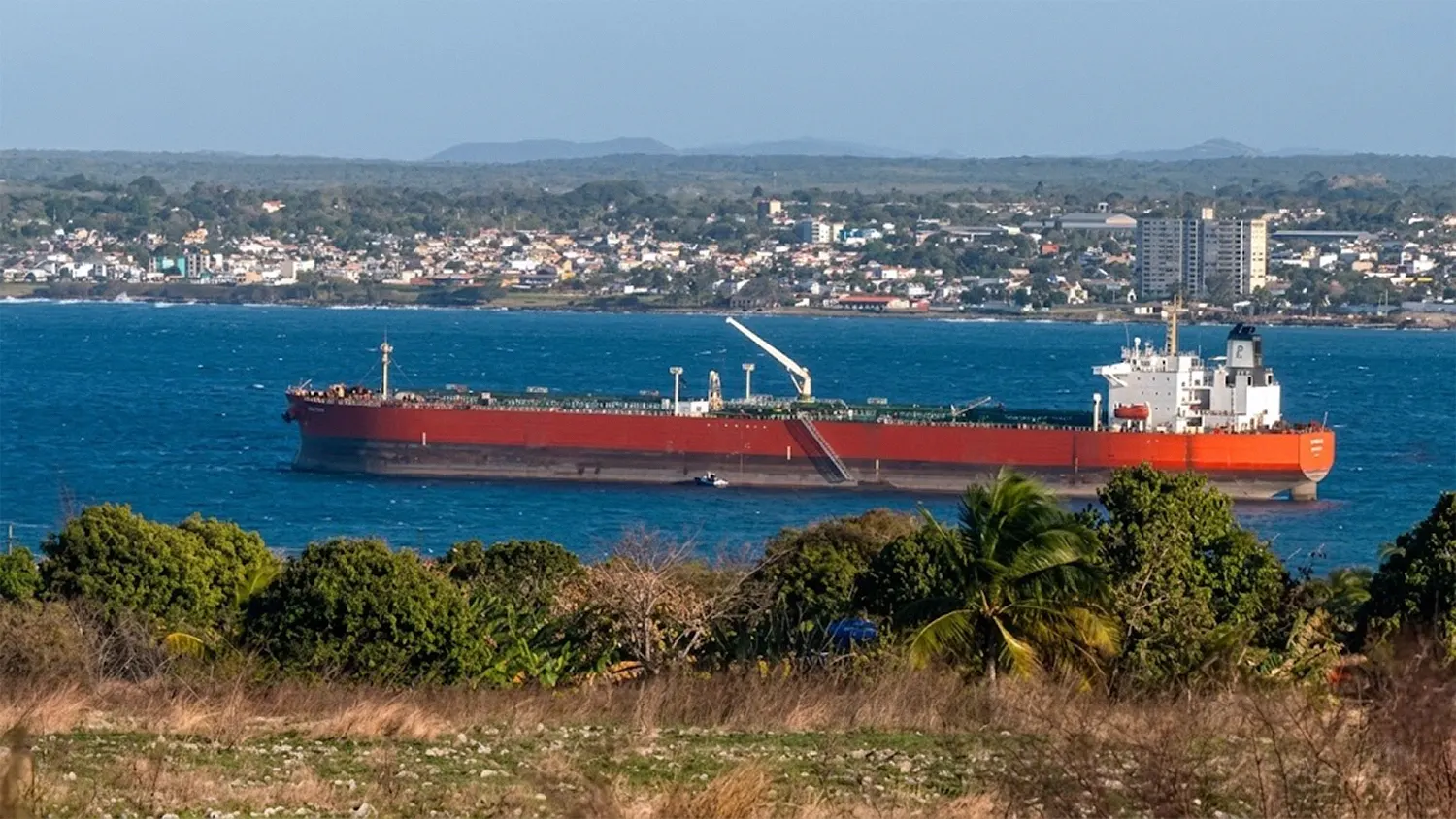
A sanctioned Russian tanker carrying 730,000 barrels of crude arrived in Cuba on March 31, 2026, offering short term relief to a nation facing its worst energy crisis in decades.
But beyond the immediate headlines, the shipment raises a deeper question: how long can Cuba sustain itself on emergency fuel deliveries? The answer matters not just for Cubans enduring daily blackouts, but for the wider geopolitical balance in the region.
A single tanker, a nation on pause
The arrival of the Anatoly Kolodkin tanker at the Port of Matanzas ends a three month gap in major oil deliveries to Cuba. For a country whose energy system depends almost entirely on imported fuel, that gap pushed infrastructure to the brink.
“This is not a recovery. It’s a pause,” said one Havana based energy analyst, who asked
not to be named due to political sensitivities. “The system is still extremely fragile.”
The tanker’s cargo 730,000 barrels of Russian Urals crude will now be refined by
the state oil company into fuel for power plants, transport, and households. But that process takes time, and time is something Cuba does not currently have.
A grid collapse that exposed systemic weakness
Just two weeks before the tanker arrived, Cuba’s national grid suffered a total collapse on March 16 after a failure at its largest thermoelectric plant in Matanzas. The outage plunged millions into darkness and exposed the depth of the crisis.
Since then, rolling blackouts lasting up to 20 hours a day have become routine. Entire neighborhoods cycle in and out of power, disrupting everything from refrigeration to basic communication.
What makes this even more urgent is the cascading impact on essential services. Hospitals are delaying procedures, water systems are failing, and the economy has slowed to a near standstill.
Daily life under prolonged blackouts
The human toll is becoming increasingly visible. Officials estimate that 96,000 patients are waiting for surgery, as hospitals prioritize only life saving procedures due to unreliable electricity.
Meanwhile, nearly one million people now depend on water trucks, because electric pumps can no longer guarantee supply. Schools and universities remain closed, while many businesses have shut their doors to conserve fuel.
“People are adapting, but it’s not sustainable,” said a local public health worker in Matanzas. “You cannot run a modern society without stable electricity.”
And yet, even with the tanker’s arrival, relief will not come overnight.
Why the oil won’t fix the crisis immediately
Although the shipment is substantial, the refining process creates a critical delay. It will take 25 to 35 days to convert crude into usable fuel, meaning the current blackouts are likely to persist for weeks.
Compounding the problem is the nature of the oil itself. Russian Urals crude is heavy and high in sulfur, placing additional strain on Cuba’s aging refineries, many of which date back to the Soviet era.
An energy engineer familiar with the system explained: “These facilities were not designed for sustained high sulfur processing. Breakdowns are a real risk.”
That raises a second question: even if the fuel is refined, can Cuba’s infrastructure effectively use it?
Power plants running at half strength
Cuba’s thermoelectric plants are currently operating at roughly 40% efficiency, largely due to a lack of spare parts and deferred maintenance. Fuel alone cannot solve that problem.
In practical terms, this means that even a full supply of refined oil will not restore normal service. The grid remains vulnerable to further failures, especially during peak demand.
“The fuel keeps the system alive,” said an energy consultant in Madrid who tracks Caribbean markets. “But it doesn’t make it healthy.”
This fragility underscores why the latest shipment is being described as a lifeline rather than a solution.
Russia steps in and sends a message
The geopolitical implications of the tanker’s arrival are just as significant as the humanitarian ones. By delivering oil via a sanctioned vessel, Russia has demonstrated that Western restrictions can be bypassed under certain conditions.
For Moscow, the move serves multiple purposes. It reinforces its presence in the Western Hemisphere, utilizes surplus crude that is difficult to sell elsewhere, and positions Russia as Cuba’s primary energy partner.
“This is strategic, not just symbolic,” said a European foreign policy analyst. “Russia is reasserting influence in a region where it had lost ground.”
But the success of one shipment does not guarantee a steady supply.
Washington’s “case by case” approach
The United States allowed the tanker to proceed under what officials described as a humanitarian exception, with President Donald Trump stating that Cubans “have to survive.”
However, the administration emphasized that sanctions policy remains unchanged. Future shipments will be evaluated individually, creating uncertainty for Cuban planners.
This ambiguity has real consequences. Without predictable supply lines, Cuba cannot negotiate long term contracts or stabilize its energy market.
“It’s a stopgap, not a policy shift,” said a Washington based analyst. “And that keeps pressure on Havana.”
A fragile dependency returns
With Venezuela no longer able to supply oil following political upheaval earlier this year, Cuba has lost its primary energy lifeline. In its place, a familiar pattern is re emerging.
The phrase “brotherly duty” used by Russian officials signals a return to Cold War era dynamics, when Cuba relied heavily on Soviet support. Today, the dependency is less ideological but no less significant.
To maintain basic operations, analysts estimate Cuba needs four to five similar tankers every month. One shipment, no matter how dramatic, falls far short of that requirement.
A temporary reprieve, not a resolution
For now, the lights in Havana may begin to flicker back on in the coming days. Fuel will move through refineries, generators will restart, and some normalcy will return.
But the underlying reality remains unchanged. Cuba’s energy system is structurally weak, its supply lines uncertain, and its future dependent on forces beyond its control.
In that sense, the arrival of the Anatoly Kolodkin is both a relief and a warning, a reminder that while a single tanker can keep a country running for weeks, it cannot secure its future.