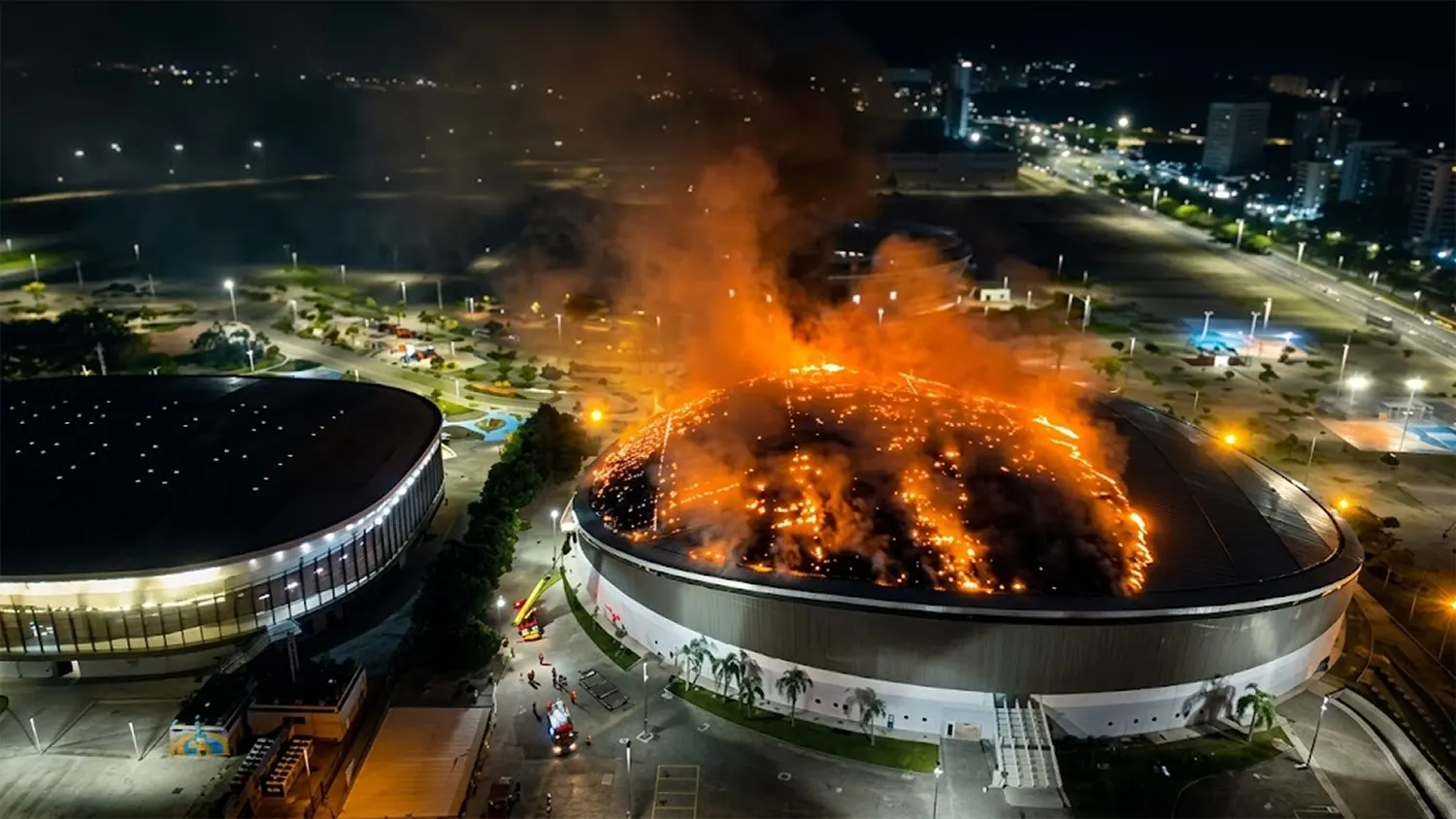
A fire tore through Rio de Janeiro’s Olympic Velodrome on April 8, 2026, damaging its roof but sparing lives and critical infrastructure, officials said. Authorities are still investigating the cause as repair costs climb.
The blaze broke out at 4:17 a.m., prompting a rapid response from firefighters. No injuries were reported, and the building’s core interior remained intact, offering a rare piece of good news in an otherwise costly incident.
But beyond the immediate damage, the event raises a bigger question: how vulnerable are high profile Olympic venues to repeated incidents and what will it cost to keep them operational?
A Fire That Looked Worse Than It Was But Still Costly
The scale of the fire was dramatic.
Around 80 firefighters and 20 vehicles were deployed to contain the blaze, which quickly spread across the structure’s distinctive white roof. Images from the scene showed flames consuming large sections of the venue, fueling fears of total loss.
Yet the outcome was more contained than expected. The fire was largely confined to the synthetic roof, preventing it from reaching the interior where the most valuable assets are located.
That containment made all the difference, limiting what could have been a catastrophic loss to a more manageable though still significant repair challenge.
The Roof: A Specialized Weak Point
The most severe damage was concentrated in one place.
Nearly half of the velodrome’s composite fabric roof was destroyed or melted, according to early reports. This is not a standard structure. The roof is made from high performance synthetic materials designed for precise temperature and acoustic control, essential for professional cycling events.
That complexity comes at a cost.
Replacing the roof is expected to run into the millions of dollars, due to the need for specialized materials and skilled labor. And because the structure was custom built for the 2016 Olympics, repairs are unlikely to be simple or quick.
But the real significance lies in what wasn’t damaged.
What Was Saved Matters More Than What Was Lost
Despite the destruction above, the most valuable parts of the facility survived.
The Siberian pine cycling track considered the “crown jewel” of the venue remained completely untouched. This is critical, as replacing a world class Olympic track alone can cost between $1 million and $3 million.
The Olympic Museum also avoided major losses. More than 1,000 artifacts, including medals and torches, were largely preserved, with only minor damage reported in a small section.
Mayor Eduardo Cavaliere emphasized this point, noting that the “soul” of the venue
its history and performance core remains intact.
That outcome significantly reduced what could have been a far more severe financial and cultural loss.
A Familiar Pattern Raises New Concerns
While the cause of the fire is still under investigation, early theories point to a troubling possibility.
Authorities are examining whether “sky lanterns” small airborne devices fueled by candles may have ignited the blaze. This is not speculation without precedent.
Similar fires in 2017 at the same venue were caused by these lanterns landing on the roof, which is known to be flammable under certain conditions.
Investigators are now reviewing security footage to determine whether the fire originated internally or was triggered by an external object.
The repetition of similar incidents raises concerns about structural vulnerability, particularly for a venue that has already faced this issue multiple times.
The Hidden Costs Beyond the Flames
While the immediate damage is visible, the longer term financial impact is still unfolding.
The velodrome was originally built for the 2016 Olympics at a cost of approximately $45 million, and although total loss has been avoided, repair costs are expected to reach several million dollars.
But direct repairs are only part of the equation.
- Operational losses are mounting as the facility remains closed
- Around 4,000 community users and national teams are temporarily displaced
- Training schedules and local programs are disrupted
In addition, insurance premiums are likely to rise significantly, given this is the third major fire involving the roof.
These indirect costs could place a long term burden on the city’s sports budget, extending the impact far beyond the initial incident.
A Key Olympic Venue Now on Pause
The velodrome is more than just a sports facility.
It serves as a training base for Brazil’s national cycling and weightlifting teams and acts as a community hub for thousands of users. Its temporary closure affects both elite athletes and everyday residents.
City officials say the next steps will focus on:
- Clearing debris
- Conducting structural safety checks
- Planning roof reconstruction
Only after these steps are completed will the venue reopen.
The timeline remains uncertain, but authorities have indicated that restoring full functionality is a priority.
A Costly Reminder of Infrastructure Risk
The Rio velodrome fire highlights a broader issue facing major sports venues.
Even iconic Olympic infrastructure can carry hidden vulnerabilities, especially when built with specialized materials that are difficult and expensive to replace.
At the same time, the incident also shows the value of rapid emergency response and structural design that can contain damage.
What could have been a total loss became a partial one thanks to containment and timing.
But as cities continue to invest in large scale sporting infrastructure, the question is no longer just about building world class venues.
It’s about maintaining them, protecting them, and ensuring they can withstand unexpected risks in the years that follow.