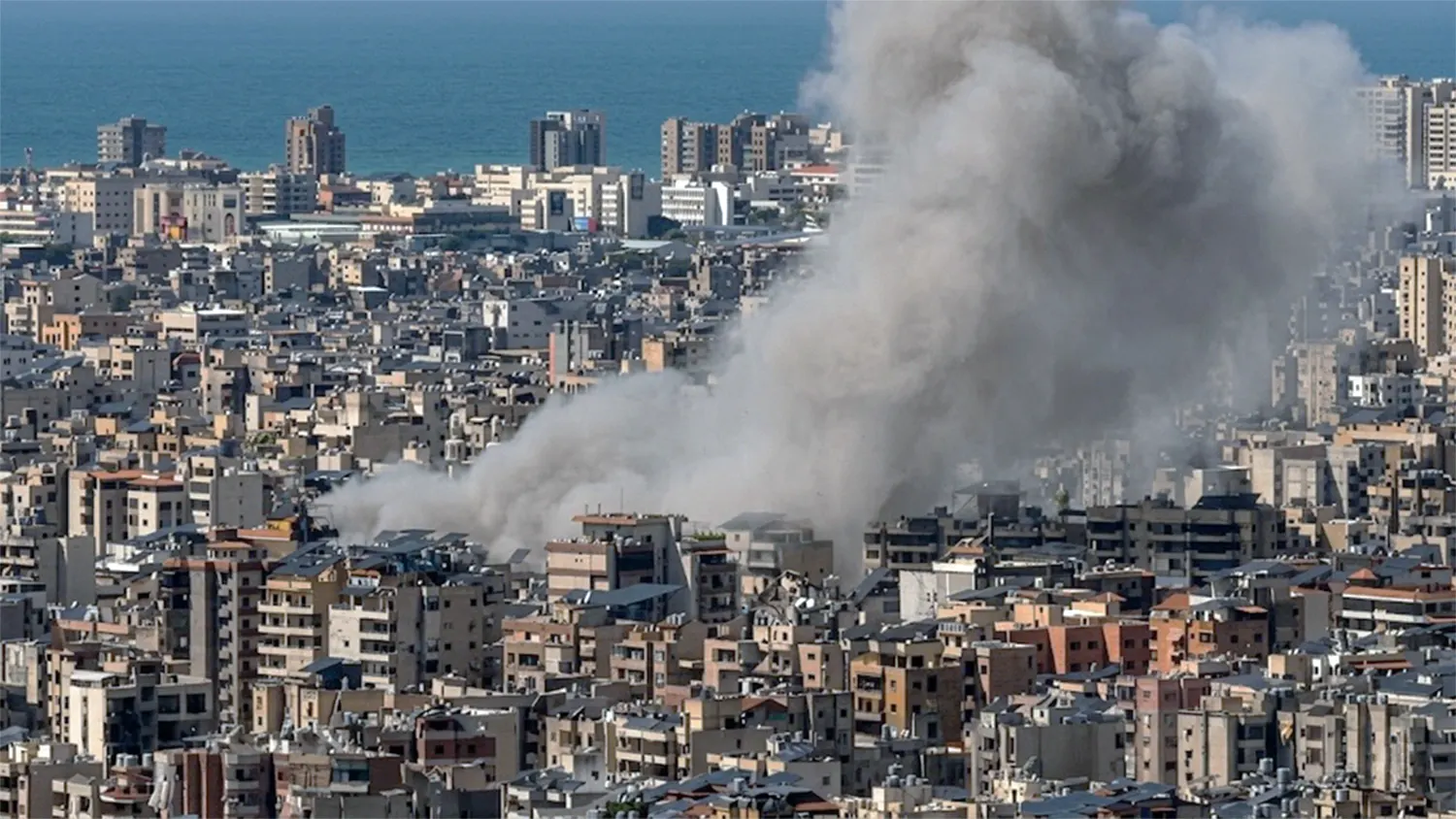
On March 31, 2026, Israel announced plans to create a permanent buffer zone in southern Lebanon, extending to the Litani River, while barring 600,000 displaced residents from returning, marking a major escalation in the conflict.
But this move is about more than military positioning. It raises urgent questions about territorial control, civilian displacement, and the risk of a prolonged regional crisis
issues that could reshape Lebanon’s future for years.
A strategy that shifts from defense to control
Israel’s Defense Minister, Israel Katz, made clear that the plan is not temporary.
The proposal includes full military control of a strip up to 20 miles inside Lebanon, designed to prevent Hezbollah from operating near the border.
However, the most controversial element is the policy of systematic demolition of border villages. Katz explicitly referenced tactics used in Gaza, signaling a strategy that goes beyond targeted strikes.
“This is not just about security,” said a regional security analyst. “It is about changing the physical and strategic landscape of the border permanently.”
That shift from short term defense to long term control is what has alarmed both Lebanon and the international community.
Why displacement is now at the center of the conflict
At the heart of the controversy is the fate of civilians. Israel’s plan would block the
return of roughly 600,000 people who have fled southern Lebanon since early March.
For many observers, this changes the nature of the conflict. What began as a military confrontation is now also a large scale displacement crisis with no clear end date.
Lebanese Defense Minister Michel Menassa called the move a “new occupation”, arguing that preventing civilians from returning transforms a buffer zone into something more permanent.
This leads to a deeper concern: if people cannot return, what happens to the social fabric of the region?
A plan that could reshape Lebanon’s internal balance
Lebanon’s political system is built on a delicate sectarian balance. Analysts warn that permanently displacing hundreds of thousands of residents many from the Shia community could disrupt that balance.
“This is not just a humanitarian issue,” said a UN affiliated researcher. “It has the potential to trigger a long term political and social crisis inside Lebanon.”
Because of this, the buffer zone is no longer viewed as a narrow military measure. Instead, it is being seen as a move with deep internal consequences for the Lebanese state.
And that is precisely why international legal concerns are intensifying.
Legal warnings focus on forced displacement and destruction
Human rights organizations have raised serious concerns about the legality of the plan. Two issues stand out: forced displacement and widespread destruction of civilian property.
Under international law, civilians can only be displaced temporarily during active fighting. Blocking their return, especially on a large scale, may qualify as illegal forced transfer.
At the same time, the proposed destruction of entire villages has been described as “wanton destruction”, which is prohibited unless strictly required for military necessity.
“Destroying all homes in a village, regardless of use, risks crossing a legal threshold,” said an international law expert based in Geneva.
These concerns are not just theoretical. They are already shaping diplomatic reactions.
Global pressure builds as comparisons to past conflicts emerge
International reaction has been swift. Human Rights Watch has drawn comparisons to earlier operations in the region, noting a pattern of large-scale demolition followed by restricted return of civilians.
The United Nations has also warned that such actions could set a dangerous precedent. If enforced, the buffer zone could become an example of territorial control achieved through displacement.
At the same time, Lebanon has formally appealed to the UN Security Council, calling the plan a “flagrant violation of sovereignty.”
But while diplomatic pressure is rising, events on the ground are moving just as quickly.
Escalation on the ground is reinforcing the strategy
The announcement of the buffer zone comes alongside intensified airstrikes on Beirut and expanded ground operations in the south.
Since the conflict escalated on March 2, more than 1,200 people have been killed, including over 100 children. The scale of the fighting suggests that the buffer zone is not a future plan, it is being shaped in real time.
Military analysts say this combination of territorial control and sustained strikes indicates a long term strategy rather than a temporary campaign.
“Once you establish control and prevent return, it becomes very difficult to reverse,” said a defense analyst in London.
This raises a critical question: can this strategy remain contained?
A risk of wider regional escalation
The situation is increasingly tied to broader regional dynamics. Hezbollah’s involvement already connects the conflict to tensions involving Iran, Israel, and the United States.
A permanent Israeli presence in southern Lebanon could trigger further escalation, drawing in additional actors and expanding the conflict beyond its current boundaries.
At the same time, ceasefire negotiations have stalled. Lebanon insists that the unconditional return of displaced civilians must be part of any agreement, a condition that directly conflicts with Israel’s current plan.
Because of this, the diplomatic path forward is becoming narrower.
A conflict moving toward long-term uncertainty
What began as a border conflict is now evolving into something far more complex. The proposed buffer zone introduces questions of occupation, legality, and long-term stability that go beyond immediate military goals.
For Lebanon, the stakes are existential. For Israel, the strategy reflects a desire for lasting security. But for the region as a whole, the risk is that temporary measures become permanent realities.
And as events continue to unfold, one thing is becoming clear: the line being drawn in southern Lebanon may not just separate two sides, it may define the next phase of the conflict itself.