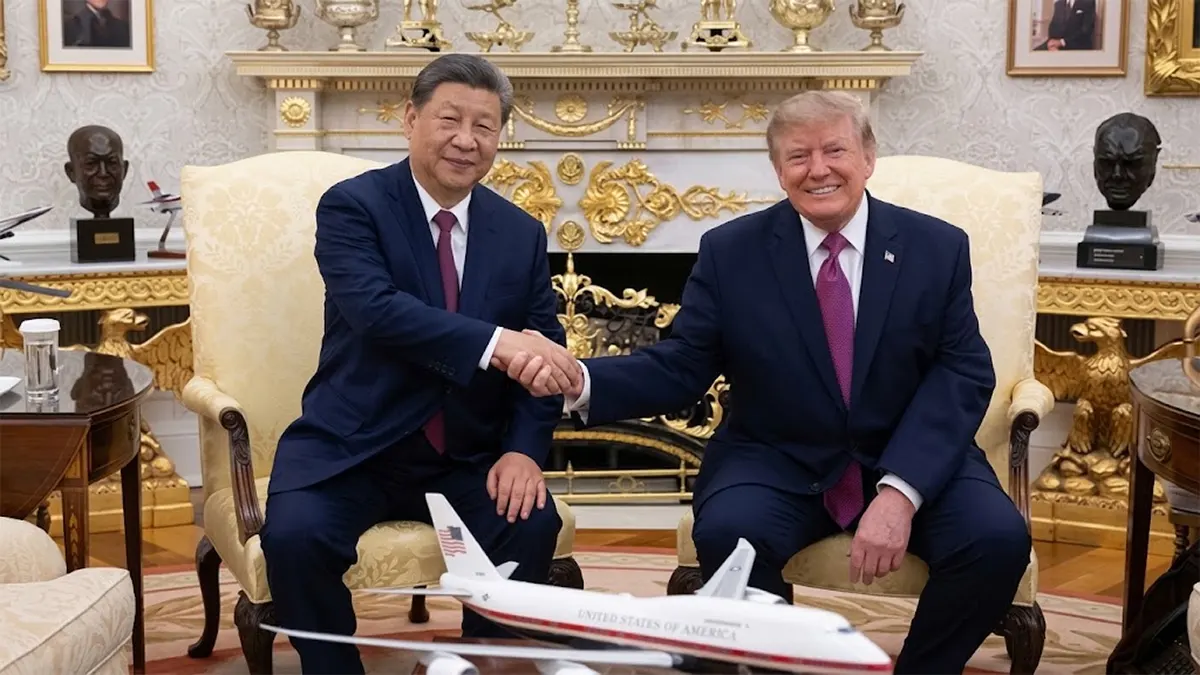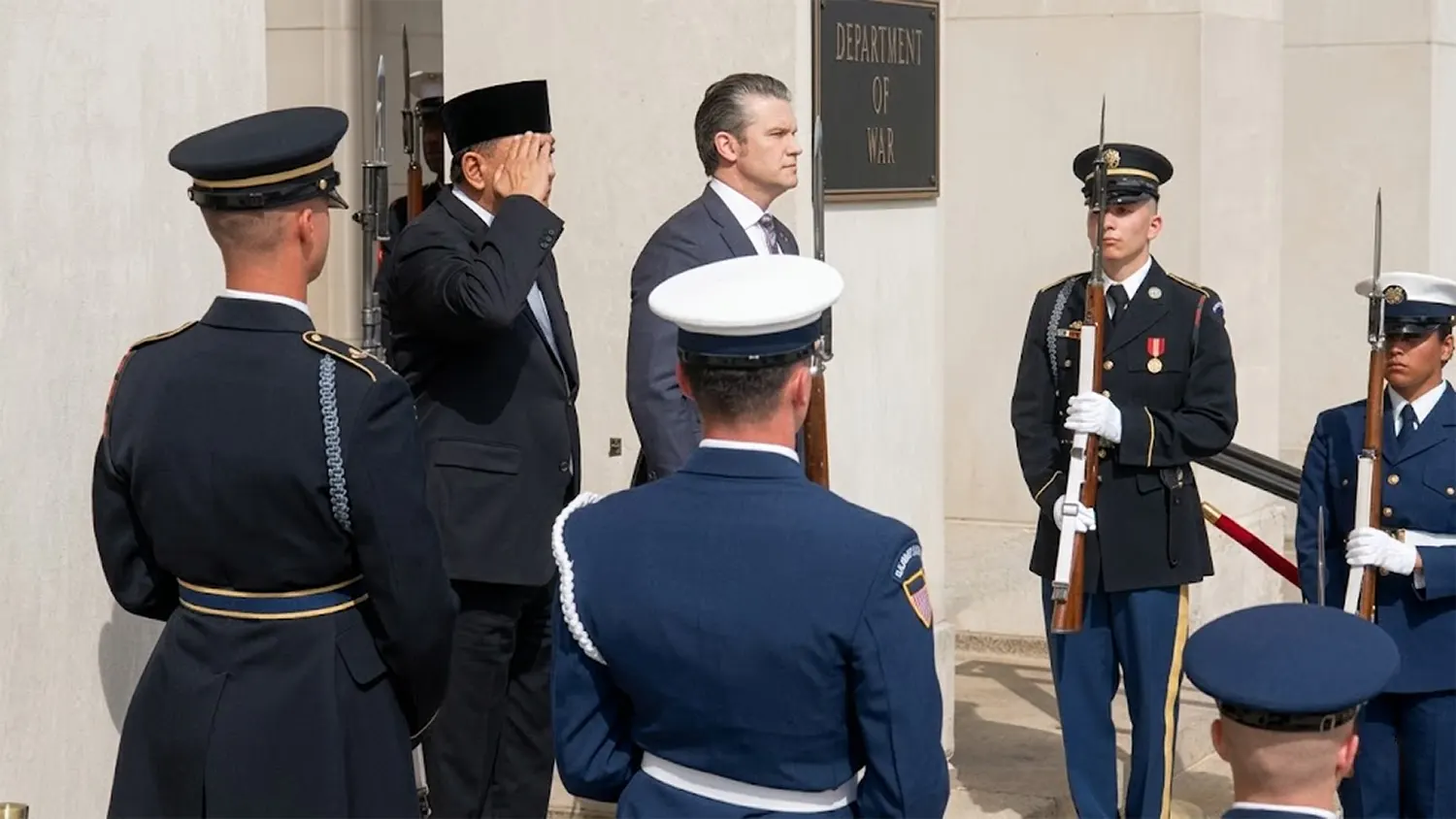
A major new defense deal between Indonesia and the United States is raising a difficult question in Jakarta.
Is this a strategic partnership that strengthens Indonesia or a step that risks giving away too much control?
On paper, the agreement promises advanced weapons, training, and closer military ties. But behind the scenes, a controversial proposal over airspace access is triggering serious concern about sovereignty, neutrality, and Indonesia’s role in a rapidly shifting global landscape.
A Landmark Agreement With Hidden Tensions
On April 13, 2026, Indonesia and the United States officially upgraded their relationship to a Major Defense Cooperation Partnership (MDCP).
For Indonesia’s military, this is a major breakthrough. It opens the door to:
- Advanced fighter jets like the F-15IDN
- High level training with U.S. forces
- Access to cutting edge defense technology
This is particularly important as Indonesia looks to strengthen its position in sensitive
areas like the North Natuna Sea.
However, even as officials celebrated the deal, concerns were already emerging.
A confidential warning from Indonesia’s Foreign Ministry suggested the real cost of this partnership could be far higher than expected.
U.S. Push for “Blanket Overflight” Access
At the heart of the controversy is a separate but connected proposal.
The United States is seeking “blanket overflight access”, the ability for its military aircraft to fly over Indonesia without case by case approval.
Currently, foreign military flights must go through a strict process:
- Diplomatic clearance
- Security approval
- Case by case authorization
This system ensures one thing:
Indonesia remains fully in control of its own airspace.
The proposed change would replace that system with a standing permission effectively giving U.S. aircraft a constant green light.
Why This Proposal Is So Controversial
At first glance, the deal may look like a fair exchange access in return for military support. But many in Jakarta see it differently.
The Sovereignty Question
Airspace is considered sovereign territory, just like land or sea.
There is already unease over reports that U.S. aircraft entered Indonesian airspace
18 times between 2024 and 2025 without proper clearance.
Because of this:
Granting blanket access now could be seen as weakening Indonesia’s authority over
its own borders.
A “Base Without a Base”
Indonesia’s constitution does not allow foreign military bases.
But critics argue:
Unrestricted overflight access, combined with frequent joint exercises, could create the same effect without the official label.
U.S. forces would gain:
- Regular operational access
- Strategic positioning across the archipelago
- Increased presence without permanent bases
In practice, the distinction may become meaningless.
The Risk to Neutrality
For decades, Indonesia has followed a “Free and Active” foreign policy known as
Bebas Aktif.
This allows Indonesia to maintain balanced relations with major powers like
the U.S., China, and Russia.
However, the overflight proposal could disrupt that balance.
If U.S. aircraft use Indonesian airspace for:
- Surveillance missions
- Military operations in the Middle East
- Strategic positioning against China
Indonesia may no longer be seen as neutral but as part of one side’s strategy.
The Bigger Picture: A Strategic Crossroads
The timing of this proposal is critical.
Global tensions are rising from the Middle East to the South China Sea and Indonesia
sits at the center of key global routes.
This makes the country highly valuable strategically.
For the United States:
- Indonesia is a bridge between the Pacific and the Middle East
- Access would improve speed and flexibility in military operations
For Indonesia:
- The same geography creates vulnerability
- Being used as a “corridor” could make it a target in future conflicts
What makes Indonesia valuable also makes it exposed.
A Delicate Balancing Act
President Prabowo Subianto is navigating a complex geopolitical reality.
On one side:
- The United States offers advanced military technology and training
On the other:
- China is Indonesia’s largest trading partner
- Russia remains important for energy and defense ties
Indonesia is trying to engage with all sides without committing to any one of them.
But that strategy has limits.
At some point, deeper cooperation with one power can create friction with others.
The Decision Point: How Far Will Indonesia Go?
For now, Indonesia is proceeding cautiously.
Officials have made it clear that the overflight proposal is still under review and not yet approved.
Any future agreement is likely to include:
- Strict conditions and limitations
- Continued oversight by Indonesian authorities
- Legal safeguards to protect sovereignty
A fully unrestricted “blanket” agreement appears unlikely in its current form.
The Real Stakes: Power, Control, and Independence
This is more than a defense deal, it is a test of Indonesia’s independence.
- The MDCP offers real military benefits
- But the overflight proposal raises serious strategic risks
Indonesia must decide how far it is willing to go in deepening ties without compromising control.
Because once access is granted, it may not be easy to take back.
The real question is not what Indonesia gains but what it might lose in the process.