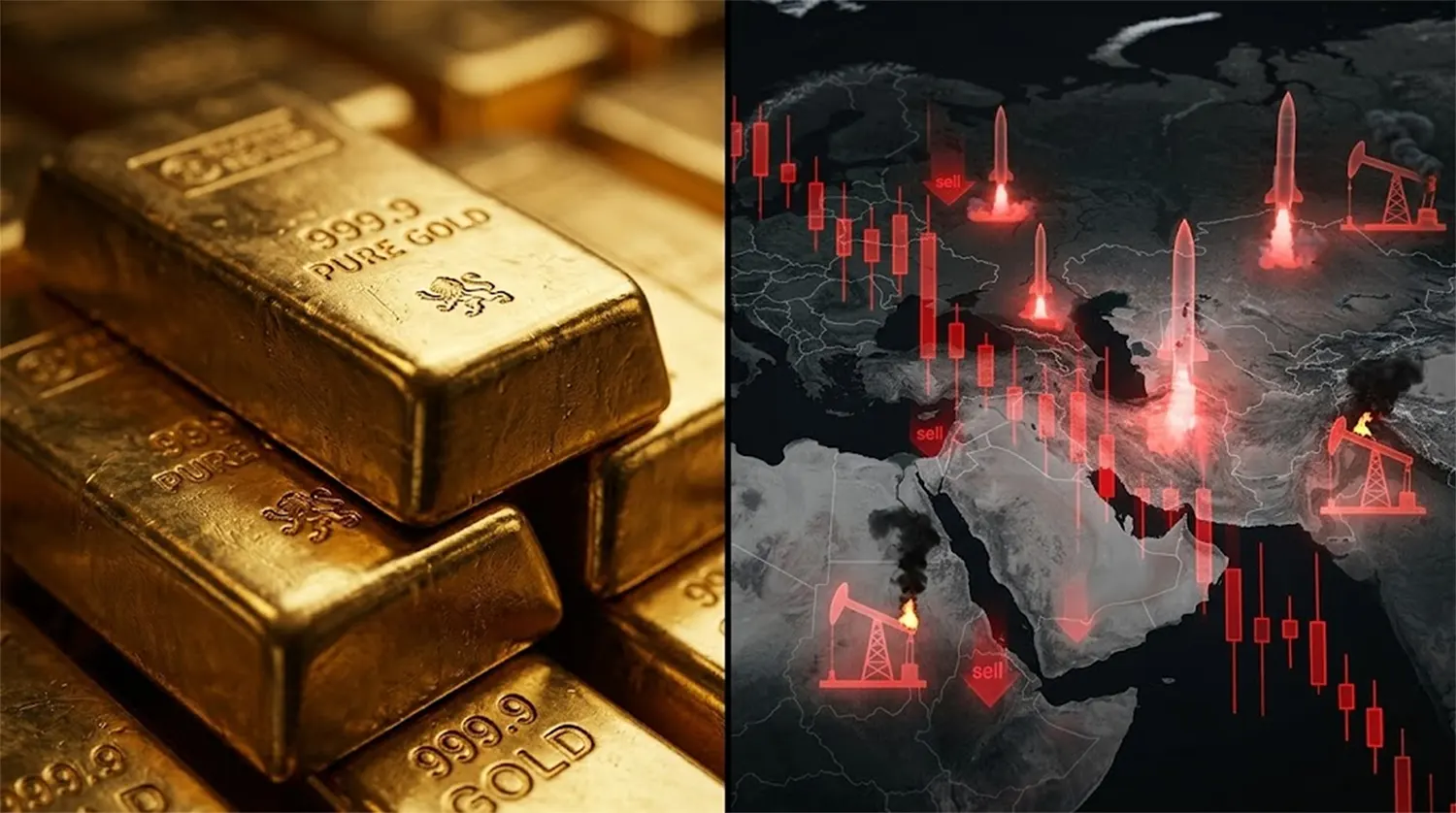
Gold is back in focus. After a sharp drop in March, prices are rebounding but uncertainty remains. This article breaks down what’s moving gold right now, who’s buying and selling, and what it means for investors.
A Market Under Pressure, Then a Sudden Rebound
Gold prices are staging a comeback after a brutal sell off. As of April 1, 2026, gold is trading around $4,700 per ounce, recovering from its worst monthly decline since 2008.
However, this rebound is not straightforward. Multiple forces geopolitics, central banks, and interest rates are pulling gold in different directions, leaving investors unsure about what comes next.
Why This Moment Matters for Everyone Watching Gold
Gold is more than just a metal. It is often seen as a safe place to store wealth during uncertainty. When prices move sharply, it signals deeper shifts in the global economy.
Right now, gold is caught between fear and optimism. On one hand, geopolitical tensions usually push prices higher. On the other, easing conflict and shifting economic policy can pull them down.
Because of this, what happens next could set the tone for the rest of 2026.
A Sharp Drop Followed by a Fast Recovery
March 2026 was brutal for gold investors. The metal lost more than 13% in a single month, marking its worst performance since the global financial crisis.
But the story didn’t end there. In the last 24 hours, gold has surged nearly 1.5%, bouncing back after testing a key support level near $4,368.
Still, context is important. Gold remains about 18% below its January peak of $5,650, showing that the market is far from stable.
This leads to the key question: what is actually driving this volatility?
The “Trump Factor” and Why Gold Is Rising Anyway
Normally, signs of peace push gold lower. That’s because investors feel less need for a “safe haven.” But this time, the market is behaving differently.
US President Donald Trump’s comments about ending the Iran war in “2–3 weeks” would typically weaken gold. Instead, prices are rising.
The reason lies in the currency market. The US dollar is weakening, and that makes gold more attractive globally.
Because of this, investors are betting that shorter conflict means lower interest rates, which historically supports gold prices.
In simple terms: less war should hurt gold but a weaker dollar is pushing it up instead.
Central Banks Are Breaking the Trend
For years, central banks have been major buyers of gold. That trend is now shifting.
In 2026, some countries are selling gold instead of buying it, a rare reversal after decades of accumulation.
Russia and Turkey are leading this shift. Both countries are facing economic pressure and are using gold reserves to stabilize their currencies.
As a result, new supply is entering the market, which has contributed to recent price drops.
However, this is only half the story.
At the Same Time, New Buyers Are Stepping In
While some countries are selling, others are buying aggressively.
Poland has emerged as the world’s largest gold buyer by volume, aiming to increase gold to 30% of its reserves. Meanwhile, China continues a steady strategy, buying gold
for 17 consecutive months.
Beyond these major players, a wider group of countries including India, Uzbekistan, and Kazakhstan are also adding gold to their reserves.
This shift means demand is no longer concentrated in just one or two countries. Instead,
it is spreading globally.
Because of this, the market is becoming more balanced but also more unpredictable.
Why Some Countries Are Selling Gold Fast
Not all selling is strategic. In many cases, it is driven by necessity.
Turkey, for example, has sold over 50 tonnes of gold in recent weeks to defend its currency. Russia has also reduced its reserves, using gold to manage budget gaps and bypass sanctions.
These actions highlight a key reality: gold is not just an investment, it is also an emergency financial tool.
As one analyst put it, “Countries sell gold when they run out of options.”
This pressure selling creates volatility, especially when large volumes hit the market at once.
The Hidden Challenge: Can Gold Supply Keep Up?
While central banks dominate headlines, gold mining also plays a crucial role.
China remains the largest producer globally, but it keeps most of its gold domestically. Australia is the most consistent exporter, supplying global markets.
However, even strong production cannot fully offset sudden selling or buying by governments.
This creates a situation where short term price movements are driven more by policy decisions than mining output.
Where Gold Could Go Next
Looking ahead, gold faces two possible paths.
If prices break above $4,760, analysts expect a move toward $4,800–$5,000. This would signal renewed confidence and strong demand.
On the other hand, if geopolitical tensions ease and the dollar strengthens, gold could fall back toward $4,368.
In other words, the market is in a tug of war between safety demand and currency trends.
A Market Defined by Uncertainty
Gold is at a turning point. The recent rebound shows resilience, but underlying risks remain.
Right now, gold is being pulled in two directions at once by global uncertainty and
shifting economic policy.
For investors, the message is clear: this is not a stable market, but it is one full of opportunity.
What happens next will depend on a delicate balance between war and peace, selling
and buying, and above all, confidence in the global economy.