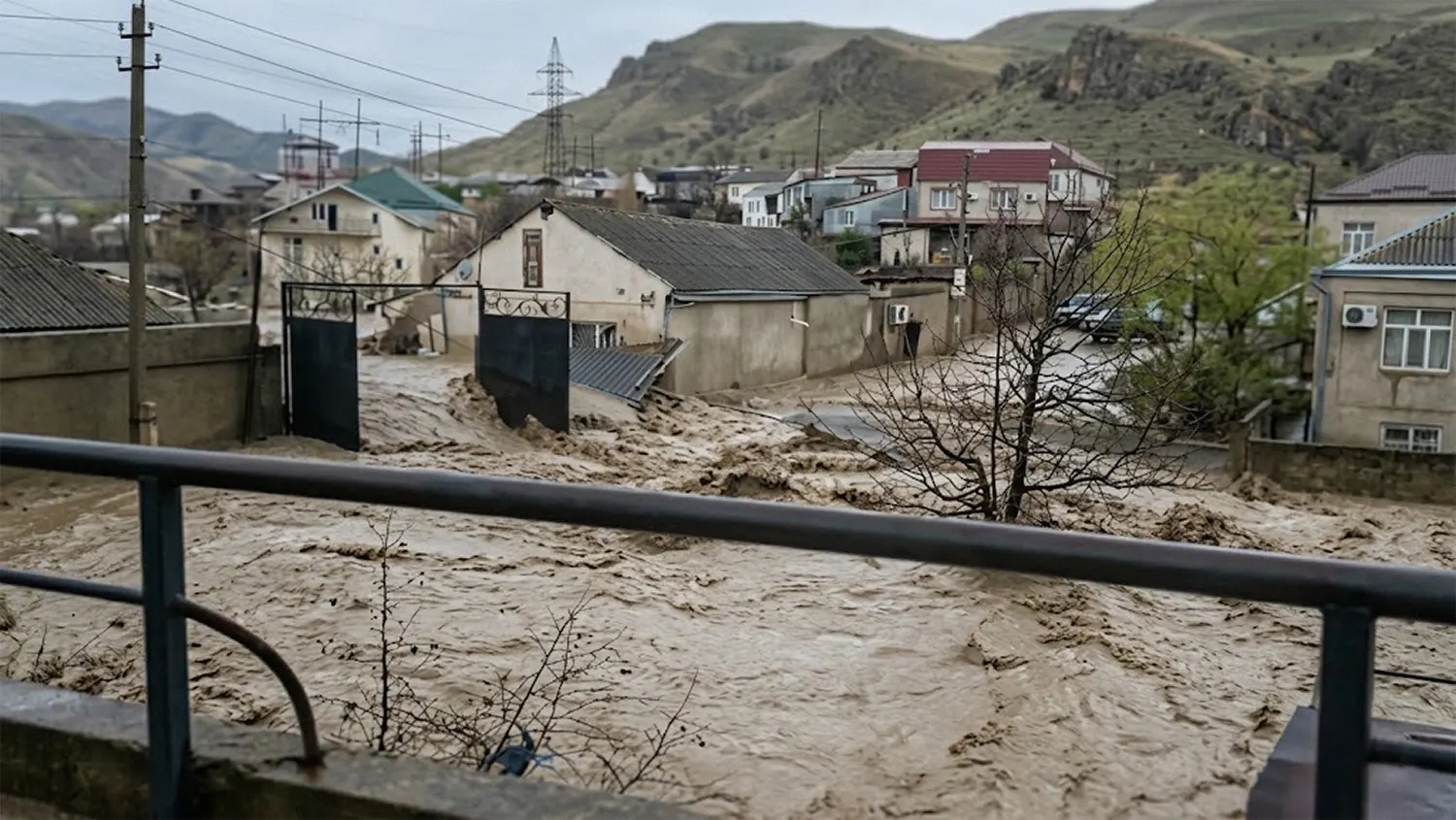
Dagestan remains in crisis on April 8, 2026, after deadly flooding and a dam collapse forced mass evacuations, with more heavy rain forecast in the coming days.
The situation is rapidly evolving. While officials say some areas are stabilizing, the reality on the ground tells a more urgent story. A second, more destructive wave of flooding has already overwhelmed infrastructure, pushing authorities to declare a federal state of emergency.
But to understand the full scale of the disaster, it’s important to look at how quickly conditions have deteriorated.
A Disaster Growing in Scale and Severity
The human toll continues to rise. At least six people have died, including three children, with the latest victim recovered from rubble in the village of Mamedkala.
Meanwhile, over 6,200 residents have been evacuated, many forced to leave their homes with little warning as floodwaters surged through communities.
The turning point came on April 5, when the Gedzhukh reservoir dam collapsed, releasing a powerful wall of water downstream. Entire villages were flooded, and major highways were cut off, isolating communities.
This raises a critical question: how prepared was the region for such an event?
Infrastructure Under Strain and Failing
The flooding has exposed deep vulnerabilities in Dagestan’s infrastructure. Reports indicate that the Gedzhukh dam had been declared unsafe as early as 2006, but was never properly reinforced.
In the capital, Makhachkala, the consequences are visible. Apartment buildings have partially collapsed, as saturated ground and landslides weaken foundations.
At one site, an annex to a six story building gave way entirely, forcing emergency evacuations and raising fears about the safety of nearby structures.
Beyond buildings, essential services have also been hit hard.
Earlier this week, around 500,000 people were left without electricity, and while some power has been restored, many areas remain unstable. Water filtration systems are also offline, compounding the crisis.
And that leads to another growing concern: public health.
Contaminated Water Raises Health Emergency
Authorities have issued urgent warnings across major cities, including Makhachkala, Kaspiysk, and Khasavyurt: do not drink tap water.
Mudflows and damaged sewage systems have contaminated water supplies, creating conditions ripe for disease outbreaks.
In response, officials have launched a mass Hepatitis A vaccination campaign, aiming to prevent a secondary health crisis.
But the challenge is enormous. With infrastructure damaged and more rain expected, maintaining clean water access is becoming increasingly difficult.
And the weather forecast suggests the situation could worsen.
A Third Wave of Rain Threatens Further Destruction
Meteorologists have issued an “Orange level” weather warning, the second highest alert, signaling a high probability of further natural disasters.
Heavy rainfall is expected to begin again on April 9 and continue through April 14. What makes this especially dangerous is the current condition of the land.
The soil across much of Dagestan is already fully saturated, meaning nearly all new rainfall will turn into immediate runoff. This significantly increases the risk of:
- Flash floods
- Mudslides in mountainous regions
- Additional dam failures
Areas such as Khasavyurt and Kaitag are particularly vulnerable, where steep terrain can amplify the destructive power of water.
This raises the stakes dramatically for emergency responders.
Government Response Intensifies Amid Rising Pressure
In response to the escalating crisis, Russia’s Emergencies Ministry has upgraded the situation to a federal state of emergency.
This designation unlocks greater resources, including additional funding, military support, and large scale rescue operations.
Preliminary estimates suggest the damage has already exceeded 4 billion rubles (approximately $43 million USD), though officials warn the true cost could be significantly higher.
Despite these efforts, the scale of the disaster continues to challenge response teams, especially as new threats emerge.
A Region on Edge as the Crisis Continues
For residents of Dagestan, the disaster is far from over. Thousands remain displaced, living in temporary shelters while authorities assess structural damage and ongoing risks.
At the same time, nearly 1.5 million people have been affected by power outages, damaged roads, or flooding highlighting the widespread impact across the region.
Beyond the immediate devastation, this crisis underscores a deeper issue: aging infrastructure and increasing climate volatility are combining to create more frequent and severe disasters.
As the next wave of rain approaches, the focus now shifts to prevention holding damaged systems together long enough to avoid an even greater catastrophe.
For now, Dagestan stands at a critical moment, where every hour and every drop of rain could determine what comes next.