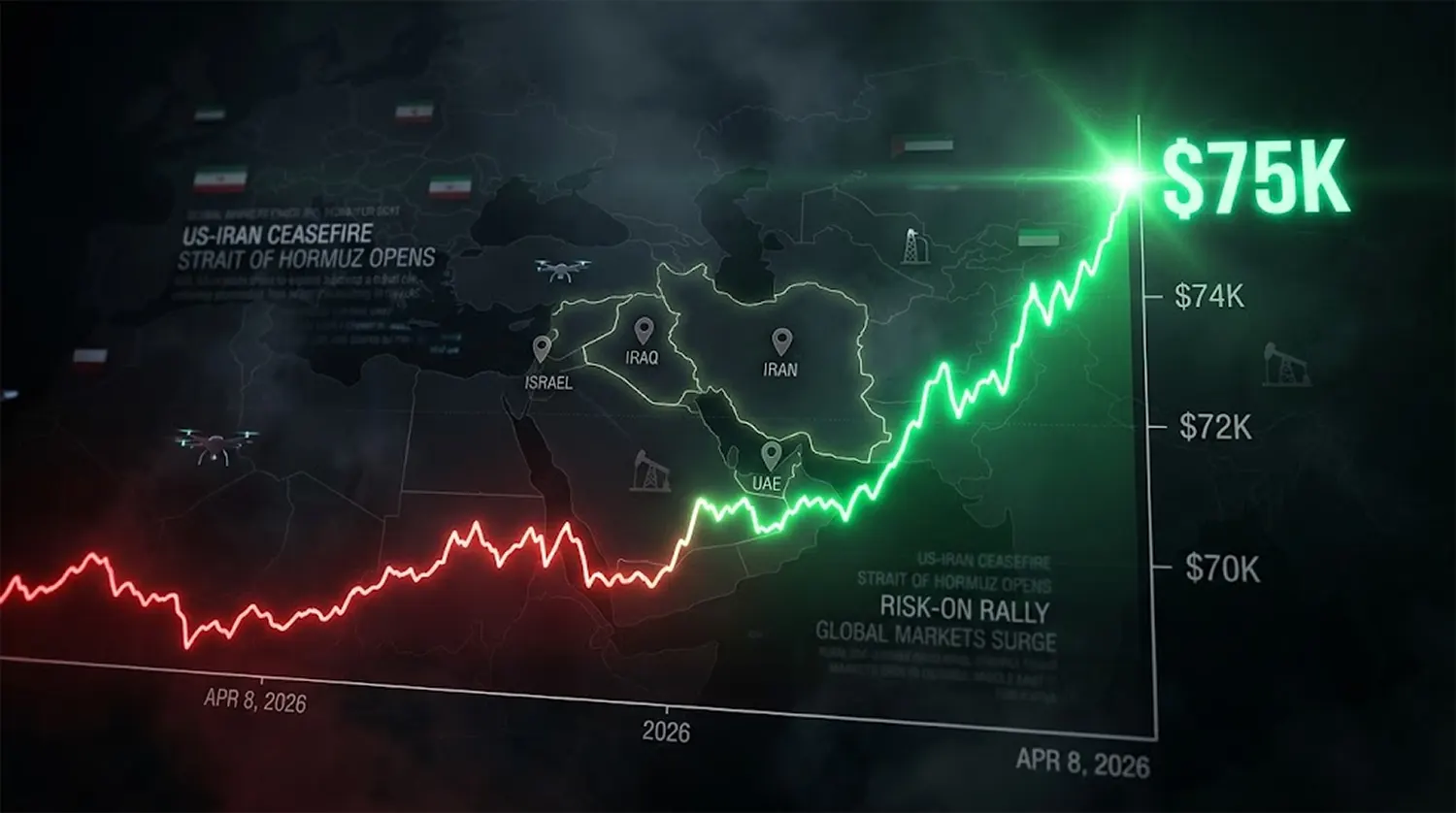
Bitcoin jumped above $71,000 on April 8, 2026, after a U.S.–Iran ceasefire eased global tensions, but resistance near $75,000 and fragile market confidence are keeping traders cautious.
The rally matters because it reflects more than price action. It shows how quickly capital shifts when geopolitical risk fades. For investors, Bitcoin’s next move could signal broader market direction, from equities to commodities.
But the real story lies beneath the surface of this surge.
Why the rally feels strong but not yet secure
Bitcoin is up roughly 3.36% in 24 hours, briefly touching $72,700 before settling lower. The move coincided with a sharp drop in oil prices, as markets reacted to the ceasefire.
This is a classic “risk on” shift. Money is rotating out of defensive assets like oil and gold and into growth assets. In this case, Bitcoin and tech stocks are leading the charge.
However, that strength comes with a caveat. Much of the rally was driven by forced liquidations of short positions, totaling around $425 million. In simple terms, traders betting against Bitcoin were squeezed out, pushing prices higher.
That raises a second question: how much of this rally is real demand?
The $75,000 barrier shaping the entire market
Bitcoin has spent nearly nine weeks trapped between $62,000 and $74,000, creating what traders call a consolidation range. At the top of that range sits a critical level: $75,000 resistance.
This level is both technical and psychological. It represents a point where many investors who bought earlier are breaking even and may choose to sell.
At the same time, data shows a dense cluster of holders between $63,000 and $71,000. This creates a high friction zone where selling pressure can stall upward momentum.
But the dynamic changes if Bitcoin breaks through.
A breakout could trigger rapid price discovery
If Bitcoin closes decisively above $75,000, analysts expect a rapid move higher.
The reason is simple: there is very little historical resistance above that level.
This creates what traders call a “liquidity vacuum,” where prices can move quickly due to a lack of sell orders. In that scenario, $85,000 to $89,000 becomes the next major target range.
Technically, some charts are already hinting at this possibility. An inverse head and shoulders pattern, a bullish formation suggests that a breakout could end the current consolidation phase.
But that outcome depends on more than charts alone.
Why geopolitics still holds the key
The current rally is tied directly to the U.S.–Iran ceasefire. Markets are effectively pricing in a temporary pause, not a permanent resolution.
The agreement hinges on stability in the Strait of Hormuz, a critical oil shipping route.
If disruptions occur, the risk premium could return instantly, pushing investors back into defensive assets.
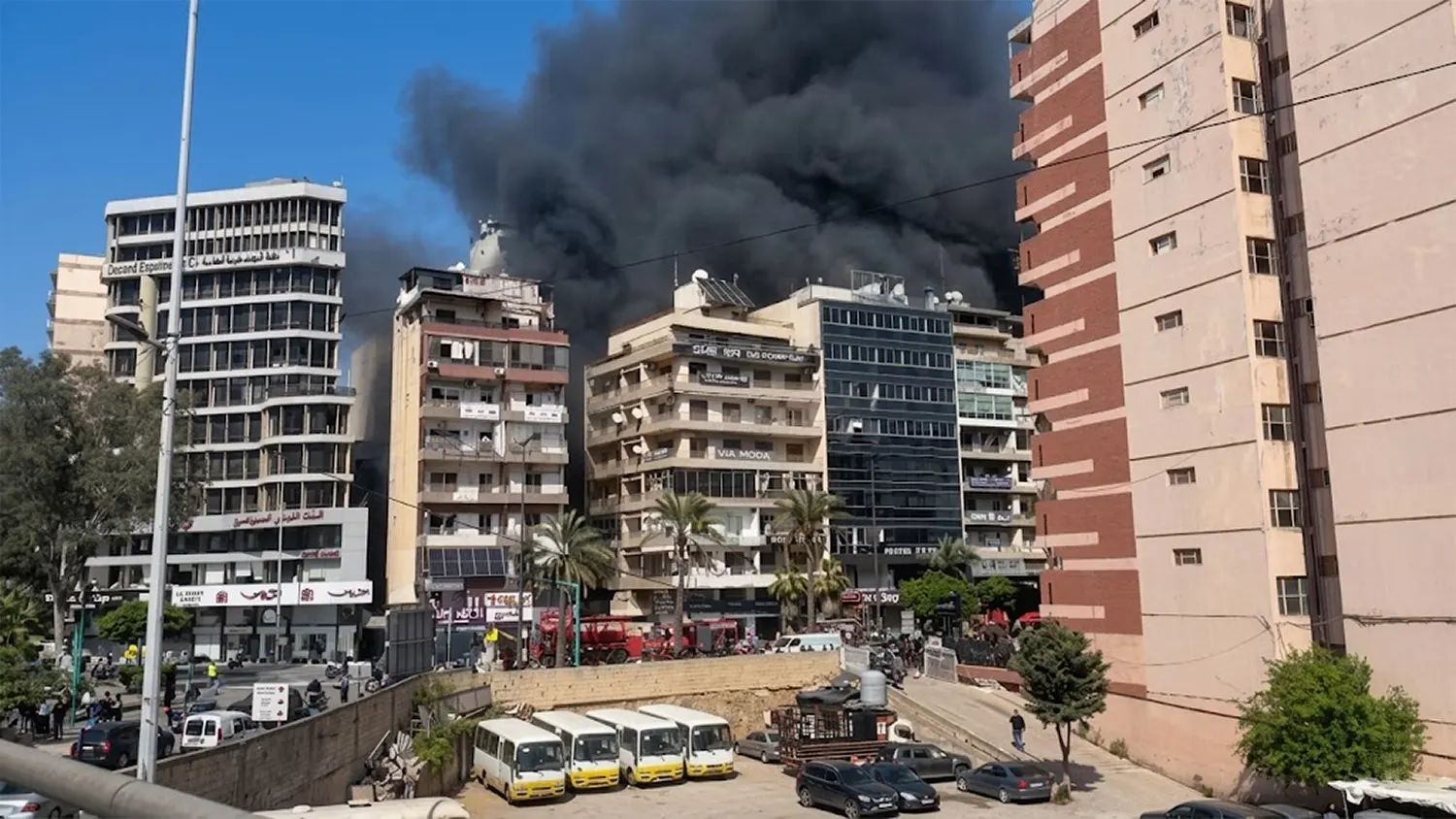
At the same time, the ceasefire does not cover Lebanon. Ongoing tensions there mean regional risk has not disappeared, it has simply shifted.
This uncertainty explains why many investors are holding back rather than going all in.
The hidden hesitation among institutional investors
Large investors are not rushing into the market just yet. Instead, many are waiting for confirmation from macroeconomic data, particularly U.S. inflation figures due later this week.
If inflation remains under control, it could reinforce expectations of a more supportive monetary policy. That would strengthen the case for Bitcoin to move higher.
But if inflation surprises to the upside, it could dampen risk appetite. In that scenario, Bitcoin could retreat toward $66,000, a key support level.
This cautious stance reflects a broader reality: the market is reacting to events, but not fully committing to a direction.
A market caught between momentum and uncertainty
Right now, Bitcoin is sitting near the top of its range, creating what analysts describe as a “decision phase.” The next 48 hours are likely to determine the trend.
Key levels are clear. A sustained move above $75,000 signals a breakout. Holding $70,000 keeps the current rally intact. Falling below $66,000 would indicate a failed move.
At the same time, external triggers remain critical. The safe passage of oil tankers through the Strait of Hormuz and the upcoming inflation data will shape investor confidence.
In other words, the market is not just trading Bitcoin, it is trading global stability.
The rotation from oil to crypto tells a bigger story
One of the most striking developments is the sharp drop in oil prices, which fell from around $110 to $92 in a single session.
This decline reflects fading geopolitical fear. As that fear recedes, capital is moving into assets with higher growth potential.
Bitcoin has become a primary beneficiary of this shift. The result is a clear “oil to crypto” rotation, where investors reposition for a more optimistic outlook.
But this trend is fragile. If tensions flare up again, the flow of capital could reverse just as quickly.
Why the next move could define the year
The current setup is unusually balanced. On one side, there is strong momentum, improving sentiment, and bullish technical patterns. On the other, there is geopolitical risk, macro uncertainty, and heavy resistance.
That tension is what makes this moment so important. A confirmed breakout could accelerate Bitcoin’s path toward new highs. A rejection could extend the consolidation for weeks.
For now, the market remains in a holding pattern reacting to relief, but waiting for clarity.
And that brings the story back to where it started. A ceasefire may have sparked this rally, but its durability will determine what comes next. As long as that peace remains uncertain, Bitcoin’s surge will remain powerful but unproven.