
Tensions in the Middle East have escalated sharply following recent strikes between Iran, the United States, and Israel. In response, the United Kingdom is rapidly expanding its military presence in the region but with a critical caveat.
Prime Minister Keir Starmer has made it clear that Britain will take part in “collective self defense,” not offensive war.
That distinction may sound technical, but it has major implications for international diplomacy, regional security, and Britain’s relationship with Washington. As drones and missiles fly across the Gulf and airspace closes across several countries, London is trying to balance three competing priorities: protecting its citizens, supporting regional allies, and avoiding a direct war with Iran.
The result is a complex strategy that places the UK squarely in the middle of one of the world’s most volatile crises.
The Background: Escalation After “Operation Epic Fury”
The current crisis accelerated after U.S. and Israeli forces launched coordinated strikes on Iranian military infrastructure on February 28 under the operation known as “Operation Epic Fury.”
Those attacks targeted Iranian command and control facilities and
missile infrastructure. In response, Iran launched hundreds of drones and missiles across the Gulf, hitting or threatening targets in several countries.
While the United States and Israel continue their offensive campaign,
the UK has deliberately chosen a different path.
Britain’s strategy is focused on interception, air defense, and civilian protection not bombing Iranian territory.
That policy difference has quickly created political friction across the Atlantic.
Starmer’s Strategy: The “Defensive Only” Doctrine
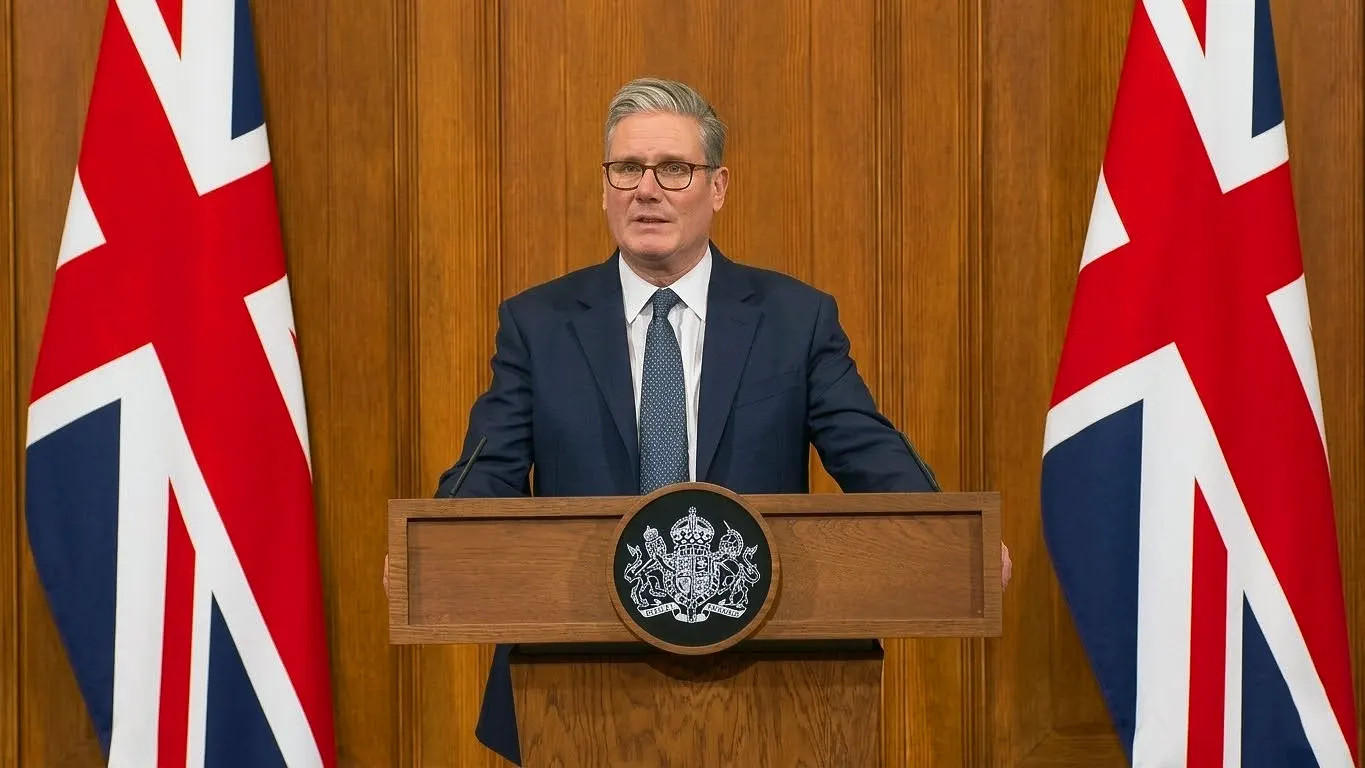
From 10 Downing Street on March 5, Prime Minister Starmer outlined what he called a “collective self defense” mission designed to protect allies and British nationals.
The policy is built around several clear rules:
Intercept threats in the air.
British fighter jets are authorized to shoot down Iranian drones and missiles heading toward civilian areas, airports, or military facilities.
Stop attacks before they launch indirectly.
UK intelligence and surveillance assets may help identify Iranian missile launch sites, but the actual strikes are left to U.S. and Israeli forces.
No regime change operations.
Starmer has repeatedly stressed that Britain will not take part in a campaign aimed at overthrowing the Iranian government.
The Prime Minister framed the decision bluntly:
“This government does not believe in regime change from the skies.”
For London, the goal is to act as a shield rather than a sword.
New Military Deployments Across the Region
To support this defensive mission, the UK is deploying a surge of air and naval assets to the Middle East.
Air Power: Interceptors in the Sky
The backbone of the operation is air defense.
Four additional Typhoon fighter jets are being deployed to Qatar, joining aircraft already stationed there. Their primary task is intercepting drones and missiles before they reach populated areas or military bases.
At the same time, F-35B stealth fighters have been redirected to defensive patrols over Jordan and Iraq. These jets can detect and track threats long before they reach their targets.
To keep aircraft in the air longer, Voyager tanker aircraft are providing
mid air refueling, extending patrol times across the Gulf.
Naval Assets: A Missile Shield at Sea
The Royal Navy is also expanding its presence.
The Type 45 destroyer HMS Dragon Britain’s most advanced
air defense warship is currently transiting the Mediterranean and
is expected to arrive near Cyprus by March 8.
Once in position, the ship will provide long range missile detection and interception, creating what military planners describe as a “protective umbrella” over British facilities such as RAF Akrotiri.
Elsewhere in the Gulf, HMS Middleton, a mine hunting vessel based in Bahrain, continues operations to keep shipping lanes open.
Counter Drone Units
One of the biggest threats in the conflict is the widespread use of
Iranian made suicide drones.
To address that risk, the UK is deploying Leonardo Wildcat helicopters to Cyprus, equipped with Martlet lightweight missiles.
These weapons are specifically designed as low collateral interceptors, meaning they can destroy small drones without causing large explosions that could harm civilians on the ground.
The move reflects the defensive emphasis of the mission: protecting infrastructure and population centers rather than striking Iranian territory.
The Cyprus Incident That Changed the Situation
The dangers of the crisis became clear on March 2, when an Iranian drone struck near RAF Akrotiri, Britain’s major military base in Cyprus.
While the base itself was not seriously damaged, the incident marked a turning point.
The strike prompted the UK government to immediately evacuate roughly 1,200 dependents and non essential personnel from the base.
Families and schoolchildren connected to the Ministry of Defence were flown to the UK via RAF Voyager aircraft.
For many in London, the attack confirmed that even a defensive posture makes Britain a potential target.
Protecting 300,000 British Nationals
Beyond military deployments, the UK government is managing a major civilian logistics challenge.
An estimated 300,000 British citizens are currently spread across the Gulf region, including large communities in the UAE, Qatar, Bahrain, and Kuwait.
With many airports facing intermittent closures due to missile threats, the government has launched a phased evacuation plan.
The Oman Evacuation Hub
Muscat has become the central hub for assisted departures.
The first government chartered evacuation flight departed Muscat International Airport on March 5, after initial delays.
Priority seats are being given to:
- Medically vulnerable citizens
- Unaccompanied minors
- Individuals identified by the Foreign Office as high risk
More flights are expected in the coming days.
Alternative Routes
If congestion builds in Oman, Saudi Arabia may serve as a secondary evacuation corridor, with travelers moving overland or via short regional flights.
For now, most citizens in the Gulf have been instructed to shelter in place until airspace becomes safer.
Rapid response teams from the Foreign Office have been deployed across the region to assist British nationals navigating the crisis.
A Growing Rift With Washington
The UK’s limited role has not gone unnoticed in Washington.
Former President Donald Trump whose administration authorized the initial strikes on Iran has openly criticized London’s stance.
He reportedly mocked Starmer’s approach, saying:
“This is not Winston Churchill that we’re dealing with.”
From the U.S. perspective, Britain’s refusal to fully join the offensive campaign signals hesitation at a moment when Washington believes unified pressure on Iran is necessary.
London, however, sees the situation differently.
British officials argue that joining offensive strikes without a clear legal mandate risks repeating the mistakes of the Iraq War.
Why the Legal Distinction Matters
At the center of the dispute is international law.
By labeling its mission “collective self defense,” Britain is positioning its actions under Article 51 of the United Nations Charter.
That legal framework allows states to defend themselves and their allies against attack.
But it does not automatically justify offensive military campaigns inside another country.
This legal boundary explains why UK forces can intercept missiles, provide intelligence, and protect civilians but not directly bomb targets inside Iran.
What Happens Next ?
The coming days could determine whether the crisis escalates or stabilizes.
Several key developments will shape the outcome:
Iran’s next moves.
If Tehran continues launching drones and missiles across the region, Western defenses may intensify.
The arrival of HMS Dragon.
Once the destroyer is on station near Cyprus, Britain’s defensive capabilities will significantly expand.
Diplomatic pressure.
European governments are pushing for de escalation talks to prevent a broader regional war.
At the same time, every new missile launch increases the risk of miscalculation.
The Stakes for Britain and the Region
Britain’s strategy in the Middle East is a careful balancing act.
The UK is trying to defend allies and protect its citizens without becoming a direct participant in a war against Iran.
That approach places London between two powerful forces,
an increasingly aggressive regional conflict and pressure from Washington to take a stronger military role.
For now, Prime Minister Starmer is betting that a defensive posture will keep Britain safe while leaving the door open for diplomacy.
But in a region where tensions can escalate overnight, that diplomatic tightrope could become harder to walk.