
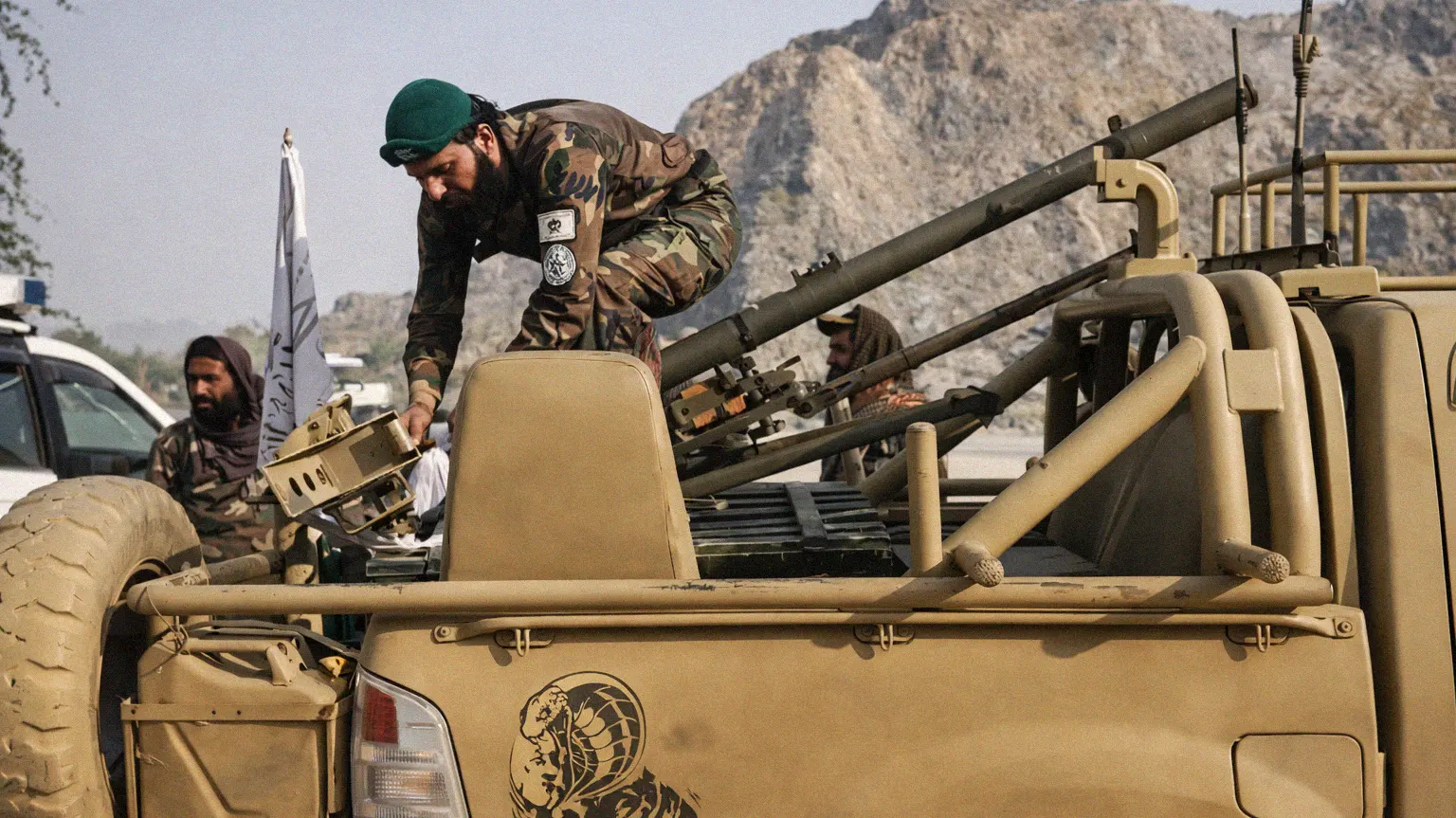
The war between Pakistan and Afghanistan is entering a far more dangerous phase.
Just days after the conflict escalated into open hostilities, both sides are now conducting sustained military operations across the disputed Durand Line, turning a long running security dispute into a high intensity interstate conflict.
As of March 6, 2026, the fighting has expanded to include airstrikes near major Afghan cities, artillery duels across multiple provinces, and retaliatory Taliban offensives against Pakistani border posts. Civilian casualties are rising rapidly, trade routes are shut down, and diplomatic efforts are struggling to gain traction.
The result is a fast moving crisis that risks destabilizing the wider region while much of the world’s attention remains focused elsewhere.
A War That Has Moved Beyond the Border
The confrontation between the two neighbors is no longer limited to isolated frontier clashes.
Pakistan’s military campaign, known as “Operation Ghazab lil Haq,”
has expanded dramatically, targeting not only militant groups but also locations inside Afghanistan that Islamabad believes support cross border attacks.
Pakistani officials say the operation is aimed primarily at eliminating safe havens used by Tehrik-e-Taliban Pakistan (TTP), an insurgent organization responsible for a growing number of attacks inside Pakistan.
However, the scale and geography of the strikes show that the conflict has broadened far beyond counterterrorism operations.
For the first time in years, Pakistan has acknowledged conducting airstrikes near major Afghan urban centers, including Kabul and Kandahar. Pakistani jets have also conducted strikes in areas surrounding Bagram Airbase, the former U.S. military hub north of the Afghan capital.
Islamabad describes these operations as “intelligence based strikes on militant infrastructure.”
Kabul tells a very different story.
The Afghan Taliban government says the strikes hit civilian areas and residential infrastructure, reporting dozens of deaths, including children.
The conflicting narratives highlight a familiar reality of modern warfare: information battles unfolding alongside military ones.
Taliban Retaliation Along the Durand Line
Across the border, the Taliban has responded with force of its own.
Taliban fighters have launched coordinated offensives against Pakistani military posts along the frontier, using artillery, mortars, and mobile infantry units.
According to Afghan officials, several Pakistani positions have been temporarily overrun during intense fighting, though Islamabad disputes those claims.
What is clear is that the Taliban is not simply absorbing Pakistan’s air campaign.
Instead, it is attempting to impose costs on Pakistan through aggressive “retaliatory offensives.”
Taliban forces have targeted military infrastructure across Pakistani border districts, including areas near Kurram, Bajaur, and North Waziristan. Afghan officials claim their latest clashes killed at least four Pakistani soldiers in the past 24 hours.
The fighting is currently concentrated in two key Afghan regions:
- Dand Patan district in Paktia province
- Zazi Maidan district in Khost province
These mountainous areas have become some of the most intense frontlines of the war, where heavy artillery exchanges now occur almost nightly.
Air Power vs Asymmetric Warfare
One defining feature of this conflict is the sharp imbalance in military capabilities between the two sides.
Pakistan’s strategy relies heavily on its superior air force, using jets and drones to conduct deep strikes inside Afghanistan.
The Taliban, by contrast, lacks a conventional air force and relies on asymmetric tactics.
Their approach includes:
- Heavy artillery and mortar strikes on Pakistani border areas
- Ground incursions targeting military checkpoints
- Hit and run assaults on logistical infrastructure
There are also persistent accusations from Islamabad that the Taliban allows TTP militants to operate from Afghan territory, enabling attacks deep inside Pakistan.
Kabul denies these claims.
But the issue of militant sanctuaries remains the central driver of the war.
The Humanitarian Crisis Is Growing Fast
While the military confrontation intensifies, the human cost is rising sharply.
According to the United Nations Assistance Mission in Afghanistan,
at least 56 civilians have been killed and more than 100 injured
since the latest escalation began. UN officials stress these figures
remain preliminary, as access to active conflict zones along the border is extremely restricted.
The number of displaced people is even more alarming.
More than 160,000 people roughly 23,000 families have been forced to flee their homes across eastern Afghanistan, particularly in provinces such as Nangarhar, Kunar, and Khost.
Entire communities are evacuating villages near the frontier as shelling and airstrikes intensify.
The crisis is particularly devastating because many of these communities were already struggling to recover from the August 2025 earthquake that struck eastern Afghanistan, leaving thousands displaced even before the current fighting began.
As a result, many civilians now fleeing the war are being displaced for the second time in less than a year.
Healthcare systems are also under pressure.
Several clinics and hospitals in the region have reportedly been damaged or forced to shut down due to the fighting, leaving thousands without access to medical care.
Trade Routes Turn Into War Zones
The economic consequences are already being felt.
The vital Torkham border crossing, one of the busiest trade routes between Pakistan and Afghanistan, remains closed due to the ongoing shelling.
This corridor normally handles billions of dollars in annual trade,
making it essential for the Afghan economy.
With the crossing shut:
- Trucks carrying food and fuel are stranded
- Supply chains are disrupted
- Prices are beginning to spike in local markets
The Spin Boldak crossing further south remains partially open, but only for limited movement, including Afghans returning or fleeing from conflict zones.
For landlocked Afghanistan, prolonged disruption of these trade corridors could quickly trigger shortages of essential goods.
Conflicting Casualty Claims
One of the most difficult aspects of the conflict is determining the true scale of the losses.
Both governments are engaged in aggressive information warfare, releasing widely different casualty figures.
Pakistan claims:
- More than 460 Afghan fighters killed
- Hundreds of Taliban military posts destroyed
The Taliban counters with dramatically different numbers:
- Over 80 Pakistani soldiers killed
- Dozens of Pakistani positions captured
Independent verification remains extremely difficult due to the rugged terrain and restricted access for journalists.
As a result, most analysts treat official figures from both sides with caution.
Diplomacy Struggles to Gain Traction
Despite the escalating violence, diplomatic efforts remain weak and fragmented.
Several countries have offered to mediate the crisis.
Among them:
- Recep Tayyip Erdoğan has reportedly reached out to Pakistan’s leadership to help restore a ceasefire.
- Qatar and Saudi Arabia have expressed willingness to revive earlier mediation efforts.
- China has called for restraint, partly due to its economic investments in Pakistan through the China-Pakistan Economic Corridor.
- Russia has also voiced support for diplomatic talks.
Meanwhile, the United Nations is primarily playing a monitoring and humanitarian role through UNAMA, documenting civilian casualties and warning about the growing displacement crisis rather than acting as a direct political mediator.
However, none of these efforts have yet produced meaningful negotiations.
One major reason is the hardened rhetoric on both sides.
Pakistani officials have stated there will be no ceasefire until Afghanistan takes “verifiable steps” against the TTP.
The Taliban leadership, meanwhile, views the airstrikes as a violation of national sovereignty and has vowed to continue its “measured response.”
A War Overshadowed by a Larger Crisis
Another factor complicating mediation is the broader geopolitical climate.
The escalating confrontation involving the United States, Israel, and Iran has dominated global attention, pushing the Pakistan–Afghanistan war into the background of international diplomacy.
The ripple effects of that conflict are also being felt in the skies above the region.
Because of the wider war, regional airspace restrictions have been introduced across parts of the Middle East and Central Asia, complicating civilian and military flight routes. These restrictions have made it more difficult for humanitarian organizations and international observers to operate in and around the conflict zone.
Diplomats warn that this global distraction is dangerous.
Without sustained international attention, the border war risks continuing with limited diplomatic pressure on either side to de escalate.
What to Watch Next
Several developments in the coming weeks could determine the trajectory of the war.
Key indicators include:
- Whether Pakistan expands its air campaign deeper into Afghanistan
- Whether the Taliban attempts larger ground offensives across the border
- Whether trade corridors such as Torkham reopen or remain closed
- Whether any direct diplomatic channel between Kabul and Islamabad is restored
The absence of dialogue remains the most alarming factor.
Without communication between the two governments, even minor incidents along the border could rapidly spiral into larger confrontations.
The Bottom Line
The Pakistan–Afghanistan conflict has evolved into a full scale interstate war.
Pakistan is leveraging air superiority and deep strike operations, while the Taliban is responding with aggressive border offensives and asymmetric tactics.
At the same time, civilians are paying the price.
Hundreds of thousands are displaced, trade routes are collapsing, and humanitarian systems are under strain.
For now, neither side appears willing to back down, and diplomatic efforts remain stalled.
If the current trajectory continues, this border war could become one of the most destabilizing conflicts in South and Central Asia in years.