A New Phase in the Israel–Lebanon War
The conflict between Israel and Lebanon has entered a dangerous new stage. On March 24, Israeli Defense Minister Israel Katz announced that Israel will seize and hold territory in southern Lebanon up to the Litani River.
This is not just another military operation. It marks a shift from short term raids to a long term territorial strategy, potentially placing nearly 10% of Lebanon under Israeli control.
For a region already on edge due to the wider Israel–Iran confrontation, this move raises a critical question: Is this a temporary buffer or the beginning of a prolonged occupation?
From Border Clashes to Territorial Control
To understand the significance of this decision, it helps to look at how quickly the conflict has escalated.
What began earlier this month as cross border attacks between Israel and Hezbollah has now evolved into a full scale ground campaign. As a result of continued rocket fire into northern Israel, Israeli leaders argue that a more aggressive approach is necessary.
The new plan is clear: push Hezbollah forces north of the Litani River and create a “security zone” free of threats.
This river, located roughly 30 kilometers inside Lebanon, has long been seen as a natural dividing line. But by moving troops that far north, Israel is no longer just defending its border, it is reshaping it on the ground.
The “Gaza Model” Comes to Southern Lebanon
The way Israel is carrying out this strategy is just as significant as the strategy itself.
Defense officials have openly said they are applying tactics used in Gaza particularly in cities like Rafah to southern Lebanon. The goal is to create what Israeli leaders describe as a “sterile zone.”
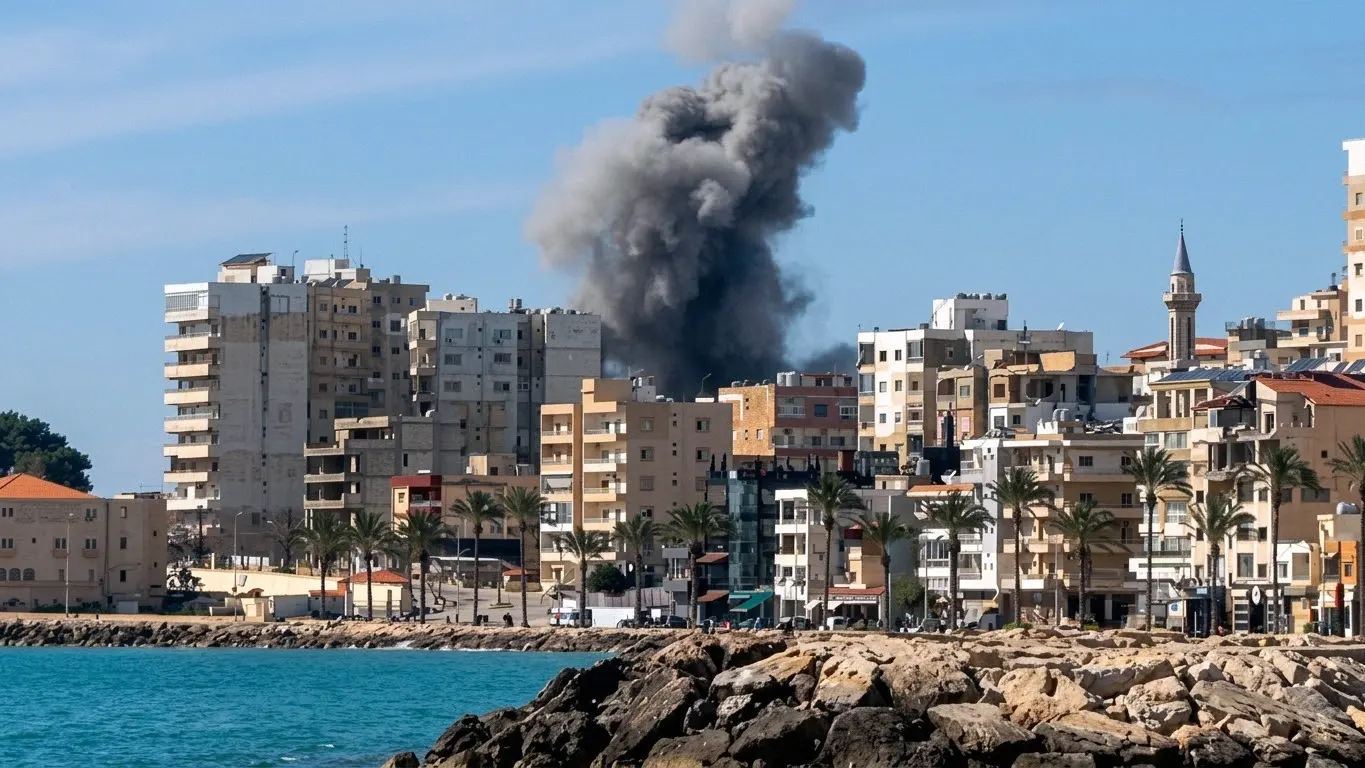
In practice, that means widespread demolition of homes and infrastructure in frontline villages.
As Israel Katz put it: “Where there is terror and missiles, there will be no homes.”
At the same time, Israeli forces have targeted key infrastructure. At least five major bridges over the Litani River have been destroyed, cutting off supply routes and isolating the south.
Taken together, these actions show a clear military logic:
remove civilian presence, sever logistics, and deny Hezbollah any ability to operate near the border.
A Humanitarian Crisis Unfolds
However, this strategy comes with a massive human cost.
More than 1 million people nearly 20% of Lebanon’s population have been displaced in just a few weeks. Entire communities have been forced to move north of the Litani River, with warnings that returning south could be life threatening.
This scale of displacement is not just a byproduct of war, it is central to the strategy. And that is what has alarmed international observers.
The fear is that a “temporary evacuation” could become permanent, leaving large parts of southern Lebanon effectively emptied of civilians.
As a result, what began as a military operation is now also a humanitarian emergency,
one that could destabilize Lebanon even further.
Legal Questions: Security vs. International Law
As the situation intensifies, legal concerns are growing.
Under international law, countries have the right to defend themselves. Israel argues that its actions fall under self defense, given Hezbollah’s attacks from Lebanese territory.
But critics point to key legal limits.
Mass displacement of civilians is heavily restricted under the Fourth Geneva Convention, especially if people are not allowed to return. Similarly, the large scale destruction of homes and infrastructure must be strictly necessary and proportionate.
The debate becomes even sharper when discussing long term control. Occupation is meant to be temporary under international law annexation is not permitted at all.
This is why statements from figures like Bezalel Smotrich are causing alarm. He has suggested that the Litani River could become Israel’s “new northern border.”
If that idea becomes policy, it would cross a clear legal red line.
Regional and Global Reactions
The reaction from world capitals has been swift and deeply divided.
The United Nations has warned that the creation of a large “sterile zone” could lead to permanent displacement on a massive scale. European countries, led by France, are pushing for a diplomatic solution to prevent Lebanon from collapsing entirely.
At the same time, the United States is walking a careful line. While supporting Israel’s broader war efforts in the region, Washington is also concerned that a long term occupation could turn into a costly and destabilizing quagmire.
Inside Lebanon, the situation is even more complex.
The Lebanese government has taken the unusual step of expelling Iran’s ambassador, signaling a desire to distance itself from the wider Iran–Israel conflict. But its ability to control events on the ground remains limited.
Meanwhile, Hezbollah has made its position clear. It has called the Israeli move an “existential threat” and vowed to launch a prolonged guerrilla war.
A Buffer Zone That Risks Becoming a Permanent Frontline
With both sides hardening their positions, several paths are possible.
Israel could maintain control of the buffer zone, turning it into a long term security belt.
But history suggests that holding territory in southern Lebanon often leads to drawn out insurgencies.
At the same time, Hezbollah is likely to adapt. Even if pushed north of the Litani, it has already shown it can continue launching attacks, raising doubts about whether the buffer zone will achieve its intended goal.
Diplomatic efforts are ongoing, but they face major obstacles. Any deal would likely require Hezbollah to disarm or withdraw, something the group has consistently refused to do.
As a result, the risk of a prolonged and expanding conflict remains high.
A Strategic Shift That Could Redraw the Northern Border
The move to seize southern Lebanon up to the Litani River is a turning point.
What began as a defensive response is evolving into a territorial strategy with long term consequences.
It raises fundamental questions about security, sovereignty, and the limits of military power. And it comes with a stark reality:
Even if the territory is taken, the conflict itself may be far from over.