A Win That Raises Bigger Questions
BYD has officially become the world’s top electric vehicle seller but the story doesn’t
end there.
As of March 2026, the Chinese automaker has overtaken Tesla in global EV sales,
marking a historic shift in the industry. However, behind this headline victory lies a deeper issue: record sales are not translating into record profits.
This raises a critical question for the future of the EV market:
Is winning the volume game enough to survive?
The Sales Crown: BYD Overtakes Tesla
The numbers tell a clear story.
In 2025, BYD sold 2.26 million battery electric vehicles (BEVs), a 28% increase
year on year. In contrast, Tesla delivered 1.64 million units, marking a 9% decline.
For the first time, BYD has surpassed Tesla in pure EV sales.
However, the gap widens even further when including hybrids:
- Total BYD vehicles (BEV + PHEV): 4.6 million
- Tesla (BEV only): 1.64 million
BYD is no longer just competing, it is dominating on volume.
Yet, as impressive as these figures are, they reveal only part of the story.
The Profit Trap: Why More Sales Mean Less Money
Despite record breaking deliveries, BYD’s latest financial report tells a different story.
Net profit fell 19% to $4.7 billion, marking its first decline since 2021. At the same time, revenue growth slowed to just 3.5%, the weakest in six years.
So what’s going wrong?
A Brutal Price War
China’s EV market has entered a “knockout stage”, with intense competition from:
- Geely
- Xiaomi
- Leapmotor
To stay competitive, BYD has repeatedly slashed prices, squeezing its margins.
Shrinking Profit Margins
- Gross margins dropped from 19.4% to 17.7%
In simple terms: BYD is selling more cars but earning less per car.
This is the core of the “volume vs. value” paradox now defining the EV industry.
A Global Pivot: BYD Looks Beyond China
Because of slowing domestic growth, BYD is shifting its strategy outward.
Global expansion has become its most important lifeline.
- Overseas sales now make up over 22% of total revenue
- The company is targeting 1.3 million exports in 2026
Why does this matter?
Because cars sold abroad are far more profitable.
A vehicle priced at $20,000 in China can sell for $35,000+ in Europe or Australia,
even after shipping and tariffs.
This shift from domestic volume to international value could reshape BYD’s financial future.
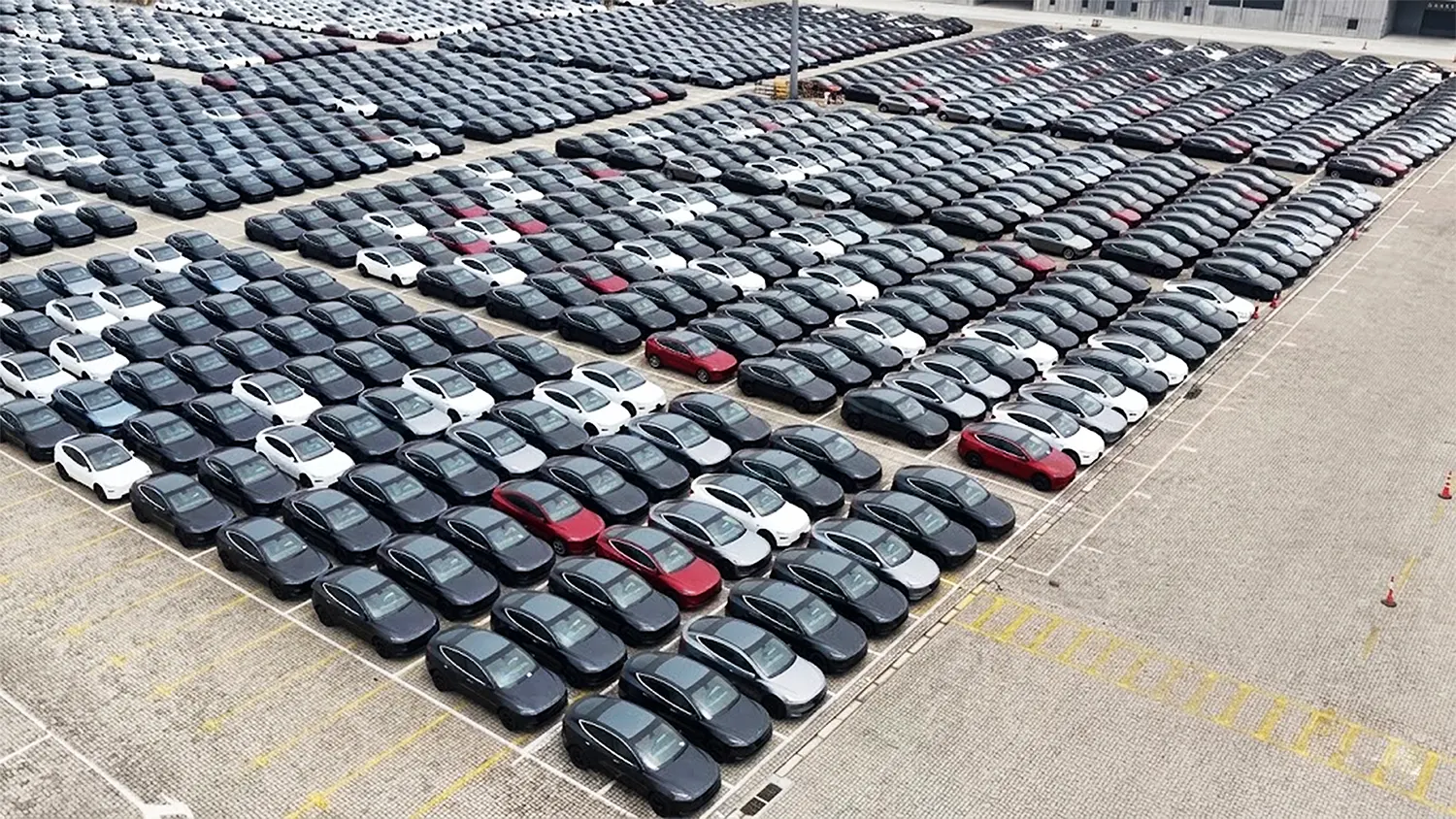
The Export Boom: China Becomes the “Electric Garage” of the World
Beyond BYD itself, a bigger trend is unfolding.
In early 2026:
- China exported 1.35 million vehicles (up 48% year-on-year)
- Electric vehicles made up nearly half of all exports
At the center of this surge is Shanghai, now a global hub for EV shipments.
For the first time, BYD sold more vehicles overseas in a single month than in China.
This marks a turning point:
China is no longer just a manufacturing hub, it is becoming the world’s dominant EV supplier.
The Energy Crisis Effect: Why Demand Is Surging
However, this export boom is not happening in isolation.
A global energy crisis is accelerating the shift to electric vehicles.
With oil prices exceeding $110 per barrel, fuel costs are rising sharply worldwide.
- Average monthly petrol cost: $162
- Average monthly EV cost: $76
The cost difference is pushing consumers toward EVs faster than ever before.
At the same time, countries heavily reliant on oil imports such as India and Vietnam
are now viewing EV adoption as a matter of energy security.
This crisis is acting as a powerful, real world incentive to go electric.
A Smarter Product Strategy: Not Just Electric
Another key advantage for BYD is flexibility.
Unlike Tesla, BYD is not purely focused on fully electric vehicles.
Its plug in hybrids (PHEVs) are seeing strong demand in markets where charging infrastructure is still limited.
This gives buyers a middle ground:
- Lower fuel costs
- No “range anxiety”
In emerging markets, this hybrid strategy is proving to be a major competitive edge.
Building a Global Footprint: From Exports to Factories
To sustain growth, BYD is going beyond exports.
The company is now building factories around the world.
Key locations include:
- Thailand (serving Southeast Asia)
- Brazil (covering Latin America)
- Hungary (gateway to Europe)
This “local production” strategy helps BYD avoid tariffs and expand faster.
At the same time, it signals a shift from:
“Made in China” → “Made for the world”
The Bigger Picture: A New Global Auto Order
All of these trends point to a larger shift in the industry.
The 2026 energy crisis is doing for Chinese EVs what the 1970s oil shock did for Japanese cars.
Back then, fuel efficiency reshaped the global auto market.
Today:
- Electric vehicles are the new standard
- China is leading production
- BYD is leading volume
The balance of power in the automotive world is shifting fast.
Winning the sales race is one thing. Staying profitable is another.
Conclusion: Volume Isn’t Everything
BYD’s rise marks a historic shift but also a warning.
The company has proven it can dominate on scale.
Now, it must prove it can translate that scale into sustainable profit.
Because in the next phase of the EV race,
the winners won’t just sell the most cars, they’ll make the most money doing it.