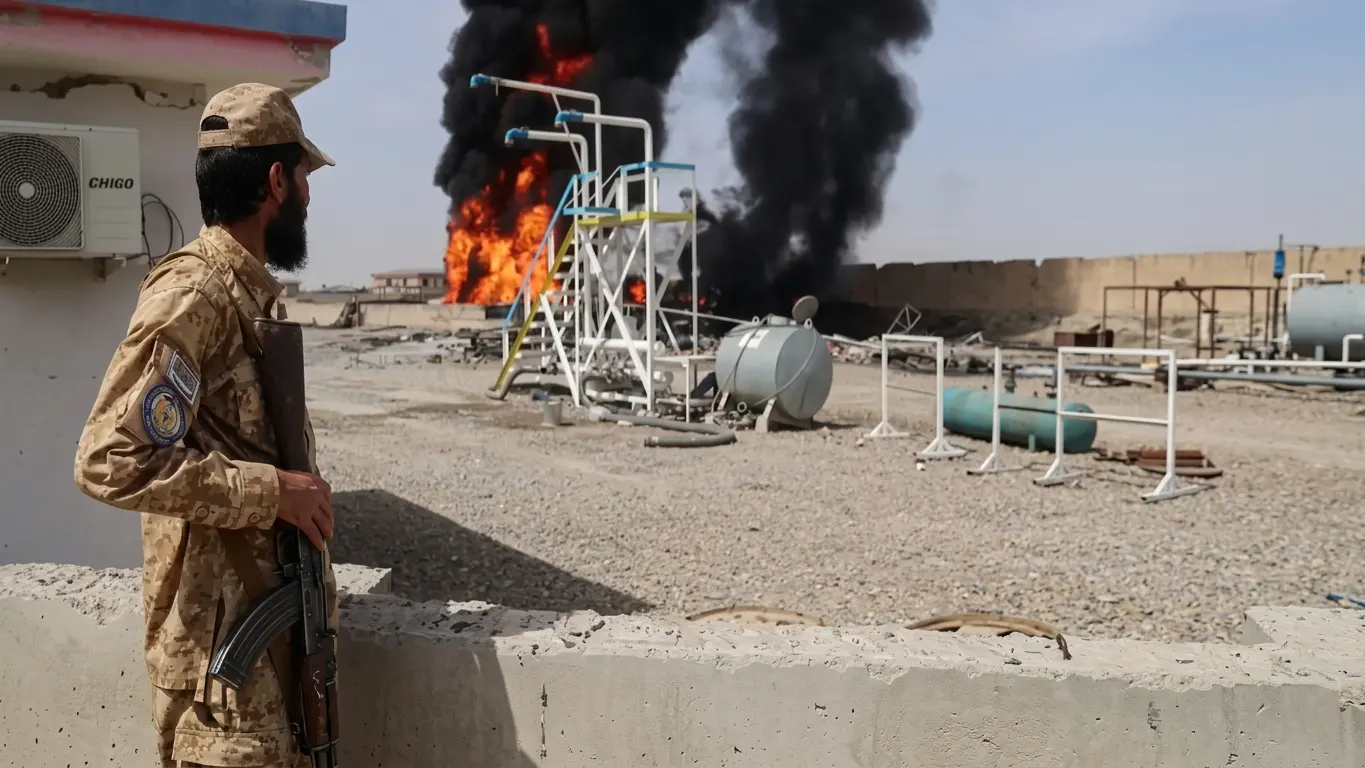
Heavy shelling struck the outskirts of Asadabad, Afghanistan, on March 29, 2026, killing one person and injuring 16, as tensions between Pakistan and the Taliban led
government escalated into what both sides now describe as open war.
For civilians along the Afghanistan–Pakistan border, the violence marks more than another flare up. It signals a dangerous shift toward sustained conflict and a growing crisis where military escalation and humanitarian disaster are unfolding at the same time.
Shelling in Asadabad highlights the human cost of escalation
The latest incident occurred on Sunday afternoon near Asadabad, the capital of Kunar Province. According to Afghan officials, the area was hit by heavy artillery and mortar fire, which they attributed to the Pakistani military.
Local health authorities reported that most of the injured were women and children, underscoring the toll on civilians. Afghan Deputy Spokesman Hamdullah Fitrat confirmed the casualties, describing the strike as an attack on residential areas and civilian homes.
But the incident is not isolated. Instead, it reflects a pattern of increasing cross border strikes that have intensified since late February. That raises a broader question: how did tensions reach this point?
A fragile ceasefire collapsed into renewed fighting
The current phase of the conflict traces back to late February 2026, when Afghanistan launched a cross border raid into Pakistan. Kabul said the move was retaliation for earlier airstrikes it claimed had killed civilians.
In response, Pakistan escalated its military operations and formally declared an “open war” posture, marking the most serious confrontation between the two sides in decades.
There was a brief pause. A ceasefire brokered by Saudi Arabia, Turkey, and Qatar during the Eid al-Fitr holiday temporarily reduced violence. Yet that truce proved short lived. Fighting resumed almost immediately after it expired, particularly in Kunar and Nangarhar provinces.
What followed has been a rapid cycle of retaliation, with both sides accusing each other of targeting civilians. And one incident, in particular, has fueled outrage on both sides.
Disputed strikes deepen mistrust and competing narratives
Earlier in March, Afghanistan accused Pakistan of carrying out an airstrike on a drug rehabilitation hospital in Kabul, claiming more than 400 people were killed. Pakistan rejected that claim, insisting the target was an ammunition depot linked to militants.
This dispute highlights a central feature of the conflict: deeply conflicting narratives and limited independent verification. Each side presents vastly different accounts of events, making it difficult to establish a clear picture on the ground.
And those contradictions extend beyond individual incidents to the overall scale of the conflict.
Clashing death tolls reveal a widening information gap
Both governments have released sharply different figures on military losses since the escalation began.
Pakistan claims it has killed hundreds of Afghan soldiers possibly over 400, while reporting relatively low losses on its own side. In contrast, the Taliban led government claims dozens to hundreds of Pakistani troops have been killed and says it has captured multiple border posts.
Independent verification remains limited. United Nations agencies have confirmed at least 289 civilian casualties, including 76 deaths, but have been unable to verify military figures due to restricted access and classified data.
As a result, the conflict is unfolding under what analysts describe as a “fog of war,” where information is fragmented and often contested. That uncertainty makes it harder to assess not only the scale of the fighting but also its trajectory.
Border clashes risk expanding into a wider conflict
Beyond the numbers, the strategic posture of both sides suggests the conflict could intensify further.
Pakistan maintains that its operations are targeted responses to militant threats, particularly against groups it says operate from Afghan territory. It frames its actions as necessary for national security.
Meanwhile, the Taliban led government argues it is defending Afghan sovereignty and has warned that continued shelling could trigger a full scale ground offensive into Pakistani tribal regions.
These positions leave little room for compromise. And as both sides dig in, the risk of a broader regional conflict continues to grow.
Civilians face a double crisis of war and natural disaster
What makes the situation even more urgent is the humanitarian impact. Border communities are now dealing with both military violence and severe flooding caused by heavy spring rains.
In the same region affected by shelling, flash floods have killed more than 22 people this week. The overlapping crises have strained local resources and complicated rescue efforts for those injured in the fighting.
For residents, the result is a “double disaster”, where access to medical care, shelter, and basic services is increasingly limited. Aid organizations warn that conditions could worsen if the conflict continues at its current pace.
A volatile standoff with no clear resolution
As of March 30, 2026, the situation remains highly unstable. There are no confirmed negotiations underway, and recent efforts at mediation have failed to produce lasting results.
The shelling in Asadabad offers a snapshot of a broader reality: a fast moving conflict marked by retaliation, uncertainty, and rising civilian risk. Each new incident adds pressure to an already fragile border.
What happens next will depend on whether diplomatic channels can reopen or whether
the cycle of escalation continues. For now, the region stands at a critical point,
where every strike risks pushing the conflict further beyond control.