
The Middle East has entered a high risk moment.
A 15 day deadline set by President Donald Trump is nearing expiration, and the diplomatic window for a new nuclear agreement with Iran is narrowing rapidly.
Both Washington and Tehran say they prefer a negotiated outcome.
At the same time, both are positioning themselves for military escalation. The result is a tense standoff with global consequences.
A Military Build Up Designed for Leverage or War
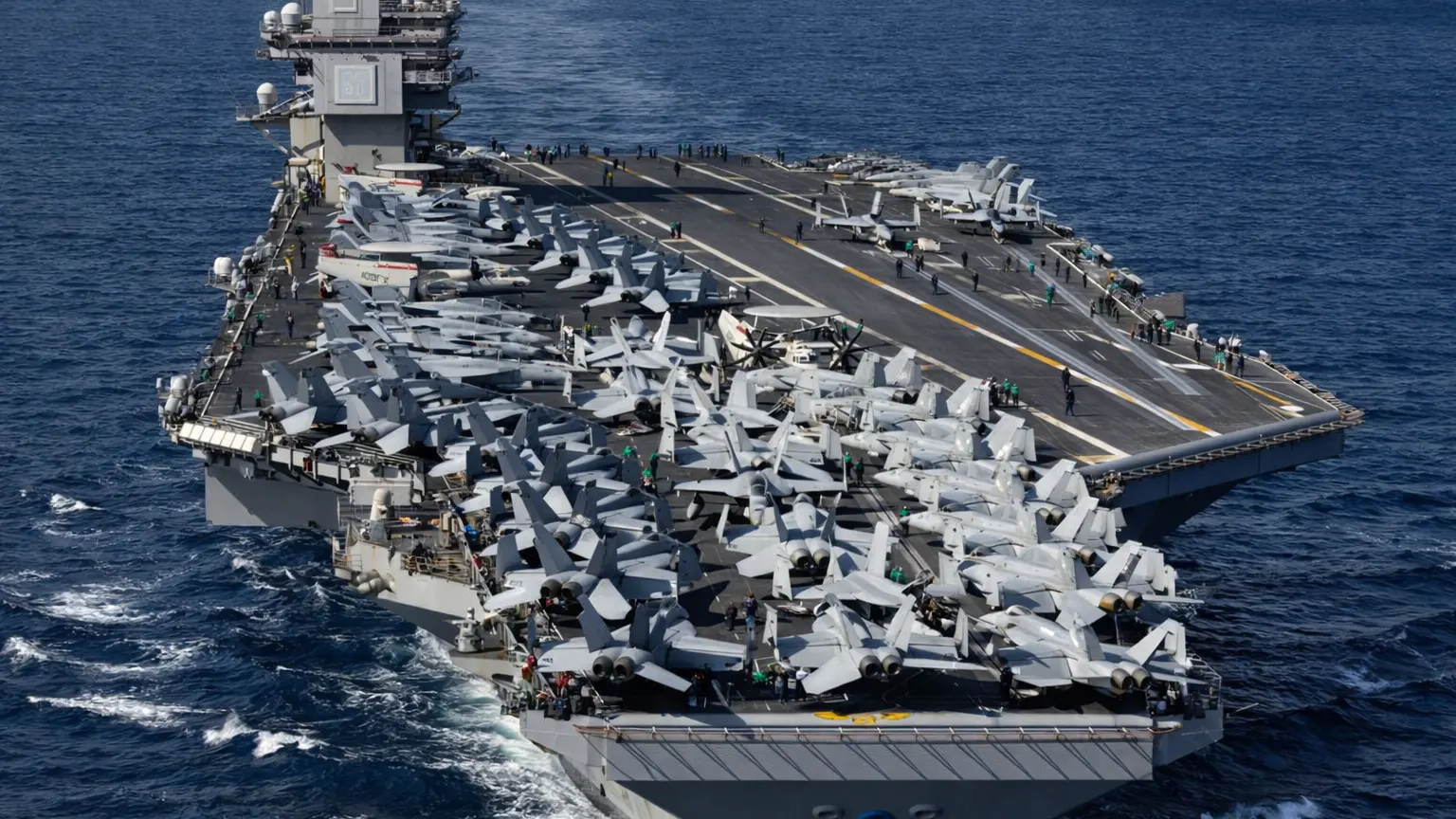
The United States has initiated what analysts describe as the largest regional military concentration since the 2003 Iraq invasion.
Repositioning Forces
Two aircraft carriers, the USS Gerald R. Ford and the USS Abraham Lincoln have moved into the Arabian Sea. They are positioned beyond the immediate range of Iran’s coastal missile systems but remain capable of launching sustained air operations.
At the same time:
- Hundreds of non essential personnel have been evacuated from regional bases as a protective measure.
- More than 50 fifth generation fighters (F-35s and F-22s) have been deployed to the region.
- The Pentagon has accelerated procurement of GBU-57 “bunker buster” bombs, capable of penetrating deeply buried facilities such as Fordow.
- U.S. Cyber Command is reportedly integrating offensive cyber operations into strike planning.
The build up serves two purposes: deterrence and readiness. If diplomacy fails, the U.S. wants the ability to act immediately and withstand retaliation.
The Diplomatic Track: Geneva’s Mixed Signals
Indirect talks in Geneva produced cautious language but no breakthrough.
Iranian Foreign Minister Abbas Araghchi described discussions as “serious and constructive.” U.S. officials used similarly restrained phrasing. Both sides agreed to a set of “guiding principles” essentially a framework for continued negotiations.
However, the central dispute remains unchanged.
The U.S. Position
Washington is demanding:
- Zero uranium enrichment
- A complete halt to Iran’s ballistic missile program
For Tehran, these conditions amount to strategic capitulation.
Iran’s Position
Iran insists:
- It has the right to peaceful nuclear energy
- It will not negotiate under deadlines or threats
- Any attack on Iranian territory will result in strikes on U.S. regional assets
Public statements after the meeting revealed inconsistencies.
Tehran suggested that “zero enrichment” was not explicitly demanded in the room. The White House quickly clarified that the policy remains firm.
The talks did not collapse. But they did not stop the clock.
Expanding Pressure: Economic and Political Levers
The administration’s approach extends beyond military posture.
Secondary Tariff Threats
President Trump has threatened 25% secondary tariffs on any country continuing substantial trade with Iran, including major importers such as China and India. The objective is to create maximum economic isolation, forcing partners to choose between access to the U.S. market or Iranian energy.
“Board of Peace” Diplomacy
Negotiations are being handled by a newly branded “Board of Peace”, which bypasses traditional State Department channels and frames potential military action as enforcement rather than invasion.
Public rhetoric has intensified. President Trump recently suggested that regime change in Tehran “could be the best thing that could happen,” shifting the conversation from nuclear compliance to regime survival.
Iran’s Counter Moves
Iran has adopted a dual track strategy: signaling readiness for war while leaving space for diplomacy.
- The Islamic Revolutionary Guard Corps (IRGC) has placed the Strait of Hormuz under heightened surveillance.
- Tehran has warned that U.S. facilities in Qatar, Bahrain, and the UAE would become “legitimate targets.”
- A formal counterproposal is reportedly being prepared.
Iran is reinforcing its alliances, signaling that it will not face pressure alone.
China and Russia Enter the Equation
The standoff is no longer strictly bilateral.
Joint naval drills under the banner “Maritime Security Belt 2026” in the Strait of Hormuz and Gulf of Oman represent a strategic counter signal. Russian and Chinese vessels operating alongside Iranian forces complicate U.S. strike calculations.
Beijing has reportedly increased technological and cybersecurity support to Tehran. Moscow is considering deeper military cooperation, potentially involving advanced air defense systems.
Diplomatically, both governments have warned that unilateral U.S. action could destabilize the broader region.
The message is clear: Washington would not be acting in isolation.
What Happens If the Deadline Expires?
If the ultimatum passes without agreement, analysts identify three primary scenarios.
1. Limited Air Campaign
The most likely option involves targeted kinetic strikes on nuclear facilities such as Isfahan and Parchin, alongside missile production and air defense systems.
The March 2 meeting of the International Atomic Energy Agency (IAEA) in Vienna could serve as a legal and political trigger if Iran is formally censured.
2. Leadership Targeting
Reports suggest contingency plans include strikes on IRGC command infrastructure or senior leadership figures. The intent would be systemic disruption without occupation.
3. A Last Minute Compromise
There remains a significant chance of a diplomatic reset.
U.S. officials have hinted that a “token” level of enrichment under intrusive monitoring could be acceptable if framed as a win. Tehran’s upcoming written proposal may determine whether the deadline is extended.
The Retaliation Problem
The size of the U.S. force posture reflects expectations of immediate retaliation.
Iran possesses thousands of ballistic missiles and has threatened to target U.S. bases and shipping lanes. Disruption of the Strait of Hormuz through which roughly 20% of global oil flows could trigger instant global energy shockwaves.
Unlike limited operations elsewhere, Iran has a hardened military infrastructure and regional networks capable of asymmetric response.
Domestic Politics: A Divided America
Recent polling shows most Americans oppose a preemptive strike. However, many also believe conflict is likely.
Within the Republican base:
- A majority supports “peace through strength.”
- A substantial minority warns against another Middle Eastern war.
Democratic lawmakers argue that military action without congressional authorization would create a constitutional confrontation.
The political stakes are therefore domestic as well as international.
The Humanitarian Risk Inside Iran
Iran is already under severe internal strain. Protests earlier this year led to thousands of reported casualties, though exact figures remain contested.
A strike that weakens central authority without replacing it could trigger:
- Fragmentation within the IRGC
- Ethnic and regional unrest
- A prolonged civil conflict
Economic pressure has already pushed Iran’s currency to record lows. Additional sanctions or conflict would likely deepen humanitarian suffering.
The Strategic Irony
President Trump campaigned on ending “forever wars.” He now oversees the most substantial U.S. military mobilization in the Middle East in two decades.
Supporters argue that overwhelming force prevents war by compelling compliance. Critics warn that such posture increases the risk of miscalculation and escalation.
If a strike occurs, it would mark the first direct, large scale kinetic confrontation between the United States and the Iranian state.
A Narrow Window
Diplomacy has not failed, but it has not succeeded.
Military engines are running while negotiators draft proposals.
Whether this moment ends in a revised nuclear framework or a new regional war depends on decisions that may be made within days.
The clock is ticking.