
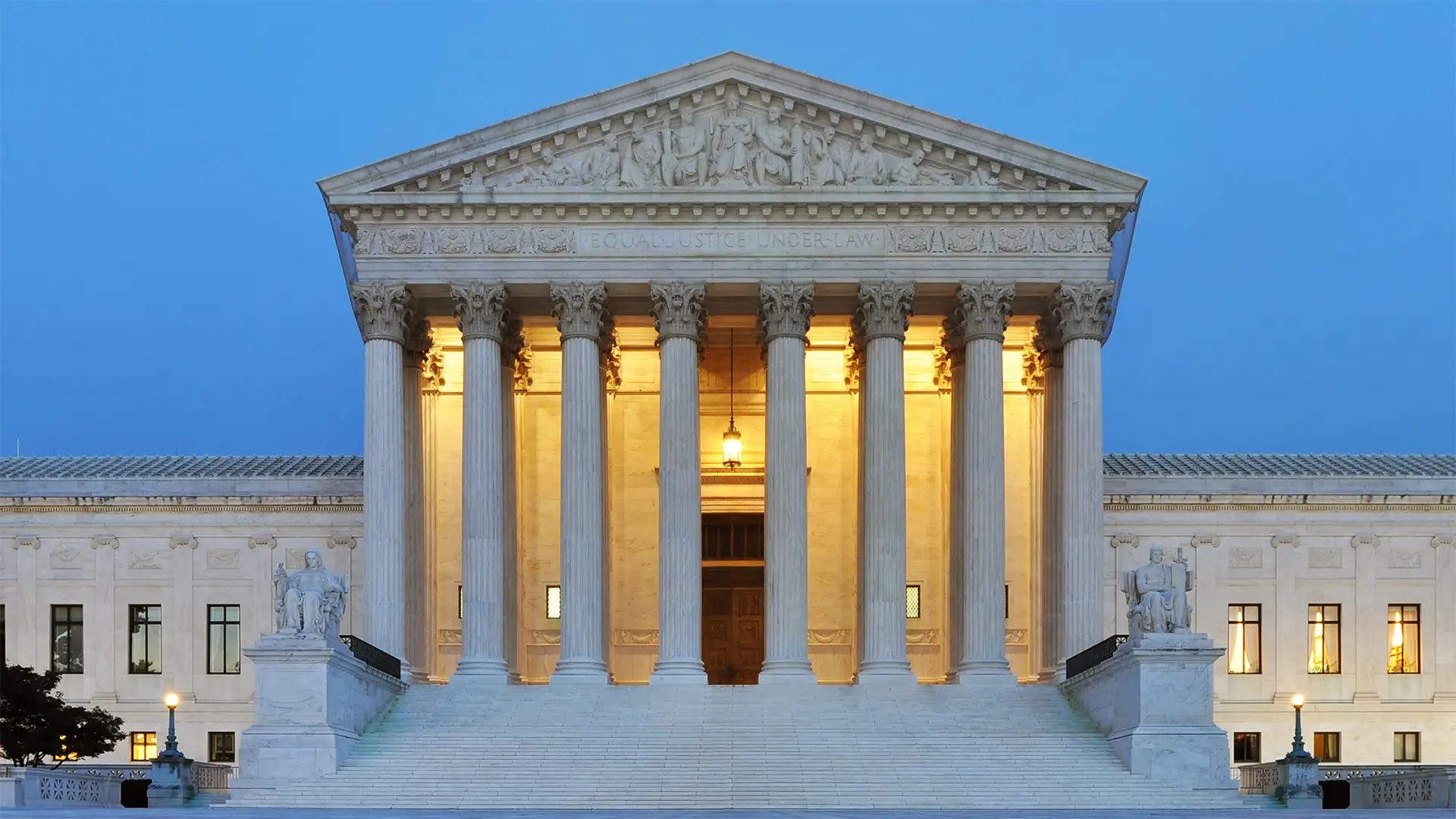
In a major constitutional ruling, the U.S. Supreme Court struck down several of President Trump’s “emergency” tariffs, delivering a 6–3 decision that sharply limits executive power over trade.
The Court’s conservative majority with unexpected cross ideological support ruled that the President cannot impose sweeping taxes on imports without clear authorization from Congress.
The decision immediately halts broad import duties and could trigger up to $175 billion in refunds.
For consumers, businesses, and global markets, the consequences are enormous.
The Major Questions Doctrine: No Blank Check
The Court invalidated tariffs imposed under the International Emergency Economic Powers Act (IEEPA).
Struck down:
- The sweeping 10% “baseline” tariff on nearly all imports
- “Reciprocal” tariffs targeting dozens of countries
- 25% duties on Canada, Mexico, and China tied to fentanyl related emergency declarations
Chief Justice Roberts leaned heavily on the Major Questions Doctrine,
a legal principle requiring explicit congressional approval for actions of “vast economic and political significance.”
The message was direct: Emergency powers do not authorize unlimited taxation.
What Still Stands
The ruling did not eliminate all tariffs.
Still active:
- Section 232 tariffs on steel, aluminum, lumber, and autos (national security justification)
- Section 301 tariffs on certain Chinese electronics and technology (unfair trade practices)
- High softwood lumber duties on Canadian imports
These measures were enacted under separate laws and were not part of this case.
The Court used a scalpel not a sledgehammer.
The $175 Billion Fiscal Shock
Because the tariffs were ruled illegal from the moment they were signed, the federal government may now owe between $133 billion and $175 billion in refunds.
That figure exceeds the combined annual budgets of the Departments of Justice and Transportation.
More than 1,800 companies have already filed lawsuits demanding repayment.
Under federal customs law, only the “importer of record”, the company that paid the tariff at the border is eligible for a refund.
Consumers are not included.
The Double Dip Scandal
When tariffs were imposed in 2025, many companies passed the cost directly to customers.
A $90 jacket became $100.
You paid the extra $10.
The company sent that $10 to the government.
Now the government must return that $10 not to you, but to the company.
Unless a retailer voluntarily lowers prices or issues refunds
(which is extremely rare and nearly impossible to track), corporations effectively collect twice.
And here’s the critical point: the tariff is now gone, but the higher price is not required by law.
Retailers are choosing whether to reduce it.
Economists call this “price stickiness.” Once prices rise, companies are slow to bring them back down even if their costs fall. Many keep prices elevated and absorb the difference as higher profit margins.
For shoppers, that means the “Trump Tax” may be dead but your grocery bill and clothing costs may not immediately change.
The Administration’s Pivot: A 150 Day Sprint
The White House is not backing down.
Officials have confirmed a shift toward alternative legal tools:
Section 122 — The Temporary Fix
Under Section 122 of the Trade Act:
- Tariffs are capped at 15%
- They expire after 150 days
- Congress must approve any extension
This makes Section 122 a short-term “sprint,” not a permanent replacement for the struck down tariffs.
Section 232 — The National Security Route
The administration may also attempt to reclassify certain tariffs under Section 232, citing national security grounds, the same authority used for steel and aluminum duties.
Legal experts expect immediate challenges if that strategy expands beyond traditional security categories.
Refund Delays and Treasury Strategy
Although refunds are required, the Supreme Court did not provide instructions on how they must be processed.
Treasury officials have indicated that companies may face detailed audits before receiving repayment. That process could stretch for months or years.
Treasury Secretary Scott Bessent has stated the government holds sufficient liquidity (around $850 billion) to manage the refunds without destabilizing financial markets. However, issuing the money would erase much of the administration’s promised deficit reduction.
Budget analysts estimate the loss of tariff revenue could create a
$2 trillion gap over the next decade.
What Happens Next
The case now returns to the U.S. Court of International Trade to determine the mechanics of refunds.
Meanwhile:
- Corporations line up for repayment
- Consumers wait to see whether prices fall
- Congress faces pressure to clarify tariff authority
- The White House prepares its next legal maneuver
The Supreme Court did not declare tariffs unconstitutional.
It declared that Congress not the President alone controls the power to tax imports.
For American households, the legal battle may be over.
The price battle at the checkout counter is just beginning.