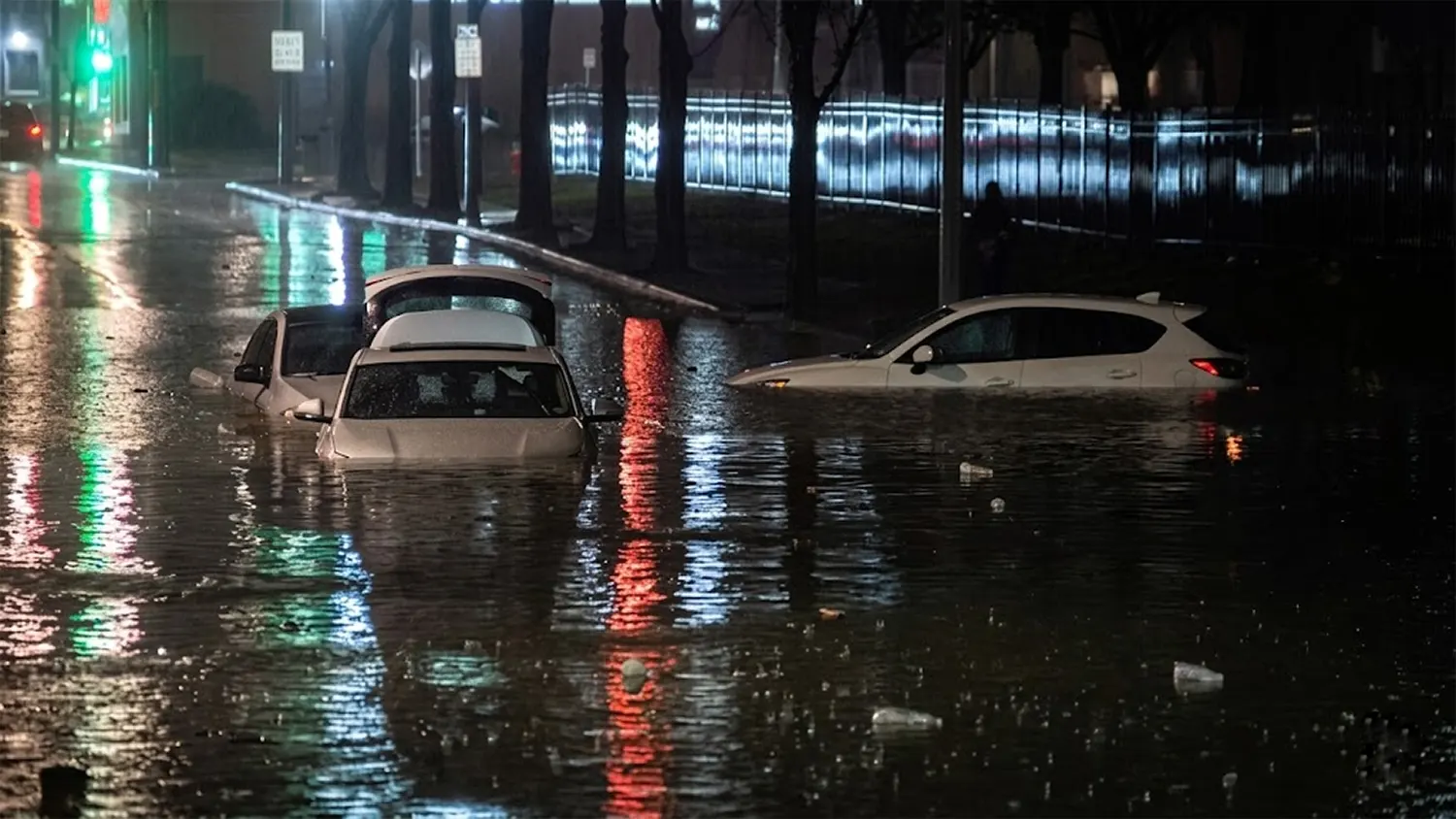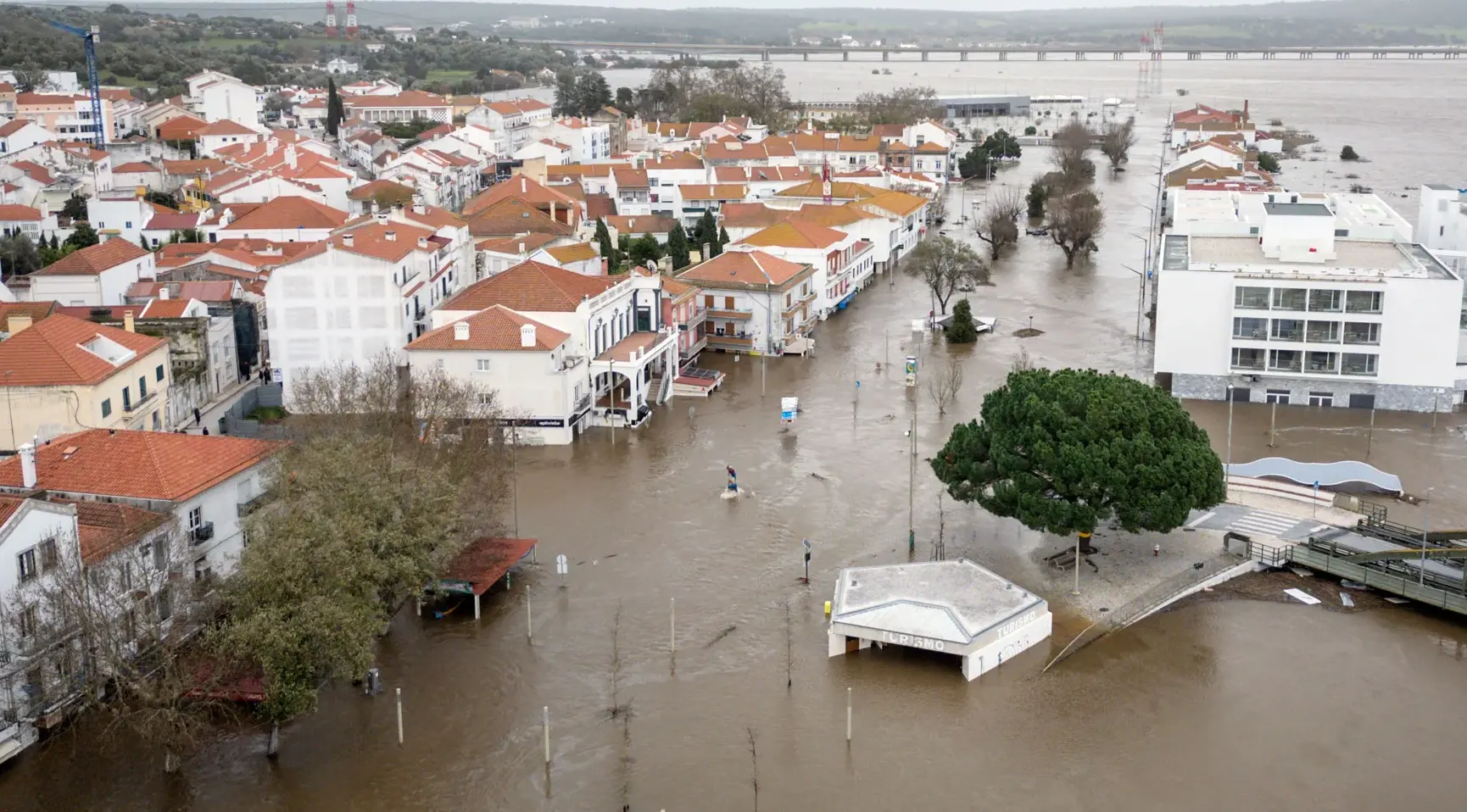
The Iberian Peninsula is currently in the grip of a relentless meteorological onslaught as Storm Marta batters Spain and Portugal. Coming less than a week after the deadly Storm Leonardo and the preceding Storm Kristin, Marta has pushed the region into a state of emergency. With thousands displaced, a mounting death toll, and a significant disruption to democratic processes, this “storm conveyor belt” is being described by officials as one of the most severe weather events of the decade.
The Human Impact: Casualties and Mass Evacuations
The primary concern for authorities in Madrid and Lisbon remains the safety of citizens. As of February 8, the “storm marathon” has claimed numerous lives across the peninsula.
- Fatalities: A 46 year old emergency volunteer died on Saturday in Portugal while attempting a water rescue, marking the first confirmed death directly attributed to Storm Marta. This follows the deaths of six others during the previous storms, Kristin and Leonardo.
- Displacement: In Spain’s Andalusia region, over 11,000 residents have been forced to flee their homes as the Guadalquivir River reaches peak levels.
- Rescue Operations: Portugal has mobilized a staggering 26,500 rescuers, including civil protection units and military personnel, to assist in flood stricken areas like Alcácer do Sal and the Tagus Valley.
Economic Fallout: A Multi Billion Euro Crisis
The financial implications of the 2026 storms are staggering. Portuguese Prime Minister Luís Montenegro has indicated that preliminary damage assessments have already exceeded €4 billion ($4.7 billion).
Agricultural Catastrophe
The agricultural sector, the backbone of rural Iberia, is facing what unions call a “total disaster.” Spain and Portugal are critical suppliers of winter produce for the rest of Europe, and the current saturation threatens to trigger a continental supply chain crisis.
| Region | Impacted Crops | Estimated Loss |
| Andalusia (Spain) | Broccoli, Cauliflower, Citrus | Hundreds of millions (Euros) |
| Portugal (National) | Olives, Vineyards, Forestry | €750 million |
| Tagus Valley | Grains and Root Vegetables | Substantial (Assessment ongoing) |
Miguel Ángel Pérez of the COAG farmers’ organization noted: “It is raining without stopping. Thousands of hectares are inundated. We have a real natural catastrophe on our hands.”
Infrastructure and Tourism
The region’s infrastructure is buckling under the pressure of continuous landslides and flash floods.
- Spain: Andalusia’s President, Juan Manuel Moreno, stated that road repairs alone will cost over €500 million. Nearly 170 roads remain closed across the country.
- Rail and Sport: High speed rail services between Madrid and the south have been largely suspended. In sports, the La Liga match between Sevilla and Girona was postponed to prevent fans from traveling through dangerous zones.
Democracy Delayed: Portugal’s Presidential Election
One of the most unprecedented consequences of Storm Marta is the disruption of Portugal’s national democratic process.
Today, February 8, was scheduled as the second round of the Portuguese Presidential Election.
Due to severe flooding making polling stations inaccessible, three municipalities (including parts of Portalegre) have officially postponed the vote by one week. While the far right CHEGA party called for a nationwide delay, the electoral commission has opted to proceed in areas deemed safe, creating a fragmented and tense voting environment.
Geographic Focus: Critical Zones to Watch
1. Andalusia and the Guadalquivir Basin (Spain)
The Guadalquivir River is at a critical state. In Córdoba and Seville, floodwaters have already submerged Roman-era bridges and riverside residential districts. The soil is so saturated that even minimal rainfall leads to immediate runoff.
2. Serranía de Ronda: Ground Tremors
In a bizarre and alarming development, residents of the Serranía de Ronda mountain range in Málaga reported the “ground trembling” for several days. Specialists from the Spanish National Research Council (CSIC) are investigating whether the extreme water saturation is causing minor structural shifts or deep seated soil movements that could precede massive landslides.
3. The Tagus and Sado Rivers (Portugal)
In the Lisbon region, the Tagus River is under its highest pressure in nearly 30 years. Coastal towns south of the capital, such as Setúbal, are seeing wave heights reach up to 13 meters (43 feet), leading to “Orange” level coastal warnings.
Scientific Context: Why Is This Happening?
Meteorologists attribute the severity of Storm Marta to a phenomenon known as an “Atmospheric River.” This system has been drawing tropical moisture from the Caribbean and funneling it directly into the Iberian Peninsula.
Combined with an unusually southward-shifted jet stream, these storms have “stalled” over the region. Climate scientists emphasize that while winter storms are normal, the intensity and frequency (three major storms in 14 days) are consistent with the patterns predicted by human-driven climate change.
Weather Forecast: February 8–9, 2026
- Seville: 70% chance of heavy rain tonight. High of 15°C, Low of 8°C.
- Lisbon: Rain persisting through Monday morning with wind gusts up to 100 km/h.
- Málaga: Orange alerts remain for high winds and coastal waves.
Authorities are urging residents to:
- Avoid unnecessary travel.
- Monitor local news for evacuation orders near river basins.
- Check on elderly neighbors as power outages continue to affect rural areas.
Summary of Key Figures (Feb 8, 2026)
- 26,500: Rescuers deployed in Portugal.
- 11,000+: People displaced in Andalusia.
- €4 Billion: Preliminary damage cost in Portugal.
- 13 Meters: Peak wave height recorded on the western coast.
The recovery effort is expected to take months, if not years. Both Spain and Portugal are currently drafting formal requests for the EU Solidarity Fund to help rehabilitate their devastated agricultural sectors and infrastructure.
If you are currently in an area affected by Storm Marta, please prioritize your safety and follow the instructions of local authorities. Below are the essential emergency contact numbers and assistance hotlines for Spain and Portugal as of February 8, 2026.
Emergency Contacts: Spain (Andalusia, Málaga, Seville)
The primary emergency number in Spain is 112. This center coordinates police, fire, and medical services.
| Service | Phone Number |
| General Emergency (Multi-language) | 112 |
| National Police | 091 |
| Guardia Civil (Rural/Highway Search & Rescue) | 062 |
| Medical Emergencies (Ambulance) | 061 |
| Fire Brigade | 080 |
| Roadside Assistance (DGT) | 900 123 505 |
| Maritime Rescue (Coastal Emergencies) | 900 202 202 |
Local Information Lines
- Andalusia Regional Government Information: 902 505 505
- Healthcare Advice Line (Salud Responde): 902 505 060
Emergency Contacts: Portugal (Lisbon, Alentejo, Algarve)
Portugal is currently under a State of Emergency until February 15. The single European emergency number 112 is the most critical contact.
| Service | Phone Number |
| General Emergency | 112 |
| SNS 24 (Health Advice & Non-Emergency Medical) | 808 24 24 24 |
| Social Emergency (Urgent Housing/Social Support) | 144 |
| Sea Rescue | 214 401 919 |
| Missing Child Line | 116 000 |
| Infraestruturas de Portugal (Road Closures/Status) | 212 879 555 |
Specialized Support
- GNR SMS for Hearing Impaired: 961 010 200
- SOS Environment (GNR): 808 200 520
- US Embassy Lisbon (Emergency for Citizens): (+351) 21 727 3300
Essential Safety Actions
If you are in a high risk zone (near the Guadalquivir, Tagus, or Sado rivers):
- Monitor Official Maps: Check the IPMA (Portugal) or AEMET (Spain) websites for real time weather warnings.
- Document Damage: For future insurance or government aid claims, take photos and videos of property damage only when it is safe to do so.
- Stay High: Avoid basements and low lying ground.
If your area is prone to flash floods, move to an upper floor immediately. - Avoid Driving: Most flood related deaths occur in vehicles.
Do not attempt to drive through even shallow moving water.