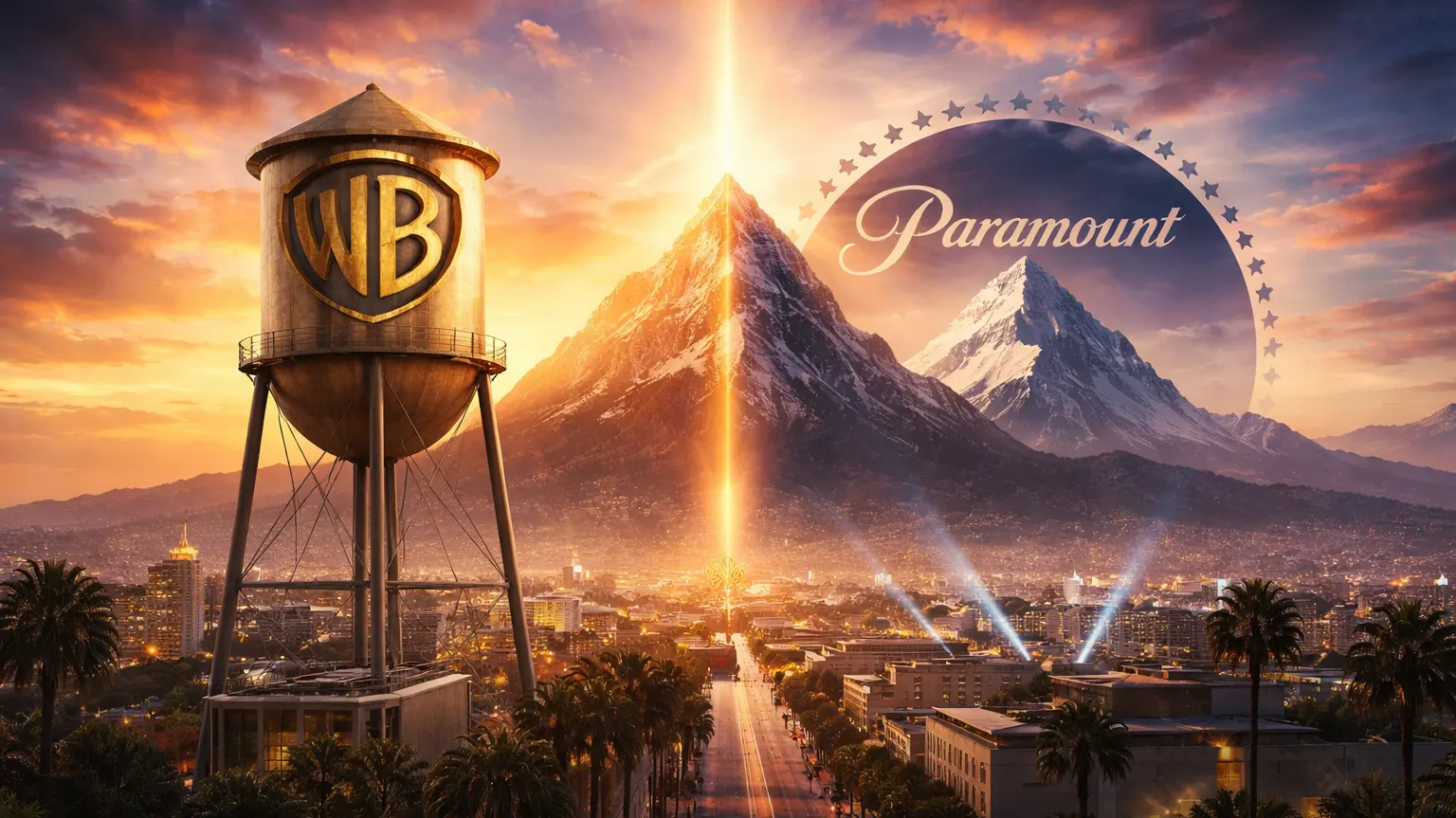
Hollywood has officially been reshaped. On Friday, February 27, 2026, the bidding war for Warner Bros. Discovery (WBD) concluded with a decisive victory for Paramount Skydance, led by David Ellison. Industry insiders are already calling it the “Great Hollywood Reset.”
The Deal That Shook Hollywood
Paramount Skydance won with an all cash offer of $31 per share, valuing the acquisition at roughly $111 billion, including debt.
- Netflix Withdraws: Netflix chose not to exercise its 4 day match period, folding in under two hours. Co CEOs Ted Sarandos and Greg Peters noted that the price was “no longer financially attractive,” formally ending Netflix’s pursuit.
- Regulatory Safeguards: Paramount Skydance agreed to a $7 billion regulatory termination fee and will cover the $2.8 billion breakup fee WBD owed to Netflix.
- Discovery Global Spin Scrapped: Netflix’s original bid targeted only the “Studio and Streaming” assets. Paramount’s victory keeps the entire WBD portfolio intact, canceling the planned spin off of linear TV networks.
This high stakes maneuver positions Paramount Skydance as a super major studio, with a portfolio rivaling Disney.
The New Super Major: What This Means
By absorbing WBD, Paramount Skydance now controls:
- Legacy Studios: Merging Paramount Pictures and Warner Bros. under one roof.
- The Crown Jewels: Iconic IPs including HBO, DC Universe, Harry Potter, Mission: Impossible, Star Trek, and Yellowstone.
- Linear & News Assets: Ownership of CBS and CNN, raising questions about newsroom consolidation and antitrust scrutiny.
The integration aims to create a tech forward “Super Platform” that can compete with Netflix and Disney+.
Streaming Shakeup: Goodbye “Max”
The standalone Max platform will be folded into Paramount+, consolidating HBO, DC, and Harry Potter content with Paramount’s existing franchises.
- Goal: Build a “must have” service with enough content to reduce subscriber churn.
- Timing: Full integration expected in late 2026, pending regulatory approval.
Creative First: Protecting HBO, DC, and Harry Potter
David Ellison has emphasized a creative first approach rather than cost cutting, signaling a departure from the Discovery era:
- HBO: Casey Bloys will remain, preserving HBO as a “boutique” premium brand with high budget productions.
- DC Studios: James Gunn and Peter Safran’s 10 year roadmap is fully funded, with theatrical releases prioritized to challenge Marvel fatigue.
- Harry Potter: The upcoming TV series becomes the anchor for the unified streaming service, with a budget exceeding $200 million per season and a planned late 2026/early 2027 premiere.
Studios and AI Integration
Ellison brings a Silicon Valley mindset to traditional Hollywood:
- Production Volume: Targeting 30 feature films per year across combined studios.
- AI Revolution: Leveraging Oracle infrastructure to speed up VFX, dubbing, and development cycles.
While promising creative freedom, this aggressive AI integration has sparked pushback from unions like SAG-AFTRA, citing restrictions on synthetic performers and digital likenesses.
Linear Assets and Political Scrutiny
Owning both CNN and CBS News creates cost efficiencies but also political heat:
- Resource Sharing: Satellites, bureaus, and tech will be consolidated.
- Potential Bias Concerns: Critics fear CNN could shift politically due to Ellison family ties with the current administration.
The Financial Tightrope: $57.5 Billion Debt and Oracle Backing
The deal carries a staggering $57.5 billion leveraged finance commitment from Bank of America, Citi, and Apollo, one of the largest in media history.
- Debt Guarantee: Larry Ellison’s personal guarantee was the “deal sealer”, reassuring banks and emphasizing the Oracle backed nature of the takeover.
- Combined Debt: Including WBD’s $33.5 billion legacy obligations, the entity wakes up on Day 1 with a debt to EBITDA ratio that analysts fear could reach 5.5x, necessitating immediate shedding of non core assets like TNT and TBS.
- Ticking Fee: If regulators don’t approve by September 30, 2026, Paramount must pay $0.25 per share quarterly (~$650 million), protecting WBD shareholders against a prolonged regulatory “slog” expected under California AG Rob Bonta.
Investor Strategy: To manage interest on $54 billion, Ellison plans to:
- Offload linear “deadweight” networks to private equity.
- Merge CNN and CBS News back end to save $500M–$1B annually.
- Deploy AI to cut content production costs by 30–70%.
Market Reactions
- Netflix (+10%): Celebrated its disciplined exit.
- Paramount (+4%): Optimism over IP portfolio, concern over interest and integration risk.
- WBD (-2%): Fear of prolonged regulatory hurdles.
The Industry Reaction
Hollywood is buzzing:
- Creative vs. AI: Ellison promises both creative freedom and AI efficiency, a paradox that has critics labeling some processes as “soulless automation.”
- Union Pushback: SAG-AFTRA and WGA cite the merger and AI usage as top reasons for a potential “Second Great Strike” in 2027.
A High Stakes Bet
David Ellison has acquired Hollywood’s ultimate toy box, but it comes with a mortgage of nearly $90 billion. By blending creative first prestige content, blockbuster IPs, and AI driven efficiency, Paramount Skydance is attempting a historic pivot.
The stakes are clear: if the Ellisons can balance innovation, creative freedom, and debt obligations, they could redefine Hollywood.
If not, the “Great Hollywood Reset” may be remembered as a cautionary tale of ambition and scale.