
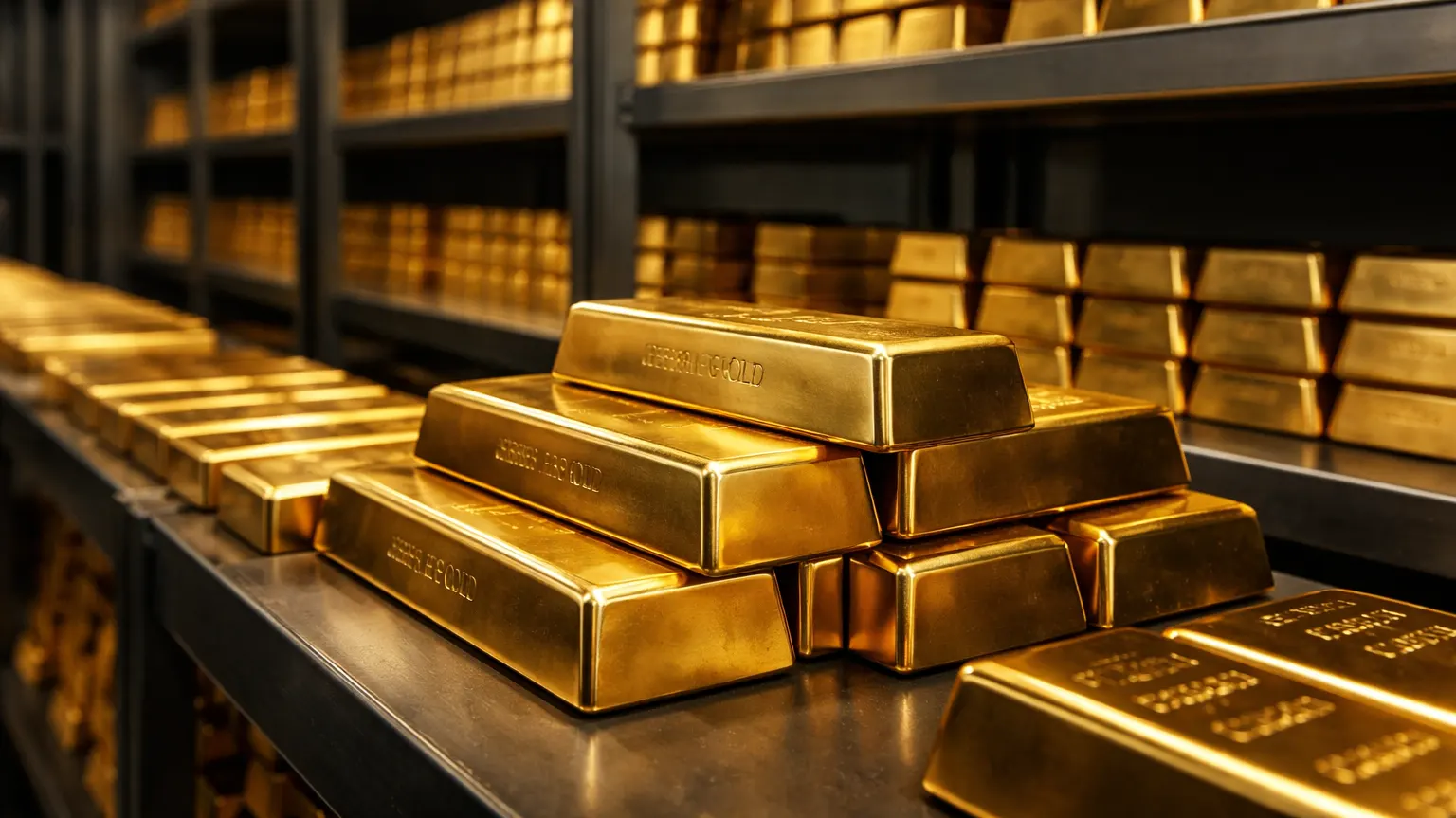
What was once a psychological barrier in the gold market
the $5,000 price level is now behaving like a structural support. Spot gold is trading around $5,058 (up ~0.7% today), suggesting that capital flows into bullion are rooted less in short term speculation and more in strategic portfolio rebalancing.
Investors, both institutional and retail, are signaling that gold is no longer merely a safe haven , it’s a reserve asset reshaping global allocation frameworks.
Three Macro Drivers Keeping Gold Elevated
1. The “Warsh Effect” Fed Independence and Hedge Dynamics
The nomination of Kevin Warsh as the Federal Reserve’s next preferred chair initially triggered a sell off. Warsh’s reputation as a monetary “hawk” someone likely to prioritize inflation control via higher interest rates buoyed the U.S. dollar, pressuring gold. Yet the market’s response has flipped.
Rather than selling off, institutional investors have used gold as a hedge against perceived political interference in central bank independence. This narrative that gold represents a neutral store of value when monetary policy faces uncertainty has underpinned persistent buying even as rate expectations shift.
2. Trade Tension Spillover The “Greenland Factor”
A surprising but real driver this month has been a flare up in trade tensions between the U.S. and Europe over Arctic access and Greenland resource rights. Whenever geopolitical discourse between major Western economies turns toward tariffs and resource competition, capital tends to shift out of fiat currencies and into bullion.
The economic logic is straightforward: tariffs and trade friction can weaken growth expectations for the Eurozone and United States alike, diminishing confidence in the dollar and euro and reinforcing gold’s role as a non sovereign asset immune to policy conflict.
3. Central Banks Versus Retail A Historic Rebalancing
For the first time since the mid 1990s, gold now accounts for a larger share of global central bank reserves than U.S. Treasuries. This reflects deep structural shifts in reserve management.
Institutional demand remains voracious: central banks are projected to add another 800 tonnes of gold this year alone.
Meanwhile, retail participation is surging. January saw nearly $19 billion of inflows into gold ETFs, and physical bullion sales even at consumer retail chains such as Costco hit all time highs.
This dual demand from “big fish” and “small fish” is a typical and highlights gold’s dual role as both institutional reserve and mass market portfolio asset.
Revised Price Targets: Banks Are Bullish
Several major financial institutions have significantly upgraded their gold forecasts for 2026:
| Institution | Year-End Target | Rationale |
|---|---|---|
| Wells Fargo | $6,100 – $6,300 | Policy surprises and macro volatility |
| J.P. Morgan | $6,300 | Structural de dollarization |
| UBS | $6,200 base / $7,200 bull | Geopolitical escalation risk |
These forecasts imply 20%–40% upside from current spot levels by year end a dramatic reappraisal by major banks.
Why 2026 Is Fundamentally Different for Gold
This bull market is not a typical flight to safety. It reflects deeper structural themes:
De Dollarization Beyond Emergencies
As J.P. Morgan analysts emphasize, many central banks particularly in the Global South are no longer holding gold merely as an emergency buffer. They are permanently reallocating reserves away from U.S. Treasuries toward bullion.
The Midterm Election Premium
UBS’s models include a “election premium” gold is expected to peak near the U.S. midterms in November 2026, as policy uncertainty rises. Should political clarity improve post-election, some analysts see gold retracing toward $5,900, still well above historical averages.
Retail FOMO Meets Institutional Stacking
Gold briefly spiked to $5,595 on January 29, a record high, before a sharp contraction. What followed was a classic market cleansing:
- A 12% single day drop on Feb 2 toward $4,400
- Weak speculative positions unwound
- Strong institutional holders used the dip as a buying opportunity
Despite the sell off, total holdings in major gold ETFs have increased the equivalent of 120 tonnes of gold indicating that long term allocation is outweighing short term trading.
Global ETF Snapshot Where Demand Is Strongest
Here’s how the most influential gold ETFs are performing as of Feb 11, 2026:
| Region | ETF | Daily Change | AUM / Trend |
|---|---|---|---|
| New York | SPDR Gold Shares (GLD) | –0.99% | ~$174B AUM; heavy inflows despite volatility |
| Hong Kong & Shanghai | 2840.HK / Guotai Gold ETF | +0.50% | Asia emerging as a structural gold demand hub |
| London/Europe | iShares Physical Gold ETC (IGLN) | –1.10% | Focus on EU “Green Gold” standards |
| India | MCX Gold | +0.80% | Retail demand surging amid wedding season |
Asia stands out as a new demand engine, with an estimated $10B of net ETF inflows in January, the strongest month on record.
Market Outlook — Support at $5,000 and Beyond
The key technical and psychological level remains $5,000. As long as gold sustains above this floor, the structural bull market framework is intact. What we’ve seen over the past weeks
a peak, a flash correction, and robust institutional buying suggests that gold is being re anchored at a higher valuation regime.
For corporate finance desks, portfolio managers, and macro strategists, the implications are clear:
- Gold is shifting from hedge to core allocation
- De dollarization is materially influencing reserve strategy
- Retail participation is amplifying liquidity and price discovery
Reports from multiple major banks now conceive of gold not as a temporary haven but as a first class asset in diversified portfolios.
A New Structural Paradigm for Gold
Gold’s steady hold above $5,000 and the depth of institutional participation suggest that the market is not merely reacting to short term headlines. Rather, 2026 may be the year gold reshapes global reserve architecture.
This shift driven by central banks, reinforced by retail demand, and underpinned by geopolitical uncertainty and monetary policy debates elevates gold from a crisis commodity to a cornerstone asset of the evolving financial order.