
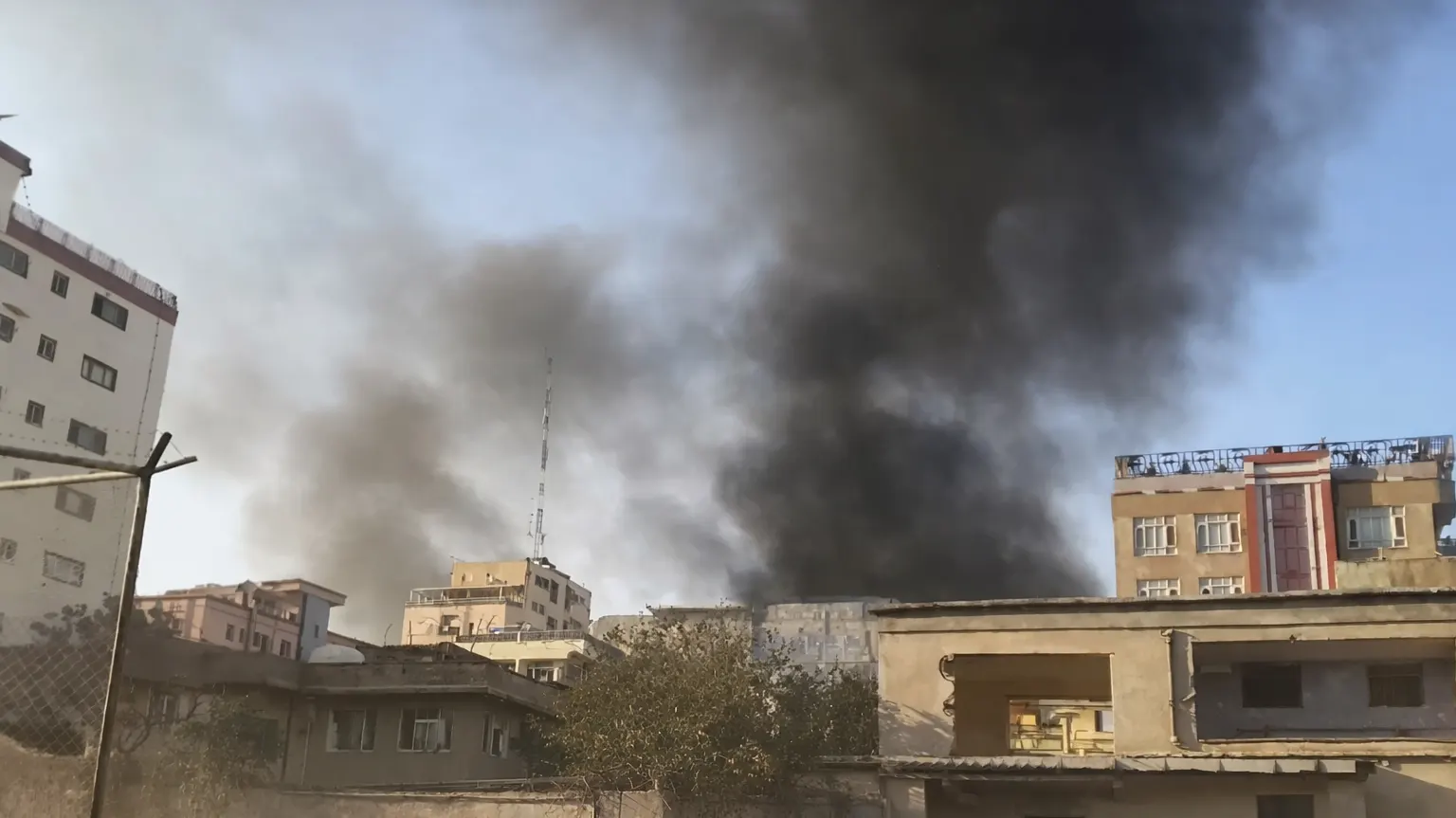
What began as a shadow war of cross border accusations has now exploded into declared “open war.”
As of Friday, February 27, 2026, Pakistan and Afghanistan are engaged in direct military confrontation along the 2,600 km Durand Line.
Airstrikes, artillery exchanges, and collapsing diplomacy have transformed a disputed frontier into an active battlefield.
Here is the clearest picture yet of what is happening and why it matters.
Operation Ghazab lil-Haq: Pakistan Escalates
Pakistan has formally launched Operation Ghazab lil-Haq (“Righteous Fury”), marking its most expansive cross border military campaign in years.
The Pakistan Air Force carried out coordinated strikes targeting:
- Kabul – 313 Brigade headquarters near the airport
- Kandahar – 205 Brigade HQ installations
- Paktia – 201 KBW Brigade facilities
- Nangarhar – Ammunition depots and logistics hubs
Islamabad describes the strikes as precision attacks on militant infrastructure. Kabul calls them a blatant violation of sovereignty.
This is the first time since 2021 that multiple major Afghan cities have been struck in a single coordinated operation.
Casualty Claims: Two Very Different Narratives
Pakistan’s Position
- 133 Taliban fighters killed
- Over 200 wounded
- 27 Afghan border posts destroyed
- 9 captured
Taliban’s Position
- 55 Pakistani soldiers killed
- Several captured
- 8 Taliban fighters killed
- 11 wounded
Taliban spokesperson Zabihullah Mujahid confirmed retaliatory operations, claiming multiple Pakistani outposts were seized, a claim Islamabad disputes.
As is typical in active combat, independent verification remains limited.
The Trigger: The Islamabad Mosque Bombing
The decisive catalyst was the February 6 suicide bombing at Islamabad’s Khadija Tul Kubra Mosque.
At least 40 people were killed and more than 170 injured, the deadliest attack in the capital in nearly two decades.
While the Islamic State Pakistan Province claimed responsibility,
Pakistani intelligence alleged the planning and indoctrination occurred in Afghanistan.
Officials further linked the attack to cross border networks and cited additional assaults in Bajaur and Bannu as evidence of escalating militant coordination.
For Islamabad, this was the breaking point.
Why the Durand Line Keeps Igniting
The recurring violence rests on three deep structural fault lines:
1️⃣ The TTP Dispute
Pakistan accuses the Tehreek e Taliban Pakistan of operating from Afghan territory. The Taliban denies harboring them, calling it Pakistan’s internal security problem.
2️⃣ The Durand Line
Afghan authorities have never formally recognized the colonial era border. Disputes over fencing and checkpoints frequently turn deadly.
3️⃣ Refugees and Economic Pressure
Pakistan’s mass deportation of nearly 2.8 million Afghan refugees and repeated closures of Torkham and Chaman crossings have deepened political resentment.
Current Border Situation: A Front Line in Real Time
The Durand Line is now effectively militarized.
Torkham Crossing (Nangarhar)
- Active combat zone
- Heavy shelling reported since morning
- A mortar struck a refugee camp, injuring civilians
At 11:00 AM local time today, Torkham was closed to all pedestrian traffic following the mortar strike.
Thousands of refugees remain stranded or relocated amid ongoing exchanges of fire.
Chaman–Spin Boldak
- Militarized
- Trade largely suspended
- Pakistani tanks and artillery deployed
Taliban sources claim to have captured multiple checkpoints here, Pakistan disputes this.
Other Crossings
Ghulam Khan and Angoor Adda remain sealed as military operations extend across Kabul, Kandahar, Paktia, Khost, and Nangarhar provinces.
The Collapse of Diplomacy
The current war traces directly back to the failed 2025 Istanbul negotiations brokered by Türkiye and Qatar.
Three deal breakers doomed the talks:
- Pakistan demanded a fatwa from Taliban Supreme Leader Hibatullah Akhundzada condemning attacks on Pakistan.
- Islamabad sought written guarantees to neutralize TTP leadership.
- Kabul demanded an end to Pakistani drone and airspace violations.
Trust evaporated. By November 2025, both sides publicly abandoned optimism.
Even a Saudi attempt at quiet mediation this month collapsed after the mosque bombing.
Diplomatic momentum didn’t just stall, it reversed.
International Reaction: Urgent, Competitive, Strategic
The global response has been swift and layered.
United Nations: Humanitarian Alarm
António Guterres expressed grave concern and urged adherence to international humanitarian law.
UN Human Rights Chief Volker Türk went further in Geneva, calling for urgent political dialogue and linking diplomatic deadlock to the Taliban’s treatment of women which he again described as “gender apartheid.”
That phrase adds a broader human rights dimension to an already volatile security crisis.
The United Nations Assistance Mission in Afghanistan warned that millions in border regions are now at risk.
China: From Concerned Neighbor to Architect of a Plan
China is no longer merely expressing concern.
Beijing has reportedly proposed a “Trilateral Security Mechanism” involving Pakistan, Afghanistan, and China, an attempt to stabilize the region and protect the multi billion dollar China-Pakistan Economic Corridor.
For China, this is about more than diplomacy, it is about safeguarding strategic infrastructure.
Iran
Foreign Minister Abbas Araghchi urged restraint during Ramadan and formally offered to facilitate dialogue.
Russia
Moscow has offered to host mediation talks if both parties agree.
United States
Washington has acknowledged Pakistan’s right to defend itself against terrorism while warning against escalation that could trigger regional destabilization or a refugee crisis.
The Bigger Picture
Even before this week’s escalation, violence in Pakistan’s border provinces had already claimed over 2,400 lives in the first nine months of 2025 alone.
This is not a sudden war.
It is the culmination of years of mistrust, militant insurgency, diplomatic collapse, and strategic brinkmanship.
Where Things Stand February 27, 2026
- Airstrikes ongoing
- Border crossings militarized or closed
- Casualty numbers contested
- Diplomacy largely frozen
The Durand Line has shifted from disputed boundary to declared battlefield.
Whether this conflict expands or de escalates will depend on three variables:
- The scale of further Pakistani air operations
- Taliban retaliation along the frontier
- Whether international mediation particularly China’s proposed Trilateral framework gains traction
The Diplomatic Crossroads
The declaration of “open war” marks a decisive and dangerous shift in South Asian geopolitics.
Years of shadow conflict have stepped fully into the light.
Unless diplomacy re emerges quickly, the humanitarian toll, regional instability, and geopolitical consequences will deepen and spread.