
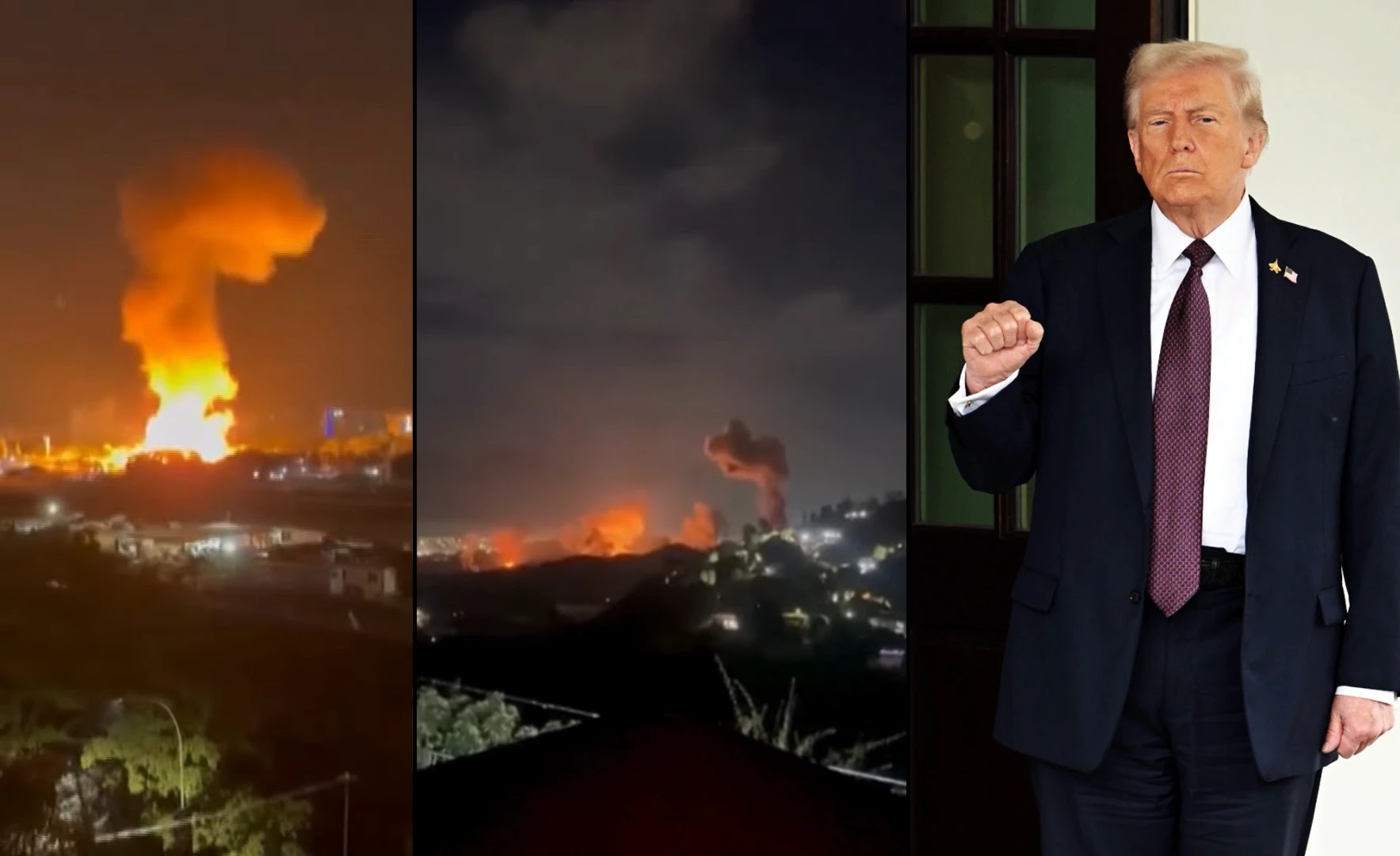

In the early hours of Saturday, January 3, 2026, Venezuela awoke to the sound of war. At approximately 2:00 a.m. local time, a series of powerful explosions rocked Caracas and several surrounding states, marking the most dramatic escalation yet in the rapidly deteriorating standoff between Washington and Caracas.
Residents across the Venezuelan capital reported at least seven explosions, accompanied by the roar of low-flying aircraft. Smoke was seen rising from multiple strategic locations, including the La Carlota military airfield and the sprawling Fuerte Tiuna military complex, the headquarters of Venezuela’s armed forces. Similar reports emerged from the states of Aragua, Miranda, and La Guaira, suggesting a coordinated, multi-site operation rather than a symbolic strike.
By sunrise, the Venezuelan government had confirmed what many feared: the country had been struck by foreign military forces.
Maduro Accuses the United States of Military Aggression
President Nicolás Maduro addressed the nation hours later, accusing the United States of carrying out “direct military aggression” against Venezuelan sovereignty. He announced the immediate declaration of a National Emergency, formally described as a “state of external commotion,” and ordered a nationwide mobilization of both military units and civilian defense organizations.
While Venezuelan authorities have not yet released official casualty figures, reports from southern Caracas indicate widespread power outages near military installations. Communications disruptions and road closures were also reported, complicating efforts to independently verify damage and injuries.
U.S. officials, speaking to major American news outlets, confirmed that President Donald Trump authorized the strikes. According to those statements, the operation followed months of escalating tensions centered on alleged drug trafficking networks, airspace violations, and Washington’s continued refusal to recognize the legitimacy of Maduro’s government.
From Pressure Campaign to Open Strikes
The airstrikes represent a sharp departure from the pressure tactics Washington had employed in recent months. The United States had framed its expanded military presence in the Caribbean as part of counter-narcotics operations, a narrative that included naval deployments, surveillance flights, and what U.S. officials described as “interdiction readiness.”
Just one day earlier, Maduro had publicly signaled openness to negotiations with Washington on drug trafficking cooperation. That overture now appears overtaken by events. Overnight, the crisis crossed a threshold that many regional leaders had long warned against: direct military action against a sovereign Latin American state.
Regional Alarm and Calls for Emergency Diplomacy
The reaction across Latin America was swift and deeply alarmed. Colombian President Gustavo Petro emerged as one of the most vocal critics, stating publicly that Caracas was being “bombed with missiles” and calling for an immediate emergency meeting of the United Nations Security Council.
Petro warned that unilateral military action risked plunging the region into chaos, potentially triggering a massive new migration wave and destabilizing fragile border regions. His call was echoed by officials across the continent, who urged restraint and the preservation of Latin America as a “Zone of Peace.”
Regional organizations, including the Community of Latin American and Caribbean States (CELAC) and the Organization of American States (OAS), faced urgent pressure to convene emergency sessions. Many governments fear that if the conflict escalates further, it could draw in neighboring countries, either directly or through humanitarian fallout.
The United Nations Enters Crisis Mode
At the United Nations headquarters in New York, diplomatic activity intensified within hours of the strikes. Both Venezuela and Colombia formally requested an emergency meeting of the Security Council, framing the situation as a threat to international peace and security.
Venezuela’s diplomatic mission moved quickly to denounce the airstrikes as a “flagrant violation of the United Nations Charter,” citing the prohibition on the use of force and the principle of national sovereignty. Caracas has also invoked Article 51 of the Charter, asserting its right to legitimate self-defense.
While UN Secretary-General António Guterres has not yet issued a detailed statement specific to the January 3 strikes, his office reiterated earlier warnings about the dangers of military escalation in the region. In recent weeks, Guterres had repeatedly called for restraint and de-escalation, cautioning that conflict could lead to severe humanitarian consequences.
The key uncertainty now is whether the Security Council will convene immediately and whether permanent members such as Russia or China will attempt to advance a resolution condemning the strikes. Any such effort would likely face strong resistance from the United States, raising the prospect of diplomatic paralysis at a critical moment.
Legal and Strategic Fault Lines
Beyond the immediate military implications, the strikes have opened a profound legal and strategic debate. Venezuela’s invocation of self-defense under Article 51 sets the stage for a contested legal battle over whether the U.S. actions can be justified under international law.
Washington has previously argued that its actions in the region are defensive in nature, aimed at combating transnational crime and protecting regional stability. Critics counter that such justifications fall short of the legal threshold required for the use of force against another state.
Venezuela is also seeking backing from the Non-Aligned Movement, a bloc of 120 developing nations, in an effort to generate broader international condemnation and diplomatic pressure. If successful, this could further isolate Washington diplomatically, even as it maintains overwhelming military superiority.
A Region on the Brink
For many in Latin America, the January 3 airstrikes revive painful memories of Cold War-era interventions and raise fears of a return to power politics in the hemisphere. The prospect of prolonged confrontation between the United States and Venezuela threatens not only regional stability but also global diplomatic norms.
As of now, the situation remains fluid. It is unclear whether the strikes mark the opening phase of a sustained campaign or a limited demonstration of force intended to coerce concessions from Caracas. What is clear is that the crisis has entered a new and far more dangerous phase.
What Happens Next
All eyes are now on New York. The timing and outcome of a UN Security Council meeting may determine whether diplomatic channels can still restrain the conflict or whether Venezuela becomes the latest flashpoint in an increasingly fractured international order.
For the people of Caracas, however, the geopolitical calculations are painfully immediate. Overnight, abstract tensions turned into explosions, smoke, and darkness. Whether this moment becomes a turning point toward de-escalation or a prelude to wider war may depend on decisions made in the coming hours.