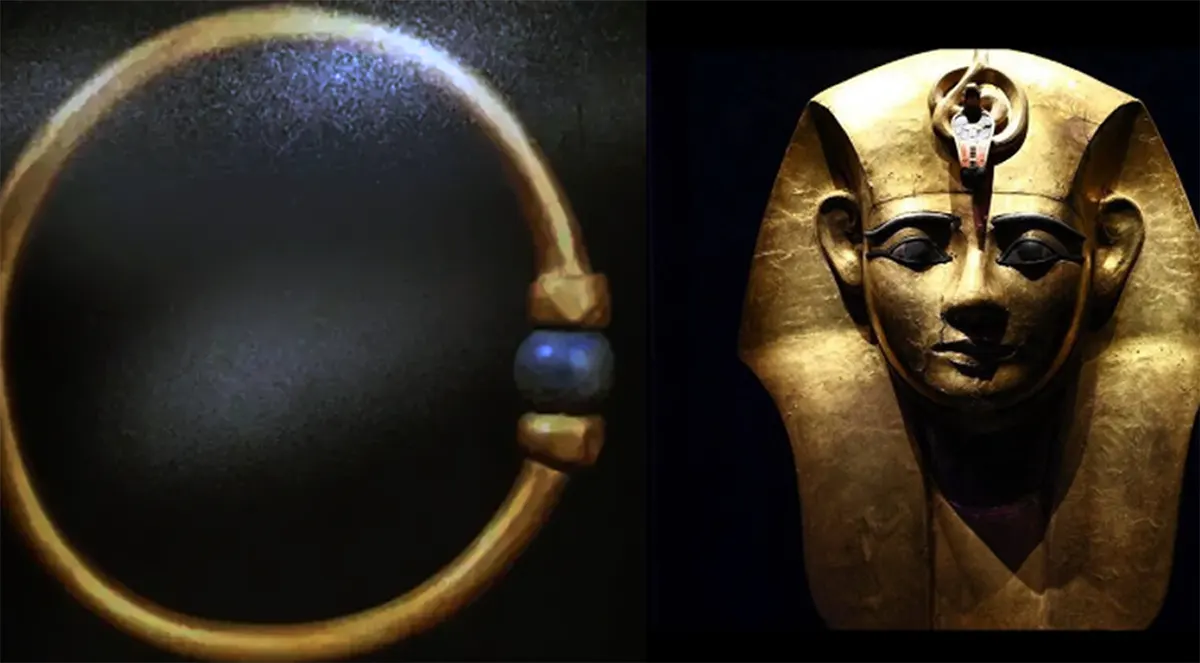
A priceless piece of ancient Egyptian history has been destroyed after a rare 3,000 year-old bracelet was stolen from the Egyptian Museum and later melted down for scrap gold.
The bracelet, believed to have belonged to Amenemope, disappeared from a secure restoration laboratory before authorities uncovered a theft involving multiple suspects.
Although police quickly arrested those involved, investigators later confirmed the devastating reality: the ancient artifact had already been destroyed.
The loss has shocked historians, archaeologists, and museum experts around the world, with many calling it an irreversible cultural tragedy.
A Rare Artifact That Survived for 3,000 Years
The stolen bracelet was considered a remarkable example of ancient Egyptian craftsmanship.
Made from solid gold and decorated with deep blue lapis lazuli beads, the piece reflected the artistic style of Egypt’s 21st Dynasty. In ancient Egyptian culture, lapis lazuli was highly valued and often associated with divinity and royalty.
Experts believed the bracelet held not only enormous historical value but also important clues about royal life and craftsmanship during the period.
Unlike many famous Egyptian treasures displayed to the public, the bracelet was being kept inside a locked safe within the museum’s restoration laboratory.
According to reports, the artifact was undergoing conservation work ahead of a planned exhibition in Rome.
Theft Discovered During Routine Inventory Check
Museum officials reportedly discovered the bracelet missing during a routine inventory inspection on September 9, 2025.
Authorities immediately launched an investigation, which quickly focused on an employee working inside the museum.
Police later identified the main suspect as a restoration specialist who allegedly stole the artifact while on duty.
Investigators say the bracelet then passed through several individuals, including a silver trader and a foundry worker, before eventually being melted down together with scrap gold.
The suspects reportedly sold the priceless artifact in stages for only around $4,000, a tiny fraction of its actual historical value.
For historians, the financial loss is almost irrelevant compared to the destruction of an irreplaceable artifact that had survived for thousands of years.
Security Failures Raise Serious Questions
The incident has triggered widespread criticism and renewed concerns about museum security procedures.
One of the biggest concerns involves the apparent lack of surveillance cameras inside the restoration laboratory where the artifact was stored.
Many experts argue that valuable antiquities should never be handled or stored in areas without constant monitoring, especially when preparing items for international exhibitions.
The case also highlights the risks posed by internal security breaches, where trusted employees gain direct access to priceless objects.
Museum specialists say protecting cultural heritage requires more than locked safes and guards. Strong internal oversight, digital tracking systems, and continuous surveillance are equally important.
Global Archaeology Community Reacts
The destruction of the bracelet has sent shockwaves through the international archaeology community.
For museums around the world, the case serves as a painful reminder that ancient artifacts remain vulnerable even inside institutions designed to preserve them.
Some experts fear the incident could damage international trust in artifact loan agreements and future collaborations involving Egyptian antiquities.
The loss is particularly devastating because historical artifacts carry information that extends far beyond their material value. Once destroyed, details about craftsmanship, materials, and historical context can never be fully recovered.
In this case, a unique object connected to ancient Egyptian royalty has vanished forever.
Suspects Could Face Severe Punishment
Under Egyptian antiquities laws, crimes involving the theft and destruction of historical artifacts carry severe penalties, including the possibility of life imprisonment.
Authorities have already arrested multiple suspects connected to the case, and investigations are continuing.
Still, many experts say justice alone cannot repair the damage that has already been done.
The bracelet survived wars, political upheaval, environmental changes, and thousands of years of history — only to disappear within days after being stolen from a modern museum.
A Cultural Loss That Cannot Be Replaced
The destruction of the Amenemope bracelet represents more than a museum theft. It is the permanent loss of a piece of human history.
For archaeologists and historians, every ancient artifact holds stories about civilizations, beliefs, technology, and culture. Once an object like this is destroyed, those stories disappear with it.
The tragedy has become a sobering reminder of how fragile cultural heritage can be and how quickly irreplaceable history can be lost forever.