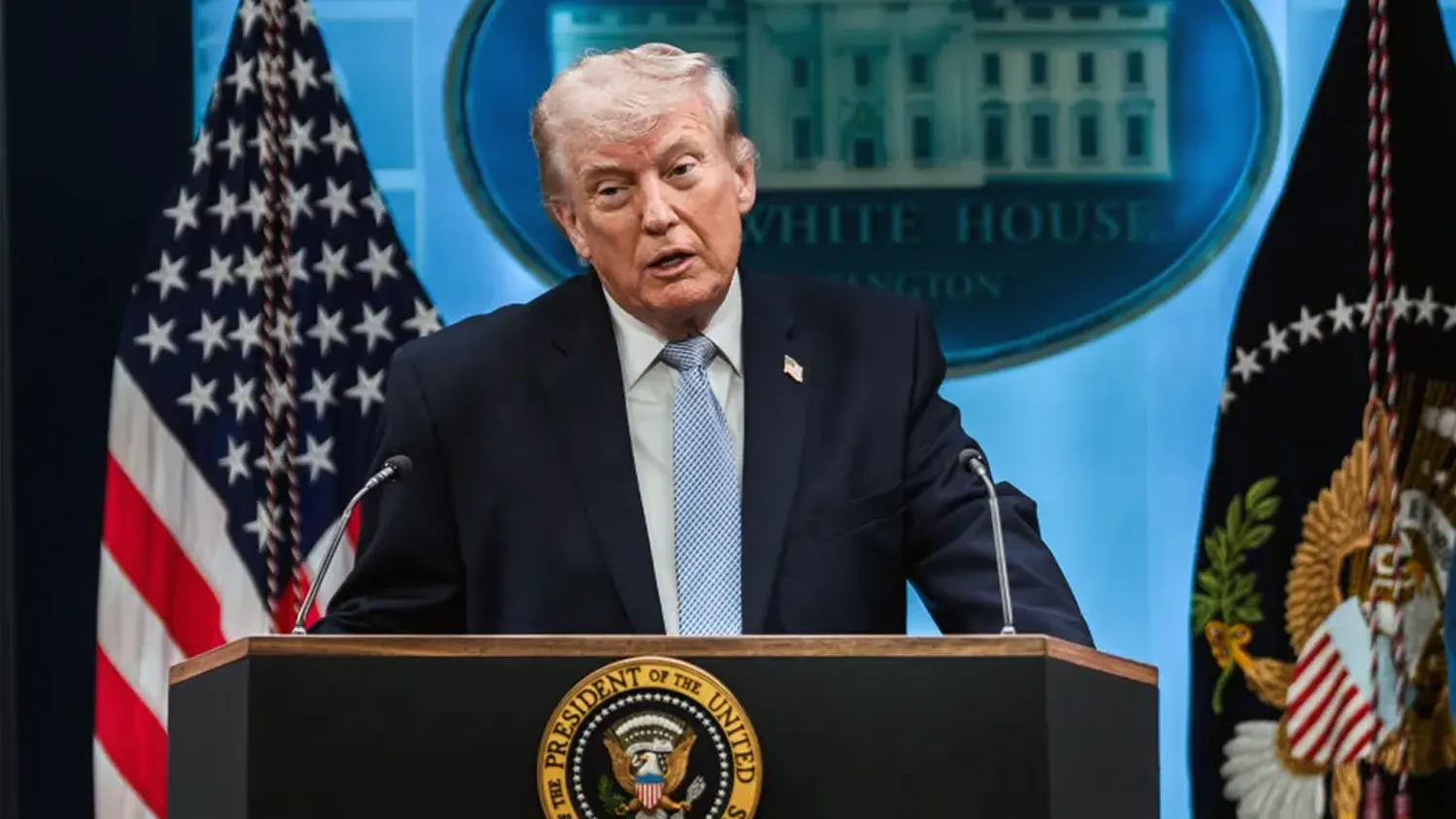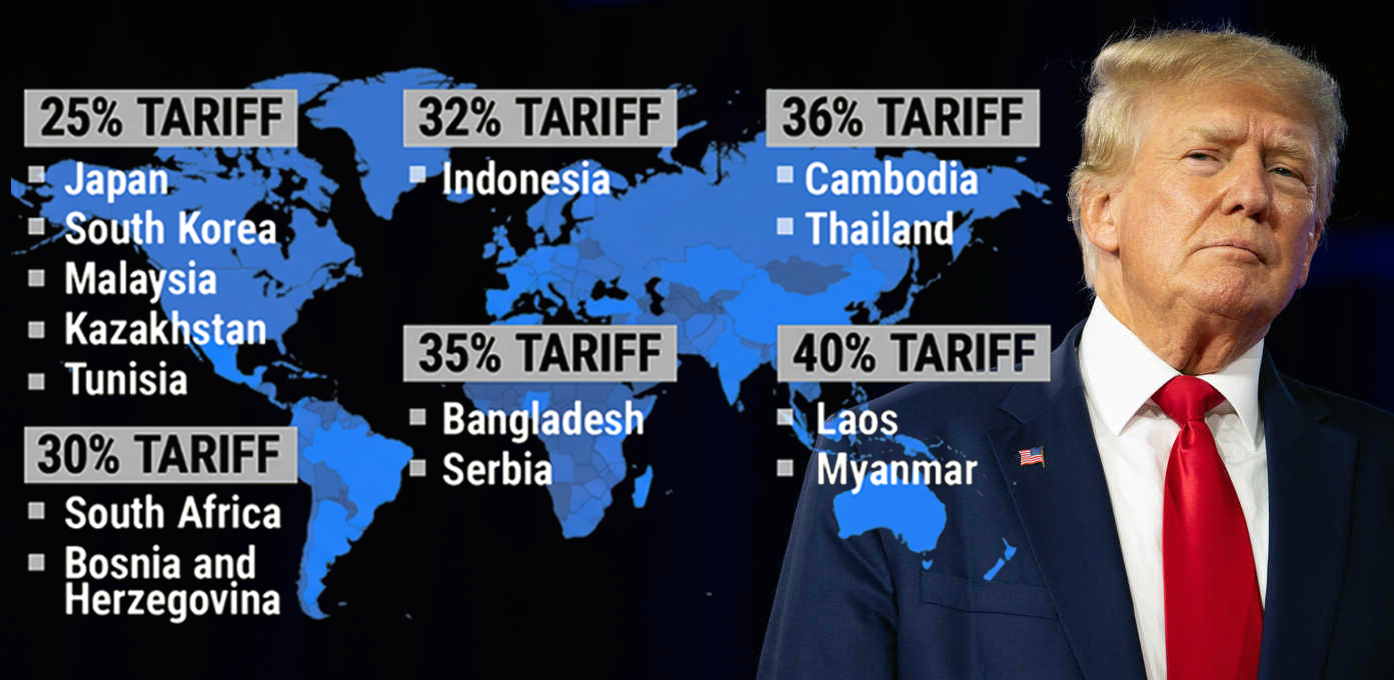
President Donald Trump defended a sweeping new round of tariffs on Thursday, saying the measures are based on “common sense,” trade deficits, and long standing economic imbalances, as the U.S. prepares to impose new duties starting August 1.
The announcement signals a sharp escalation in U.S. trade policy. It also raises concerns about global supply chains, diplomatic tensions, and potential retaliation from affected countries.
But the real shift came with the scope and the reasoning behind the tariffs.
A broader tariff strategy with political undertones
The latest measures target a growing list of countries, with Brazil facing a 50% tariff on imports, one of the most aggressive rates announced.
President Trump linked the decision not only to trade issues but also to political developments in Brazil. He cited what he described as a “witch hunt” trial of former President Jair Bolsonaro and concerns about censorship.
That justification marks a departure from traditional trade policy, where tariffs are typically based on economic factors rather than political disputes.
And it has already triggered a strong response.
Brazil pushes back as tensions escalate
Brazilian President Luiz Inácio Lula da Silva quickly rejected Trump’s claims, disputing the idea that Brazil has an unfair trade advantage over the United States.
He also warned of reciprocal tariffs, signaling the risk of a broader trade confrontation between the two countries.
This back and forth highlights a growing pattern in global trade disputes, where economic measures are increasingly tied to political disagreements.
But Brazil is not the only country affected.
A widening list of countries in the crosshairs
The new tariff measures extend beyond Brazil, targeting several countries across multiple regions.
Among them are:
- The Philippines (20% tariff)
- Iraq, Algeria, and Libya (30% tariffs)
- Brunei and Moldova (25% tariffs)
- Sri Lanka (30% tariff)
Together, these moves reflect a broad based strategy aimed at reshaping U.S. trade relationships, particularly with emerging and developing economies.
At the same time, the administration is focusing on specific industries critical to national security.
Copper tariffs highlight domestic production push
In addition to country specific tariffs, the administration announced a 50% tariff on copper imports, also set to take effect on August 1.
Officials say the move is driven by national security concerns and the need to strengthen domestic supply chains. Copper is a key material used in infrastructure, energy systems, and defense technologies.
By raising import costs, the administration aims to encourage U.S.-based production and investment in critical industries.
However, this approach carries risks as well.
Economic risks and global ripple effects
Critics warn that the new tariffs could disrupt global trade flows and increase costs for businesses and consumers.
Higher import prices may lead to supply chain bottlenecks and inflationary pressure, particularly in industries that rely heavily on foreign materials.
There is also concern that retaliatory tariffs could escalate into wider trade conflicts, affecting exports and economic growth.
Yet the administration argues the long term benefits outweigh the short-term costs.
White House frames tariffs as economic reset
President Trump has positioned the tariffs as part of a broader effort to correct what he sees as decades of unfair trade practices.
He argues that higher tariffs will push foreign companies to relocate manufacturing to the United States, creating jobs and boosting domestic revenue.
Supporters view this as a necessary reset of global trade dynamics. Critics, however, question whether the strategy could backfire by isolating the U.S. economically.
And that debate is likely to intensify as the August deadline approaches.
A turning point for global trade policy
The latest tariff measures underscore a fundamental shift in how the United States approaches international trade.
What began as an economic strategy is now increasingly intertwined with geopolitics, national security, and domestic policy goals.
As the new tariffs take effect, the key question will be whether they deliver the intended economic benefits or trigger a new wave of global trade tensions.
For now, one thing is clear: the stakes for the global economy are rising, and the impact of these decisions will be felt far beyond Washington.