On a typical weekday, the global oil market moves slowly nudged by economic forecasts, refinery outages, or policy signals from central banks. But every so often, geopolitics tears up the script.
That’s what’s happening now. As of Monday, March 9, 2026, the world’s energy market has lurched into what traders are calling full crisis mode in the global energy market. A rapidly escalating military conflict involving the United States, Israel, and Iran has effectively choked off one of the most critical arteries of global oil trade.
For ordinary consumers, the implications are already showing up at gas stations. For governments and businesses, the shock could ripple through inflation, supply chains, and global economic growth for months to come.
To understand why prices are rising so quickly, you have to start with a narrow strip of water that quietly powers the global economy.
The Strait That Powers the World
At the center of the crisis lies the Strait of Hormuz chokepoint, a shipping corridor only about 21 miles wide at its narrowest point but responsible for moving roughly a fifth of the world’s oil supply.
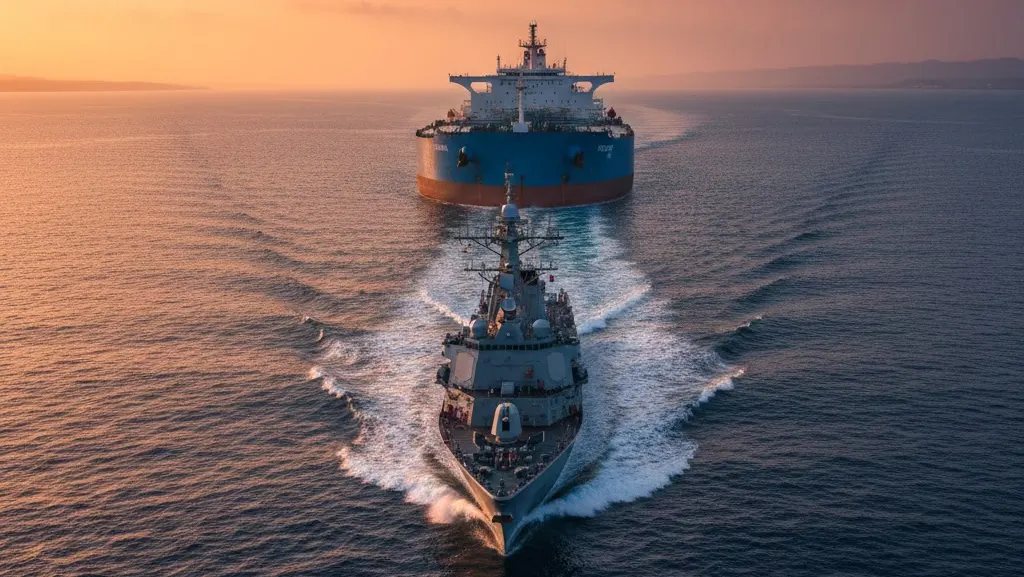
Under normal conditions, a constant procession of tankers moves crude from the Persian Gulf to markets across Asia, Europe, and North America. Today, that traffic has almost vanished.
Tanker activity through the strait has reportedly plunged by about
90 %, not because the waterway is physically blocked, but because it has become too dangerous to navigate.
Missile strikes, drone threats, and retaliatory attacks have turned the area into a high risk zone. Meanwhile, marine insurers particularly those operating through London’s maritime insurance market have withdrawn war risk coverage for vessels entering the Persian Gulf.
Without insurance, ships simply cannot sail.
The result is a bottleneck of historic proportions. Nearly 20% of global oil supply about 15 million barrels per day is now effectively trapped or delayed in the Gulf.
Some shipments are still moving, but selectively. Reports suggest Iranian authorities are permitting Chinese owned vessels to transit while restricting others, citing Beijing’s diplomatic support.
For global energy markets, that kind of disruption is equivalent to suddenly shutting off a massive pipeline.
The Price Shock in Oil Markets
With supply suddenly constrained, oil prices reacted with extraordinary speed.
Brent crude, the international benchmark, surged as high as
$119.50 per barrel during Monday’s trading session before easing
slightly into the $112–$114 range. The U.S. benchmark, WTI, followed a similar trajectory, briefly nearing $119 before settling closer to $110.
Those numbers alone are dramatic. But what stunned traders most was the speed of the move.
Markets experienced a 20–30% single day surge, one of the largest jumps ever recorded in modern oil trading. Analysts describe the phenomenon as price velocity in oil markets not just high prices,
but an unusually rapid rate of increase.
That velocity matters because energy markets price in future shortages almost immediately. Even before supply actually disappears, traders anticipate the gap and push prices higher.
And in this case, the supply disruption is unusually tangible.
Why This Crisis Is Different From 2022
The current surge inevitably draws comparisons to the oil shock that followed the Russia–Ukraine war in 2022. But energy analysts point to a crucial difference.
Back then, Russian oil didn’t disappear, it was rerouted. Europe reduced purchases while Asia absorbed more supply. The oil still flowed, just along different trade routes.
Today’s disruption is different. It represents a physical supply bottleneck, where oil exists but cannot easily reach global markets.
Shipping companies are already adjusting. Major carriers have begun rerouting tankers around the Cape of Good Hope, the long path around southern Africa.
That detour adds 10 to 20 extra days to delivery times. The delay effectively shrinks available supply in the short term because fewer barrels reach refineries when they are needed.
Markets are pricing that delay immediately.
The Domino Effect at the Gas Pump
For consumers, the global crisis translates into something far more personal: gasoline prices.
Just days ago, the U.S. national average hovered around $3.25 per gallon. Now it is racing toward $3.60 to $3.80, and in some regions the increase has been even sharper.
Michigan drivers have already seen prices jump 56 cents in a week, averaging about $3.55. Florida has experienced a similar surge, marking the state’s highest daily average since mid 2024.
Meanwhile, the West Coast traditionally the most expensive fuel market in the country has crossed into another price tier.
California stations are averaging roughly $4.80 per gallon, with many locations in Los Angeles and San Francisco posting $5.00 or more for regular unleaded.
Market analysts warn that if the disruption in the Strait of Hormuz persists for another 72 hours, the national average could climb toward $4.25 by the weekend, placing the once unthinkable $5 national gas price threshold within reach by April.
And gasoline is only the beginning.
The Diesel Problem Few People Notice
Hidden behind the headlines about gasoline is another pressure point: diesel fuel.
Economists often describe diesel as the fuel of the global supply chain. Nearly every physical product from groceries to furniture travels part of
its journey in diesel powered trucks, trains, or cargo vessels.
When diesel prices climb, freight companies add transportation surcharges. Retailers absorb some of the increase, but much of it ultimately reaches consumers in the form of higher prices at the checkout counter.
That’s why diesel spikes tend to amplify inflation far beyond the energy sector itself.
Which brings the crisis into the realm of monetary policy.
Inflation, Markets, and the Central Bank Dilemma
Energy prices feed directly into the Consumer Price Index. Economists estimate that every $10 increase in oil adds roughly 0.2 percentage points to inflation.
If crude remains above $110 per barrel for long, the inflation outlook for 2026 could shift quickly.
That creates a dilemma for the Federal Reserve. Interest rate cuts that policymakers had tentatively expected later this year may now be delayed if rising energy prices push inflation upward again.
Financial markets are already reacting to that risk.
Major stock indices across Asia and Europe fell between 3% and 7% during Monday’s trading session as investors moved money into traditional safe haven assets such as gold.
In other words, the shock is spreading well beyond energy markets.
Governments Prepare Emergency Responses
Policy makers around the world are scrambling to soften the blow.
Energy dependent nations across Asia including India, Indonesia, and
the Philippines are preparing emergency budgets and conservation measures. Some governments have already discussed shortened operating hours for universities and businesses to reduce electricity consumption.
Meanwhile, finance ministers from the G7 are reportedly considering a coordinated release from strategic petroleum reserves.
Such releases can temporarily increase supply and calm markets. But analysts caution that strategic reserves are designed as short term buffers, not permanent substitutes for disrupted global shipping routes.
If the Strait of Hormuz remains unstable, the underlying shortage will remain.
The Military Factor Markets Can’t Predict
Ultimately, the oil market’s trajectory depends on one unpredictable variable: the conflict itself.
The opening phase of the war included nearly 900 airstrikes launched
by U.S. and Israeli forces beginning on February 28 as part of Operation “Epic Fury.” During that initial wave, Iran’s Supreme Leader Ayatollah Ali Khamenei was killed, triggering a sudden leadership transition.
His son, Mojtaba Khamenei, has since assumed the position of Supreme Leader, but the shift has introduced further uncertainty into Iran’s political landscape.
That instability has reduced the likelihood of a quick diplomatic resolution.
Iran has responded by targeting oil infrastructure and commercial vessels, signaling that energy routes themselves are central to its defensive strategy.
For oil markets, that means volatility may only be beginning.
The Road Ahead
Energy crises have a way of revealing how tightly connected the modern economy really is.
A narrow shipping lane thousands of miles away can suddenly influence grocery prices, airline tickets, and the cost of commuting to work.
What begins as a geopolitical conflict quickly becomes a household expense.
If shipping through the Strait of Hormuz resumes soon, the surge could fade as quickly as it appeared. But if the disruption drags on, the world may be entering the early phase of another prolonged energy shock.
And for drivers watching the numbers climb at the pump, the message is already clear.
The global oil market doesn’t need months to react.
Sometimes it only takes a few days.