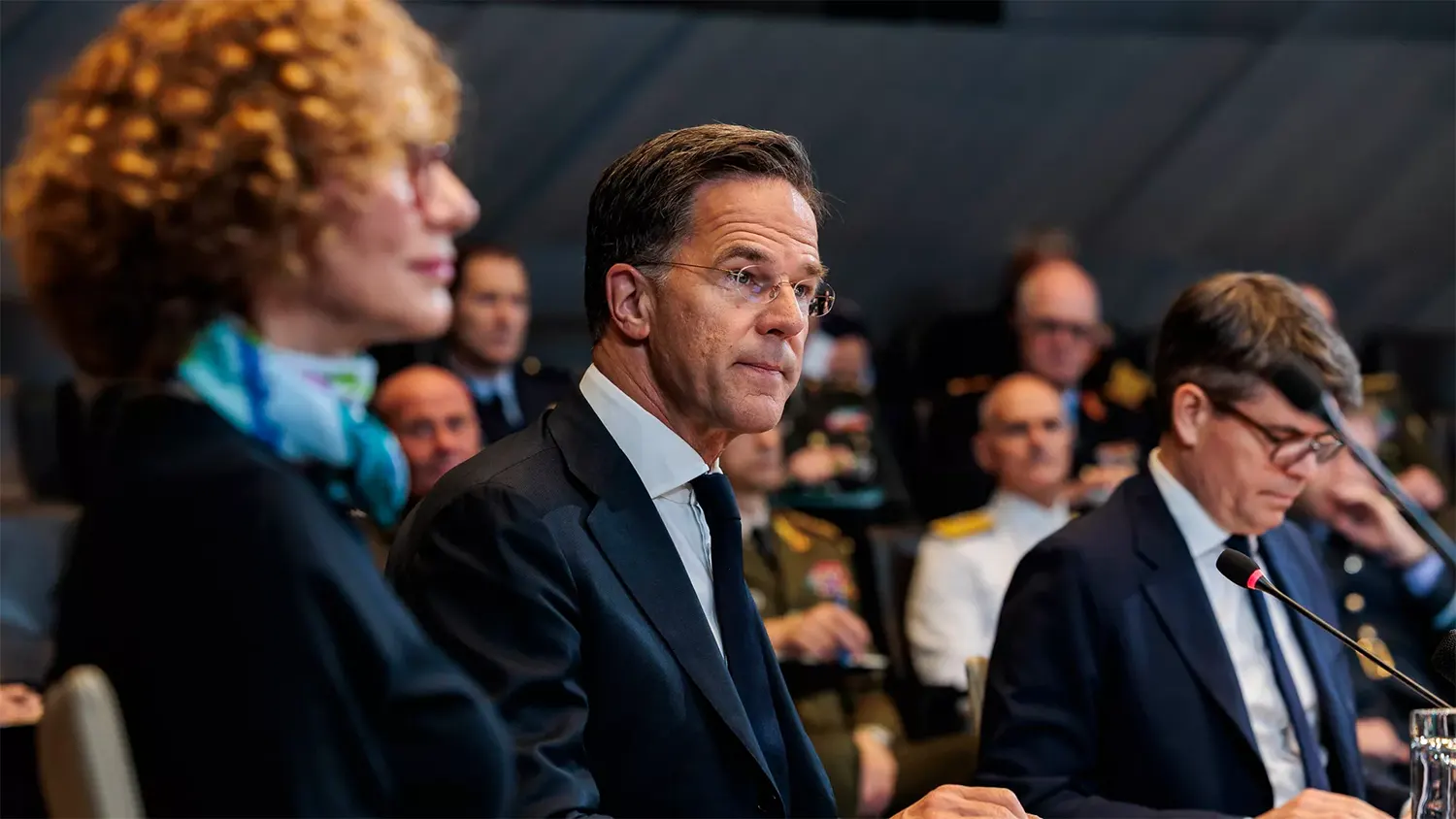
There is a negotiation table in Muscat.
There are diplomats, folders, interpreters, and cameras.
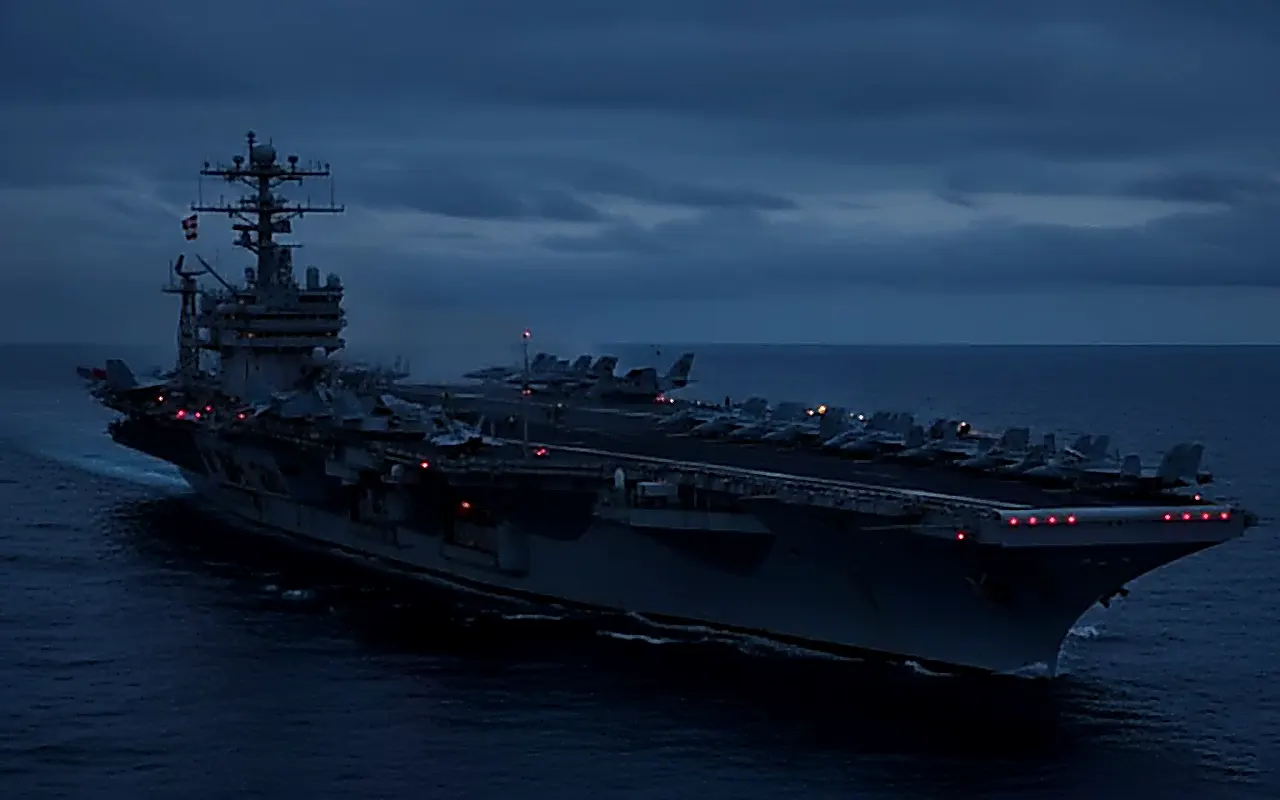
But just beyond the shoreline sits a U.S. carrier strike group, and that fact defines everything.
This is diplomacy under escort, political terms presented while military force remains visibly, operationally ready.
The United States is not managing a crisis, it is dictating the conditions under which escalation might be paused.
Iran is not bargaining for advantage, it is trying to prevent strategic suffocation from turning into strategic collapse.
The line between negotiation and coercion has not blurred in 2026. It has been erased.
The Gun in the Room and on the Flight Deck
In classical diplomacy, the military stays offstage.
In Muscat, it is part of the cast.
A senior U.S. military commander Adm. Brad Cooper appearing alongside civilian envoys is not symbolism,
it is kinetic leverage made visible. It compresses the distance between diplomacy and force. The message is not subtle.
It is operational, the people discussing terms are institutionally tied to the people who execute strikes.
And the performance did not end in the meeting room.
On February 7, the day after the talks, U.S. envoys Steve Witkoff and Jared Kushner flew out to the USS Abraham Lincoln in the Arabian Sea. They toured the carrier and met personnel involved in recent air defense actions near the strike group. The sequence matters. Diplomats at the table one day. On the flight deck the next.
This is not routine morale theater. It is a closing argument in steel and jet fuel. It tells Tehran that diplomacy and force posture are not separate tracks, they are the same track viewed from different angles.
Iran is negotiating while the strike platform is not just deployed, but showcased.
The Ghost of January: A Regime in Post-Massacre Shock
External pressure explains why Iran is at the table.
Internal trauma explains why it cannot afford to bend.
According to leaked Iranian Ministry of Health data reported by Time and Iran International, the number of people killed during the January 8–9 crackdown alone is cited as high as 36,500. That figure would place the event among the deadliest episodes of state violence against protesters in modern history.
This is not “tension.”
This is post massacre shock.
Security forces remain heavily deployed. Surveillance is intense. The streets are quiet not because grievances disappeared, but because fear is still fresh. In this environment, any visible concession abroad risks being interpreted at home as elite fracture.
Authoritarian systems built on coercive credibility cannot afford to look unsure. A regime that just oversaw mass bloodshed cannot now appear to retreat under foreign pressure without inviting the question: If they gave in out there, can they be forced to give in here ?
Tehran’s delegation is therefore negotiating with two audiences:
| Outside | Inside |
|---|---|
| U.S. military and economic pressure | A society that has just experienced mass killing |
| Risk of air or cyber escalation | A population that has not reconciled with the state |
| Strategic isolation | A legitimacy crisis measured in bodies |
The external gun is real. The internal one is closer.
The Economic Obliteration
Military pressure is immediate. Economic collapse is constant.
As of February 9, the exchange rate has reached roughly 1.45 million rials to the U.S. dollar. That is not volatility. That is currency destruction. Life savings evaporate. Meat and protein become luxury goods. Salaries lag so far behind prices that the middle class stops functioning as a stabilizing force.
The Bazaar historically a pillar of regime durability is under severe strain. When merchants cannot trade, the state loses not just tax flows but passive legitimacy.
Overlay this with U.S. measures aimed at countries trading with Iran, and the squeeze tightens further. The strategy is to narrow Tehran’s economic oxygen from the outside while domestic purchasing power collapses from within.
The diplomatic clock is ticking. The economic clock is detonating.
Survival vs. Surrender
Washington’s framework is comprehensive, nuclear rollback, missile limits, regional de escalation, and internal human rights expectations in one package. From the U.S. perspective, partial deals simply defer the next crisis.
From Tehran’s perspective, this reads as strategic disarmament.
Three pillars are explosive:
- Deep nuclear rollback – framed in Tehran as technological sovereignty.
- Missile constraints – seen as the only reliable deterrent after strikes on its own facilities.
- Curtailing regional partners – viewed as strategic depth, not optional policy.
For U.S. negotiators, these are stabilizers. For Iranian hardliners, they resemble the blueprint of vulnerability.
That is why Iranian rhetoric leans on dignity, rights, and resistance. It is not just aimed at Washington. It is defensive messaging for a domestic audience that has just seen blood in the streets.
Netanyahu and the Wednesday Deadline
Israeli Prime Minister Benjamin Netanyahu is not a background voice in this phase. He is a deadline.
He is meeting President Trump on Wednesday, February 11, with a clear objective: lock in the “Zero Enrichment” line and prevent any agreement that leaves Iran with recoverable capacity.
His role is not advisory. It functions as a veto dynamic inside the broader pressure architecture.
If Muscat does not produce terms that look like capitulation rather than compromise, the argument from his camp is straightforward: diplomacy is buying Tehran time.
That view shortens the fuse.
The strategic divergence is stark:
| Trump’s Diplomatic Win | Netanyahu’s Security Logic |
|---|---|
| A sweeping deal under pressure | Deny Iran recovery space entirely |
| Stabilization through agreement | Stability through permanent degradation of capability |
Wednesday is not another meeting. It is a pivot point.
If the conclusion is that talks are a stall, military options move from contingency planning to active consideration.
Why This Moment Is So Volatile
In past crises, force preparation and negotiation alternated. Here, they overlap.
- Military assets are forward and showcased.
- Economic pressure is active and accelerating.
- Iran’s domestic environment is traumatized and brittle.
- Regional actors are positioning for the outcome.
This eliminates the cushion that usually absorbs diplomatic failure. A breakdown in talks would not occur in a neutral environment. It would occur inside an already militarized posture.
The Bottom Line
Muscat is not a neutral table searching for a midpoint.
It is a pressure chamber.
The United States is using synchronized military, economic, and diplomatic leverage to force structural concessions.
Iran is trying to secure relief without appearing to accept strategic subordination while standing in the shadow of a recent mass killing at home.
This is not slow diplomacy.
It is crisis bargaining with engines running.
And the next major decision point is not months away.
It is Wednesday.