The UEFA Champions League quarter finals delivered two gripping first leg encounters on a night that blended tactical precision with late drama, as Real Madrid vs Bayern Munich and Sporting CP vs Arsenal both produced narratives rich in tension, quality, and consequence.
Bayern Munich seize control at the Bernabéu
At the Estadio Santiago Bernabéu, the latest chapter of the “European Clásico” tilted in favor of Bayern Munich, who claimed a statement 1–2 victory over Real Madrid, ending a 25 year wait for a win in this iconic venue.
For much of the opening period, Real Madrid appeared composed, circulating possession with authority and probing Bayern’s defensive structure. Under Álvaro Arbeloa, Madrid’s approach leaned heavily on wide progression and controlled buildup, but it lacked incision in the final third.
That would prove costly.
The first decisive moment arrived just before halftime with Luis Díaz’s goal (41’). A perfectly timed vertical pass from Serge Gnabry split Madrid’s defensive line, exposing a lapse in coordination. Luis Díaz, timing his run to beat the offside trap, drove a low finish beyond Andriy Lunin. It was a classic Bayern transition direct, ruthless, and surgically executed.
If Madrid had hoped to regroup at the break, those plans were immediately shattered by Harry Kane’s goal (46’), a strike that redefined the momentum of the tie. Just 20 seconds after kickoff, Bayern launched a devastating counterattack. Michael Olise’s composure in the final third allowed him to square for Harry Kane, who calmly dispatched his finish from the edge of the area. The English striker’s 11th goal of the campaign underlined his role as Bayern’s attacking fulcrum.
At 0–2, Madrid were stunned, and Bayern shifted into a compact, disciplined defensive block. Their structure without the ball was exemplary lines tight, pressing triggers well timed, and central spaces effectively denied.
Yet, as so often at the Bernabéu, the hosts found a way to respond.
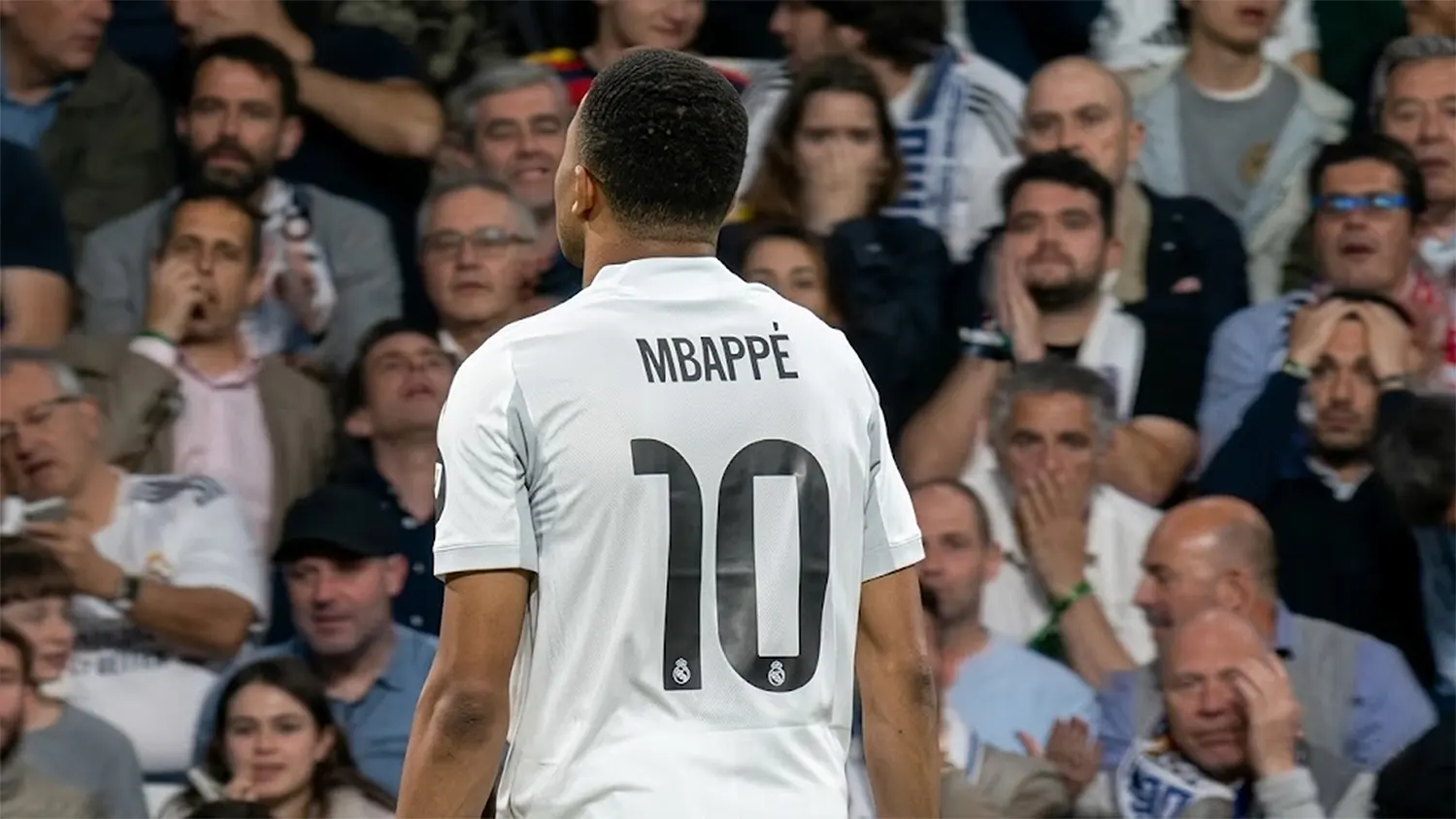
The lifeline came through Kylian Mbappé’s goal (74’). A low, whipped delivery from Trent Alexander Arnold sliced through Bayern’s defensive line, and Kylian Mbappé ghosted in at the far post to convert. The goal not only reignited the stadium but fundamentally altered the psychological complexion of the tie.
Madrid surged forward in the closing stages, throwing numbers into attack. But the defining sequence, the decisive moment beyond the goals belonged to Manuel Neuer.
In the 84th minute, the Bayern captain produced a breathtaking triple save, denying first Vinícius Júnior and then reacting instinctively to block Mbappé’s follow up. It was elite goalkeeping under extreme pressure, preserving Bayern’s advantage and earning him Player of the Match honors.
Tactically, Bayern’s victory was rooted in efficiency. They absorbed pressure intelligently and capitalized on transitional moments, while Madrid’s defensive lapses particularly in managing depth and spacing proved decisive.
The implications are significant. Historically, Real Madrid have never overturned a home first leg defeat in the Champions League knockout rounds. Yet, their strong record in Munich three wins in their last five visits offers a glimmer of hope. For Bayern Munich,
the task is now one of control: protect the aggregate lead at the Allianz Arena while managing Madrid’s inevitable attacking aggression.
Arsenal edge resilient Sporting in Lisbon
Elsewhere, at the Estádio José Alvalade, Arsenal secured a hard fought 0–1 victory over Sporting CP, ending the Portuguese side’s remarkable 16-match home winning streak.
This was a match defined less by fluid attacking play and more by structure, discipline, and key moments at both ends of the pitch.
Sporting began with intensity, pressing high and looking to exploit Arsenal’s buildup phases. Early chances reflected their intent, most notably when Maxi Araújo’s powerful effort forced a fingertip save onto the crossbar.
Arsenal, however, gradually asserted control through midfield, with Martín Zubimendi dictating tempo and offering positional stability. Their best moment of the first half came via Noni Madueke, whose inswinging corner nearly resulted in a spectacular opener, only for the ball to crash against the woodwork.
The match’s tactical balance persisted into the second half, with both sides cautious yet probing. Arsenal thought they had broken the deadlock through Zubimendi in the 63rd minute, only for VAR to intervene. The decision ruling Viktor Gyökeres offside in the
buildup was a contentious but ultimately correct call, maintaining the stalemate.
The turning point came not from attacking brilliance, but from defensive resilience.
Between the 82nd and 84th minutes, David Raya delivered a sequence of saves that proved foundational to the result. Denying Geny Catamo at point blank range before producing a rapid double save moments later, David Raya ensured Arsenal remained level at a critical juncture.
That platform allowed for late drama.
The decisive moment arrived with Kai Havertz’s goal (90+1’). Introduced as a substitute, Gabriel Martinelli injected pace and directness, threading a precise through ball behind Sporting’s defense. Kai Havertz, timing his run to perfection, finished calmly into the bottom corner. It was a textbook example of transitional execution minimal touches, maximum impact.
From a tactical standpoint, Arsenal showcased maturity. They managed phases of pressure, remained compact defensively, and relied on moments of quality rather than sustained dominance. Sporting CP, by contrast, struggled to convert territorial advantage into clear cut chances, particularly against Arsenal’s well organized defensive block.
The result places Arsenal in a commanding position ahead of the second leg in London. With a clean sheet and away victory, Mikel Arteta’s side can now dictate terms, forcing Sporting to chase the tie.
Conclusion
Across both fixtures, the theme was clear: knockout football rewards precision in decisive moments. Bayern Munich demonstrated clinical efficiency and elite game management to silence the Bernabéu, while Arsenal combined defensive resilience with late attacking clarity to secure a crucial away win.
As the ties shift to Munich and London, the margins remain fine but the advantage, both tactical and psychological, lies firmly with Bayern and Arsenal.