The war between the United States and Iran entered a new and dangerous phase on Wednesday, March 4, 2026.
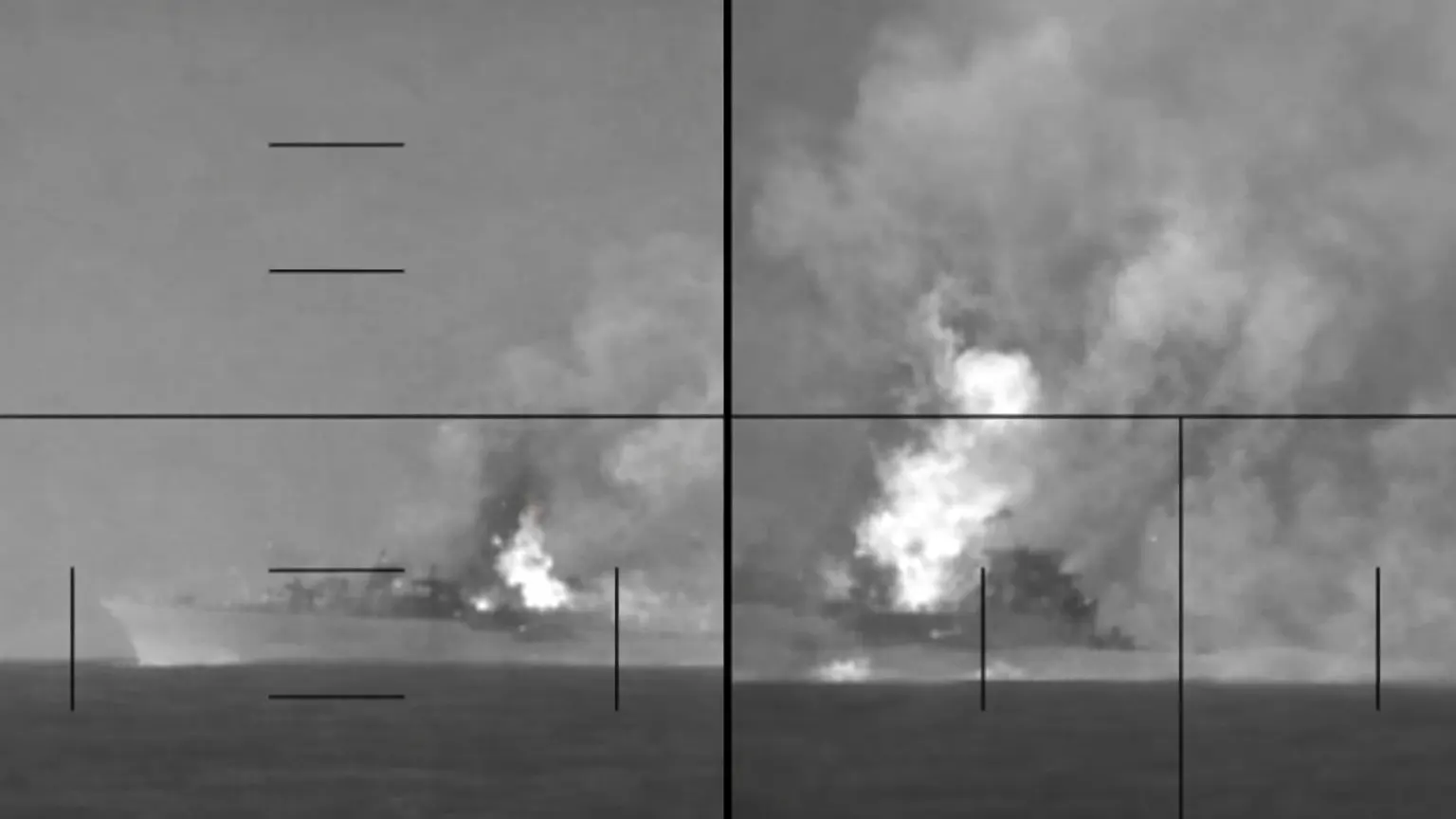
The Iranian frigate IRIS Dena was sunk in international waters south of
Sri Lanka after a confirmed U.S. Navy submarine strike.
U.S. Secretary of Defense Pete Hegseth acknowledged the attack, describing it as a “quiet death.”
This is the first confirmed submarine torpedo sinking of a warship since the 1982 Falklands War and the first U.S. strike on Iranian forces outside the Middle East in the current conflict.
The Strike in the Indian Ocean
The attack occurred approximately 40–44 nautical miles (75–81 km) south of Galle, Sri Lanka.
The IRIS Dena, a Moudge class frigate and one of the newest vessels in Iran’s fleet, was reportedly returning from the International Fleet Review 2026 in Visakhapatnam, India.
At around 5:00 AM local time, a single Mk 48 torpedo fired from a U.S. fast attack submarine struck the ship. Hegseth later said the frigate
“thought it was safe in international waters” before being hit.
Iranian sources have claimed the ship’s defensive systems were disrupted by electronic warfare prior to impact. However, the Pentagon has not confirmed this detail, maintaining that the strike was carried out successfully with a single torpedo.
By the time rescue teams arrived, the vessel had completely sunk.
Casualties and Rescue Operations
The ship was carrying approximately 180 crew members.
As of Wednesday evening, Sri Lanka’s Deputy Defense Minister Aruna Jayasekara confirmed that 83 bodies have been recovered, with 101 personnel still officially listed as missing.
The Sri Lankan Navy and Air Force launched a major search and rescue operation after receiving a distress call at 5:08 AM.
“We found people floating in the water and rescued them… we will continue operations until we are sure there are no more survivors,” said Commander Buddhika Sampath, spokesperson for the Sri Lanka Navy.
Despite political tensions surrounding the incident, Sri Lanka has maintained that its role is strictly humanitarian.
Foreign Minister Vijitha Herath addressed Parliament on Wednesday, defending the rescue effort as an international maritime obligation under search and rescue protocols. Some opposition members had questioned whether involvement could compromise Sri Lanka’s neutrality.
Officials reiterated that the sinking occurred in international waters but within Sri Lanka’s designated search and rescue region, making assistance mandatory under maritime law.
A Conflict Expanding Beyond the Persian Gulf
The sinking of the IRIS Dena confirms that the war is no longer geographically contained.
Over the past five days, U.S. and Israeli forces have carried out coordinated strikes under Operation Epic Fury and Operation Roaring Lion. More than 2,000 targets inside Iran have reportedly been hit.
Military officials state that Iranian ballistic missile launches have dropped by 86% since operations began. Drone activity is down 73%.
With Iranian air defenses described as largely dismantled,
U.S. forces have shifted toward sustained bombing campaigns using
500 lb, 1,000 lb, and 2,000 lb GPS and laser guided munitions.
The submarine strike off Sri Lanka sends a strategic message: Iranian military assets are now vulnerable far beyond the Strait of Hormuz.
The “Digital Iron Curtain”
At the same time, Iran is experiencing a near total communications blackout.
Connectivity monitoring group NetBlocks reports national internet access has fallen to roughly 1%.
U.S. officials say the Islamic Revolutionary Guard Corps (IRGC) is using the blackout to suppress dissent and conceal internal military movements.
“They blind their people on purpose,” Hegseth stated during his Pentagon briefing.
U.S. Casualties and the Road Ahead
The Pentagon has confirmed that six American service members have been killed since the conflict began.
4 Army Reserve soldiers from the 103rd Sustainment Command were killed in a March 1 drone strike at Port Shuaiba, Kuwait. Two additional service members were confirmed killed during the opening phase of operations.
Hegseth signaled that military pressure will intensify rather than slow.
Additional bombers have arrived in the region, and officials describe the campaign as “accelerating, not decelerating,” with the objective of dismantling Iran’s military industrial capacity.
A Defining Moment
The sinking of the IRIS Dena may become one of the defining moments of this conflict.
Not only because of the loss of a modern warship,
but because it demonstrates how far the battlefield has expanded.
What began as regional escalation has now reached the Indian Ocean raising the stakes for global shipping lanes, regional neutrality, and the broader balance of power.