
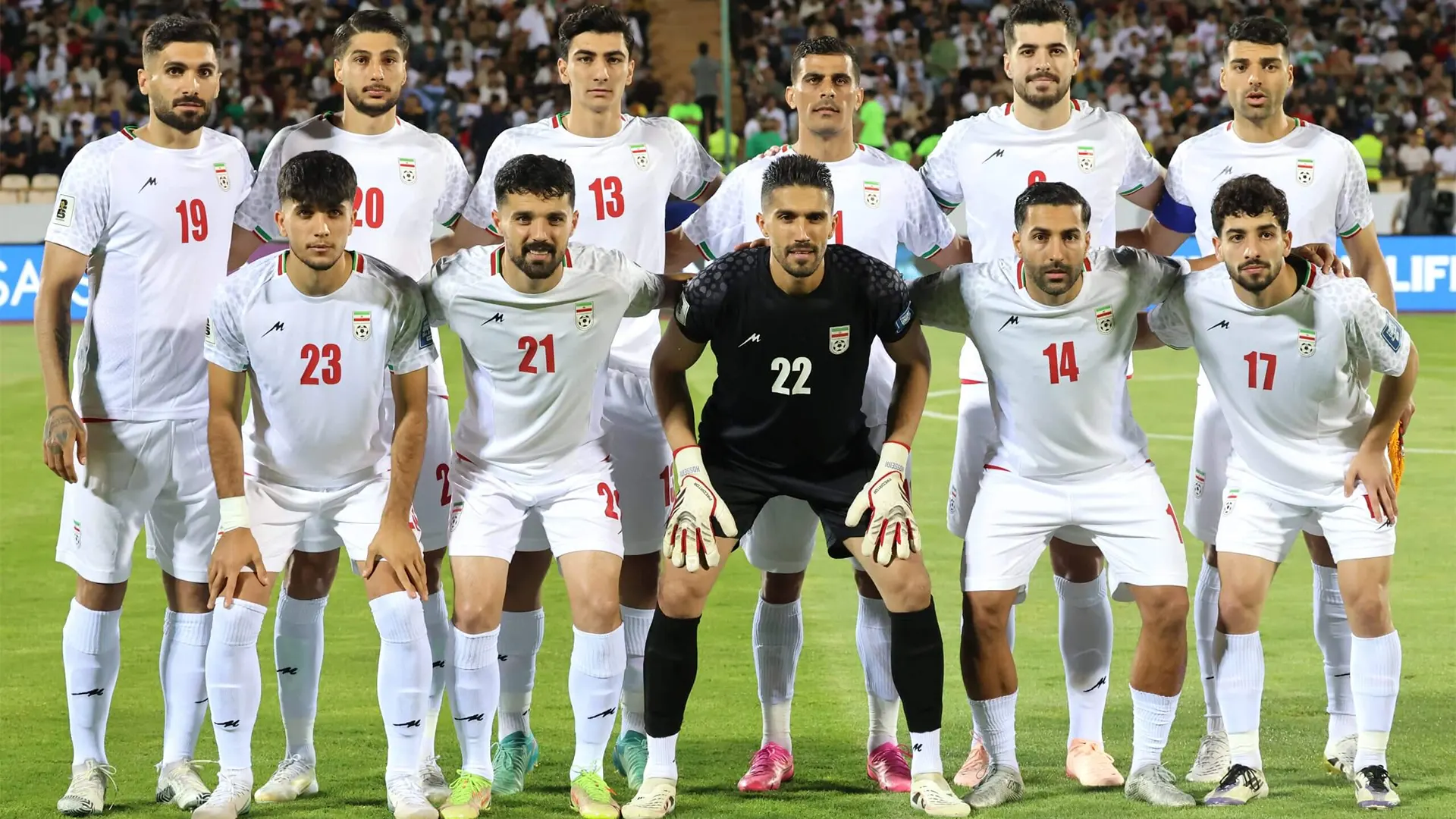
The 2026 FIFA World Cup is facing a political shock unlike anything in its modern history.
As of Monday morning, March 2, 2026, the Iranian Football Federation (FFIRI) has officially suspended all domestic league play and signaled that a full withdrawal from the 2026 World Cup is “likely.” What began as geopolitical escalation has now spilled directly into global sport.
This is no longer a scheduling issue. It is a direct collision between war, diplomacy, and football.
Tehran’s Official Position
FFIRI President Mehdi Taj addressed the nation on state television late Sunday, stating:
“With what has happened over the last 48 hours and the direct attacks by the United States, it is unlikely we can look forward to participating in a tournament on their soil. The safety of our players and the dignity of our nation come first.”
While Taj emphasized that the final decision rests with senior government and sports authorities, he confirmed that Iran’s national team training camp scheduled for Tucson, Arizona has been canceled.
A withdrawal would leave Group G with a vacancy just 105 days before kickoff.
The Replacement Dilemma
Group G currently includes Belgium, Egypt, and New Zealand.
If Iran formally withdraws, FIFA must act quickly under Article 7 of the World Cup Regulations, which allows the governing body to replace a withdrawing association at its discretion.
Two primary scenarios are under debate at FIFA headquarters in Zurich.
Scenario A: Direct Promotion of Iraq
Iraq defeated the UAE 3–2 on aggregate in November 2025 to secure a place in the Intercontinental Playoff. Under this scenario, FIFA would elevate Iraq directly into Iran’s slot.
Why this approach is gaining traction:
- Iraq remains active in the qualification process.
- It respects the most recent head to head result.
- It is viewed as the most merit based solution.
The domino effect: The UAE would likely replace Iraq in the Intercontinental Playoff against Bolivia or Suriname.
There is also narrative appeal Iraq’s only prior World Cup appearance
was in 1986.
Scenario B: Ranking Elevation of the UAE
Alternatively, FIFA could promote the UAE as the highest ranked non qualified team from Iran’s qualifying group.
Why it works:
- It preserves the integrity of the original qualifying group.
- It avoids disrupting the Intercontinental Playoff bracket.
The criticism:
The UAE was eliminated by Iraq in a direct playoff.
Promoting them could be perceived as ignoring results on the field.
The “Impracticality” Clause
There is a third, rarely discussed option.
If FIFA determines that replacing Iran is “impractical” due to visa processing, travel bans, or airspace closures, it could:
- Leave Group G with three teams (a commercial disaster).
- Invite a team from another confederation under discretionary authority.
The logistics are severe.
| Risk Area | Impact |
|---|---|
| Visa Processing | Replacement team must clear U.S. security rapidly |
| Ticketing | Thousands of Iran specific tickets already sold |
| Training Base | Tucson facility sits vacant |
| Broadcast Contracts | Schedule disruptions in Los Angeles and Seattle |
FIFA Secretary General Mattias Grafström stated that the organization is “monitoring the situation with the three host governments” while prioritizing safety.
An announcement is expected by March 4.
Why This Situation Is Historically Unique
Football history has seen bans and boycotts before.
- Russia was suspended in 2022 following the invasion of Ukraine.
- Yugoslavia was banned from the 1994 World Cup due to UN sanctions.
- South Africa was excluded for decades during apartheid.
- Germany and Japan were barred from the 1950 tournament after World War II.
Political withdrawals have also occurred such as the 1966
African boycott and the 1938 South American protest.
But the 2026 situation presents three unprecedented elements:
- Direct conflict between a qualified nation and the primary host.
- Timing, just 100+ days before kickoff.
- A replacement scramble under extreme logistical pressure.
There is no clear historical template.
The U.S. Host Dilemma
The United States is not merely a participant. It is the primary host of a tournament projected to generate over $11 billion in revenue.
That reality shapes FIFA’s calculus.
Unlike Russia in 2022, the U.S. cannot simply be removed without collapsing the entire tournament infrastructure across 11 cities.
Social media platforms are now flooded with the hashtag
#FIFAHypocrisy, with critics comparing the speed of Russia’s suspension in 2022 to FIFA’s current stance of “monitoring developments.”
The debate centers on one uncomfortable question:
If Russia was banned within days of invading Ukraine, should similar standards apply when the host nation is engaged in active military operations ?
The “Tehrangeles” Factor
Two of Iran’s matches were scheduled at SoFi Stadium in Los Angeles home to the world’s largest Iranian diaspora.
Ticket sales were reportedly record breaking.
A withdrawal would leave a significant commercial and symbolic void.
Meanwhile, a scheduled Iran–Egypt match in Seattle was already politically sensitive due to overlapping local Pride celebrations, an issue Iranian officials had previously protested.
The political tension was present before escalation. It is now magnified.
What Happens Next ?
Most insiders believe Scenario A promoting Iraq is the frontrunner because it respects recent competitive results.
But no decision is simple.
FIFA must weigh:
- Sporting merit
- Legal constraints
- Visa and travel realities
- Commercial obligations
- Political fallout
Whatever decision emerges will set a precedent.
A Tournament at a Crossroads
The World Cup has often reflected global politics. Rarely has it been so directly shaped by it.
If Iran withdraws, the 2026 tournament will enter uncharted territory balancing war, diplomacy, commerce, and sport within a 100 day countdown.
For FIFA, this is no longer a scheduling issue.
It is a legitimacy test.