For many families in Indonesia, the upcoming Eid al-Fitr (Lebaran) holiday is a time for travel and joyful reunions. But this year, health officials are raising a serious warning.
Indonesia is currently facing a significant surge in measles cases, with thousands of infections reported in the first months of 2026. Doctors and public health experts worry that large gatherings and holiday travel could allow the virus to spread even faster.
The good news is that measles is preventable. By understanding the situation and ensuring children receive the proper vaccinations, families can play a key role in protecting their communities.
The Current Measles Situation in Indonesia
The latest data from Indonesia’s Ministry of Health shows that the outbreak is expanding rapidly.
As of late February and early March 2026:
- More than 10,400 suspected measles cases have been reported.
- Over 8,300 of these cases have already been confirmed.
- Six deaths have been recorded, all involving young children.
- Outbreaks have been identified in 11 provinces across the country.
Some of the hardest hit regions include:
- West Sumatra
- South Sumatra
- West Java
- Central Java
- Yogyakarta
On the global stage, Indonesia now ranks second in the world for measles cases, behind Yemen.
According to data reported to the World Health Organization (WHO) for the period July–December 2025, the countries with the highest measles outbreaks include:
- Yemen – 11,288 cases
- Indonesia – 10,744 cases
- India – 9,666 cases
- Pakistan – 7,361 cases
- Angola – 4,843 cases
This ranking highlights how urgent the situation has become.
Why Measles Is Spreading Again
Health experts say the current surge is largely caused by an
“immunity gap.”
This gap appears when too many people in a community miss their vaccinations, allowing the virus to spread more easily.
Several factors have contributed to this problem.
Missed Vaccinations During the Pandemic
Between 2020 and 2023, routine health services were disrupted by the COVID-19 pandemic. Many children missed their scheduled immunizations during this period.
As a result, thousands of young children today lack protection against measles.
Falling Vaccination Coverage
To stop measles from spreading widely, about 95% of the population needs to be vaccinated. This level of protection is known as herd immunity.
However, vaccination coverage in Indonesia has declined.
In 2025, the second dose measles rubella coverage dropped
to 77.6%, leaving many communities vulnerable.
Vaccine Misinformation
Another challenge is the spread of false information about vaccines online. Some parents hesitate to vaccinate their children because of rumors or misleading claims on social media.
Health authorities emphasize that measles vaccines are safe, effective, and scientifically proven to prevent severe disease.
Why Measles Is So Contagious
Measles spreads extremely easily. In fact, experts consider it one of the most contagious diseases in the world.
Key facts about measles transmission include:
- One infected person can spread the virus to up to 18 others.
- The virus can linger in the air or on surfaces for up to two hours.
- It spreads rapidly in crowded environments such as schools, buses, markets, and public gatherings.
Although many people recover, measles can lead to serious complications, including:
- Pneumonia
- Severe diarrhea
- Brain inflammation (encephalitis)
In severe cases, these complications can become life threatening.
Children Under Five Are Most at Risk
Current surveillance data shows that the outbreak is heavily concentrated among children under five years old.
This age group is especially vulnerable because:
- Their immune systems are still developing.
- Many missed their routine vaccinations.
- They are more likely to develop severe complications.
All six deaths recorded in early 2026 involved toddlers under five who had never been vaccinated.
Cases are also appearing among children aged 5–15, often because they missed booster doses.
Adults can still contract measles too, although this is less common.
Why the Upcoming Holiday Travel Is a Concern
The Ministry of Health is particularly worried about the Mudik travel season during Eid al-Fitr.
Each year, millions of Indonesians travel across the country to visit family. While this tradition is important culturally, it can also increase the risk of disease spread.
Crowded transportation hubs and family gatherings create ideal conditions for viruses to move quickly from one region to another.
Health officials warn that without precautions, holiday travel could turn into a “super spreader” moment for measles.
What the Government Is Doing
The Indonesian government has launched a nationwide effort to control the outbreak.
Key measures include:
Mass Vaccination Campaigns
Authorities have secured around 16 million doses of the
Measles Rubella (MR) vaccine to strengthen immunization coverage.
Targeted Immunization Programs
A special Outbreak Response Immunization (ORI) campaign is underway in 102 high risk districts.
Door to Door Vaccination Efforts
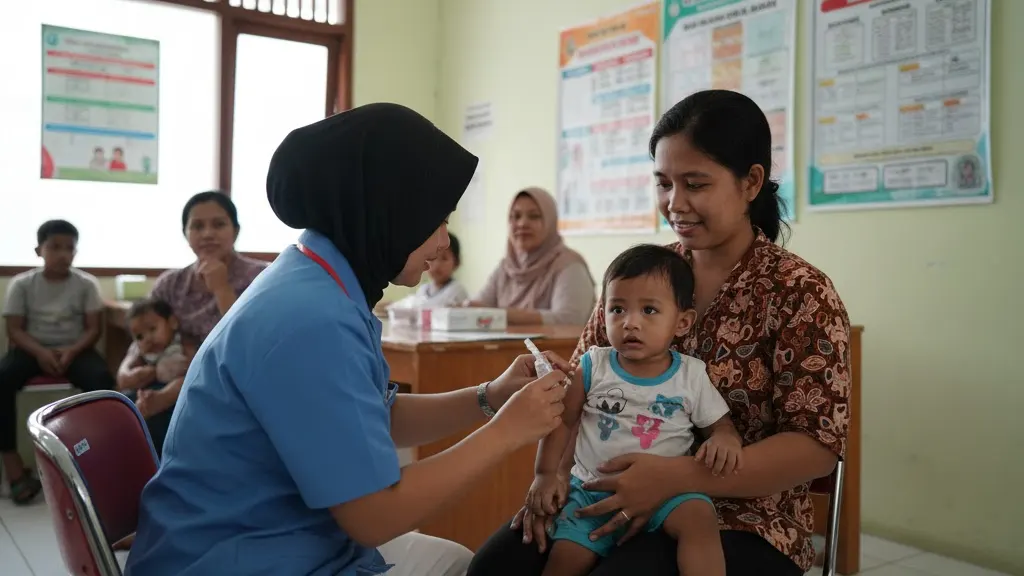
Health workers are visiting homes in areas with low vaccination rates to ensure children aged 9 months to 15 years receive protection.
Stronger Disease Surveillance
Hospitals and clinics have been placed on high alert to detect infections quickly and prevent outbreaks from spreading further.
The Measles Vaccine Is Free in Indonesia
One important point for families to know is that the measles vaccine is completely free through the national immunization program.
You can receive the vaccine at:
- Puskesmas (community health centers)
- Posyandu (integrated service posts)
- Government hospitals
The standard vaccination schedule includes:
- First dose: at 9 months old
- Second dose (booster): at 18 months old
- Additional booster: around 5 years old through school-age immunization programs (BIAS)
These vaccines are produced by the state owned pharmaceutical company Bio Farma and are strictly regulated to ensure safety and quality.
If you are unsure about your child’s immunization status, check the Buku KIA (Maternal and Child Health Book) or visit your nearest Puskesmas for assistance.
What Parents Should Do Next
Indonesia’s measles outbreak is a serious reminder of how quickly infectious diseases can return when vaccination coverage falls.
With over 10,000 suspected cases already reported, protecting children especially those under five has become an urgent priority.
The most powerful protection remains simple: timely vaccination.
If you are a parent or caregiver, take a moment today to review your child’s immunization record. A quick visit to your local health center could protect your child and help stop the spread of measles in your community.