
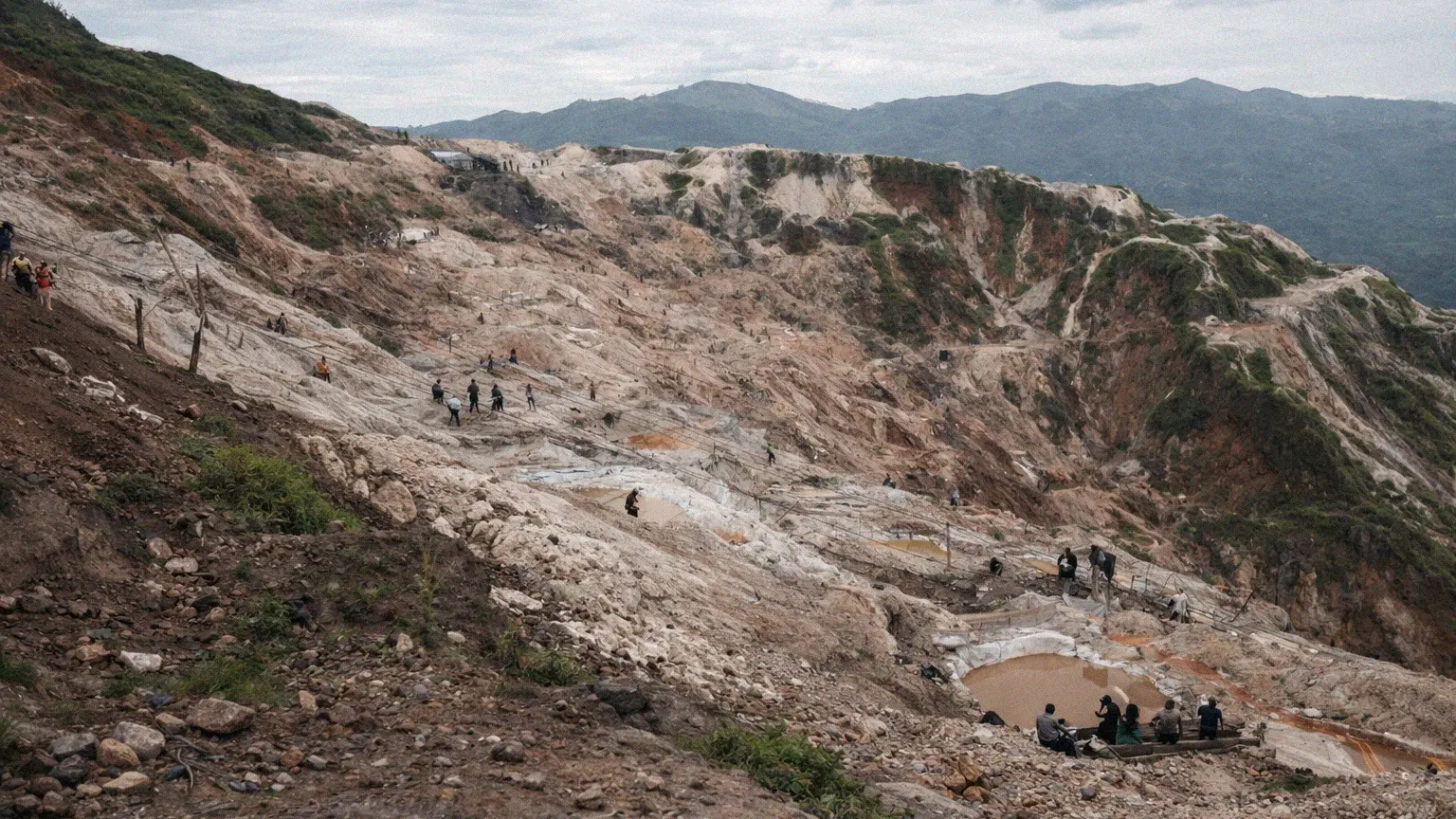
A catastrophic landslide at one of the world’s most important coltan mining hubs has left hundreds feared dead in eastern Democratic Republic of Congo.
The collapse at the Rubaya mines in North Kivu, is not just a mining accident, it is a stark reminder of the human cost embedded deep
within the global electronics supply chain.
As rescue efforts struggle to reach the remote site, conflicting claims from the Congolese government and rebel forces controlling the area have created uncertainty about the true scale of the disaster. But what is clear is that the tragedy highlights a dangerous intersection of poverty, armed conflict, and global demand for critical minerals used in modern technology.
The Rubaya Landslide: What Happened
The disaster unfolded after days of exceptionally heavy rainfall triggered a massive landslide at the Rubaya coltan mining site.
According to the Democratic Republic of Congo’s Ministry of Mines,
the collapse caused multiple hand dug tunnels to cave in, trapping hundreds of miners underground.
Government officials estimate that more than 200 people may have died, including around 70 children.
However, verifying the exact death toll has proven difficult.
The Rubaya mines sit in a remote and volatile region of North Kivu, where armed groups control territory and restrict access. Rescue teams and independent observers have struggled to reach the site, leaving much of the information dependent on local reports and official statements.
Adding to the confusion, the M23 rebel group which has controlled the Rubaya mines since 2024 has rejected the government’s account.
Instead of a landslide, M23 claims the collapse was caused by “bombings,” and insists that only five or six people died.
This stark discrepancy illustrates the information battle surrounding the tragedy.
A Disaster That Was Almost Predictable
While the scale of the latest collapse is shocking, it is not unprecedented.
A nearly identical landslide occurred at the same mining site in late January 2026, killing more than 200 miners.
The repetition of such deadly events highlights the extreme dangers of artisanal mining operations in eastern Congo.
Unlike industrial mines, artisanal mining sites rely on hand dug tunnels with little structural reinforcement or safety monitoring. Workers often descend deep underground with basic tools, no protective equipment,
and virtually no safety oversight.
In regions like Rubaya, the risks are compounded by the complete absence of government regulation.
Why the Rubaya Mines Matter to the World
The tragedy is drawing global attention not only because of the human loss, but also because of Rubaya’s strategic importance.
The Rubaya mines produce an estimated 15% of the world’s coltan supply, making them one of the most significant sources of the mineral globally.
Coltan is refined into tantalum, a metal essential for modern technology. It is widely used in:
- Smartphones
- Computer processors
- Electric vehicle batteries
- Aerospace electronics
In other words, minerals extracted in the dangerous tunnels of eastern Congo are critical to the devices used by millions of people worldwide.
This connection has long raised ethical questions about the supply chains behind modern electronics.
Rebel Control and the Governance Vacuum
The Rubaya mines are located in North Kivu, one of the most conflict affected regions in Africa.
Since May 2024, the site has been under the control of the M23 (March 23 Movement) rebel group, which the Congolese government and several international observers say is backed by Rwanda.
This has effectively created a governance vacuum.
Instead of Congolese mining authorities regulating the site, M23 has established its own parallel administration, overseeing security, taxation, and production at the mines.
The rebel group reportedly generates more than $800,000 per month from the Rubaya mines, revenue that helps fund its ongoing military operations.
In such a system, safety standards and labor protections are virtually nonexistent.
Production volume not worker safety is the primary priority.
Children in the Mines
One of the most disturbing aspects of the Rubaya mining economy is the widespread use of child labor.
Children are not simply present at these sites, they are active participants in the mining process.
The reasons are rooted in systemic challenges facing the Democratic Republic of Congo.
More than 70% of the country’s population lives in extreme poverty, forcing families to rely on every possible source of income.
At the same time, many communities lack access to functioning schools. When education is unavailable or unaffordable, mining often becomes the only option.
Conflict in eastern Congo has made the situation even worse.
Many children working in the mines are orphans or displaced by violence, leaving them with little support or protection.
The Dangerous Work Children Do
Children working in artisanal mines often perform the same hazardous tasks as adults.
These include:
Digging and tunneling
Children squeeze into narrow underground shafts that are poorly ventilated and highly unstable. Tunnel collapses are common and frequently deadly.
Washing and sorting ore
Many children spend long hours standing in streams washing mineral rich soil, exposing them to toxic substances and heavy metals.
Transporting heavy loads
Children often carry sacks of ore weighing between 20 and 40 kilograms, which can lead to permanent spinal damage.
Scavenging mining waste
Others search through discarded tailings from industrial sites hoping to find tiny fragments of valuable minerals.
Most earn less than two dollars per day.
The Hidden Cost in the Global Supply Chain
The Rubaya mines are also part of a broader problem involving so called “conflict minerals.”
Because the site is under rebel control, much of the extracted coltan enters the international market through illegal channels.
Minerals are often smuggled across the border into Rwanda, where they may be mixed with legally mined materials and exported to global buyers.
This process makes it extremely difficult for technology companies to trace the origins of tantalum used in their products.
Despite international certification initiatives designed to prevent conflict minerals from entering global markets, monitoring conditions in rebel controlled areas like Rubaya remains nearly impossible.
The Humanitarian Crisis on the Ground
Beyond the political and economic implications, the disaster has triggered a growing humanitarian emergency.
Families are still searching for missing relatives, while survivors face serious injuries and long term health complications.
The environment around the mines is already extremely hostile.
Workers and children alike often suffer from:
- Respiratory illnesses caused by toxic dust
- Chronic skin diseases from chemical exposure
- Severe bone and joint damage from heavy labor
Reports from human rights groups have also documented widespread exploitation, abuse, and violence within these mining communities.
Why Access Is So Difficult
Humanitarian organizations face enormous challenges reaching the affected area.
The Rubaya mines lie within a government designated “red zone”, meaning the Congolese state formally prohibits mining there because of security risks.
But the rule is largely symbolic.
In reality, armed groups control much of the territory, limiting access for aid workers, journalists, and international observers.
This lack of access not only hampers rescue operations but also makes independent verification of the disaster extremely difficult.
What Happens Next
For now, the situation remains highly uncertain.
The Congolese government continues to report a high death toll,
while the M23 rebels dispute both the cause and the scale of the disaster.
Meanwhile, the underlying conditions that caused the tragedy poverty, armed conflict, and unregulated mining remain unchanged.
Without significant political stabilization in eastern Congo, similar disasters are likely to happen again.
The Bottom Line
The Rubaya landslide is more than a tragic mining accident.
It is a stark example of how global demand for high tech materials intersects with poverty, armed conflict, and child labor in one of the world’s most volatile regions.
As long as the minerals powering modern technology are extracted in unregulated conflict zones, the risk of tragedies like this will remain.
And for the communities living around Rubaya, the cost of that global demand continues to be measured in human lives.